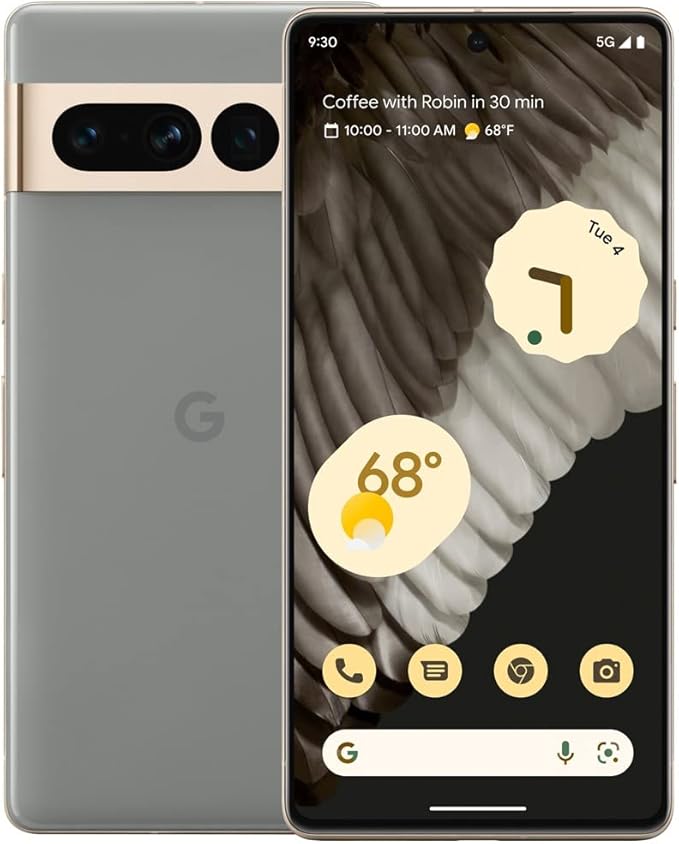
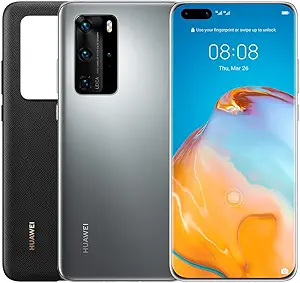
Google vs Huawei: Overview
Comparing Google and Huawei helps you determine which brand is best suited for your needs in Smartphones. Both brands offer strong choices depending on your budget and key feature requirements.
Key Features & Comparison
Evaluate factors such as build quality, warranty, customer satisfaction, and total value before making your final purchase choice between Google and Huawei.
Affordability
When analyzing affordability, Google generally presents a more accessible and clearly segmented pricing model than Huawei, especially in Western markets. The Google Pixel lineup shines particularly bright in the mid-range bracket with its 'a-series' devices, which consistently deliver flagship-level camera processing, reliable software updates, and pure Android integration at an aggressive price point. Even Google's premium models tend to undercut competitor flagships by a noticeable margin, offering clear, straightforward value for consumers seeking essential modern smartphone functionality without enterprise-tier price tags.
Huawei, by contrast, positions its primary devices—namely the P and Mate series—at ultra-premium price points that reflect their specialized, hardware-heavy manufacturing. While Huawei does produce budget-conscious handsets through its Nova series, their global value proposition is severely compromised by the ongoing absence of native Google Mobile Services (GMS). This forces consumers outside of China to pay premium flagship prices for devices requiring third-party software workarounds, which diminishes their practical cost-to-benefit ratio compared to the seamless out-of-the-box experience Google delivers at a lower price.
Quality/Durability
Huawei has long stood as an industry titan in hardware craftsmanship, often pioneering advanced material choices, complex curved chassis designs, and bespoke industrial aesthetics. Flagship devices from the Mate and P lines routinely feature proprietary materials such as Kunlun Glass, which has demonstrated exceptional drop and shatter resistance in independent testing alongside robust IP68 ingress protection. The internal assembly and structural rigidity of Huawei's devices represent top-tier mechanical engineering, giving their phones an undeniably luxurious, dense hand-feel designed to survive significant mechanical stress.
Google has steadily matured its build quality, moving away from past quality control inconsistencies to establish a distinctive and robust design language headlined by its edge-to-edge camera visor. Utilizing recycled aluminum frames and standard Gorilla Glass Victus front and back panels, modern Pixel flagships easily meet market expectations for dust and water resistance with IP68 ratings. However, while Google's physical durability is thoroughly competitive, its hardware still leans more heavily on standard commercial components rather than the ultra-hardened proprietary glass formulations and intricate physical finishing techniques found on high-end Huawei flagships.
Performance
In terms of performance, both manufacturers navigate unique architectural landscapes driven by in-house silicon rather than mainstream Qualcomm Snapdragon chipsets. Huawei’s current devices rely on proprietary Kirin processors developed under severe trade and manufacturing constraints. While HarmonyOS is masterfully optimized to provide smooth animations, excellent memory management, and remarkable network efficiency, raw silicon benchmarks reveal that Kirin chips trail behind modern competitors in raw graphical output, high-end 3D gaming, and heavy computational throughput due to older semiconductor fabrication nodes.
Google leverages its custom Tensor processors, which prioritize on-device machine learning, natural language processing, and automated computational tasks over record-breaking synthetic benchmarks. While Tensor chips also lag behind Qualcomm and Apple in sustained, thermals-intensive gaming sessions, they facilitate an unmatched array of software-driven features such as real-time voice transcription, live translation, and predictive interface actions. Furthermore, Google's deep integration of native Android ensures a fluid, bloat-free operating environment with immediate access to cutting-edge updates, granting Google the upper hand in everyday functional performance and software ecosystem synergy.
Camera Quality
Camera quality represents the pinnacle battleground for both brands, albeit with radically divergent engineering philosophies. Huawei is a champion of optical engineering and massive physical hardware, famously implementing large 1-inch type image sensors, physical variable apertures, and complex periscope telephoto systems. The result is superior optical background separation, peerless low-light light gathering, and highly detailed long-range zoom. Huawei's XMAGE image processing delivers rich contrast and vivid, cinematic color profiles that give photographs a refined, professional camera appearance straight out of the lens.
Google counters this physical hardware dominance through its world-class computational photography pipeline. While the Pixel series uses capable, high-grade sensors, its true magic lies in machine learning algorithms, zero-shutter-lag HDR synthesis, and Real Tone color science that captures hyper-accurate skin tones and lifelike dynamics. Google excels at point-and-shoot reliability; where complex lighting or moving subjects often induce blur or chromatic aberration on other phones, a Pixel almost always secures a sharp, perfectly balanced shot. While Huawei takes the lead in hardware zoom versatility and physical depth-of-field control, Google offers greater color consistency and effortless usability across varied environments.