Motorola vs Fitbit: Overview & Brand Philosophy
The smartwatch market presents a fascinating contrast when Comparing Motorola and Fitbit. Motorola was an early pioneer of modern wearable design, famously captivating consumers with the launch of the original Moto 360—a device that proved smartwatches could retain the circular, elegant aesthetics of traditional horology. Today, Motorola's smartwatch division, often produced via licensing agreements with eBuyNow, focuses on delivering accessible, utilitarian wearables that balance smart utility, classic industrial design, and aggressive price points.
Fitbit, on the other hand, established its legacy as the gold standard in consumer activity tracking before evolving into a mature smartwatch maker. Now operating under Google's hardware umbrella, Fitbit's brand philosophy centers entirely on preventative health, granular biometric tracking, and behavioral wellness modification. Rather than simply delivering phone notifications to your wrist, Fitbit approaches the smartwatch category as a dedicated clinical-adjacent wellness companion.
While Motorola views the smartwatch largely as an extension of your mobile smartphone ecosystem—emphasizing notification management, modern design, and everyday convenience—Fitbit prioritizes the continuous collection and algorithmic interpretation of physiological data. Understanding this fundamental divergence in product philosophy is essential for any consumer deciding between these two venerable brands.
Key Differences & Technological Comparison
Technologically, these two brands target vastly different user priorities across display quality, software ecosystems, biometric accuracy, and battery architectures.
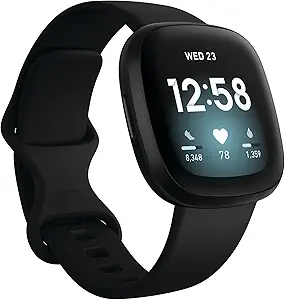
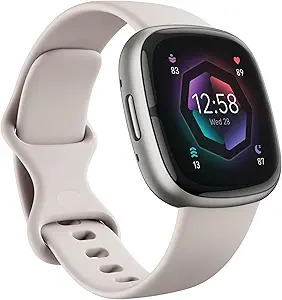
Operating System and User Experience: Motorola’s contemporary wearables, such as the Moto Watch 100 or Moto Watch 70, frequently utilize proprietary lightweight platforms like Moto Watch OS instead of power-hungry Wear OS. This ensures snappy UI transitions, exceptional battery longevity, and compatibility across both Android and iOS, but it sacrifices a rich third-party app ecosystem. Conversely, Fitbit smartwatches (like the Versa and Sense lines) run Fitbit OS. This operating system provides deeper integration with Google services, including Google Assistant and Google Wallet, while featuring an intuitive, fitness-first tile layout tailored to daily health goals.
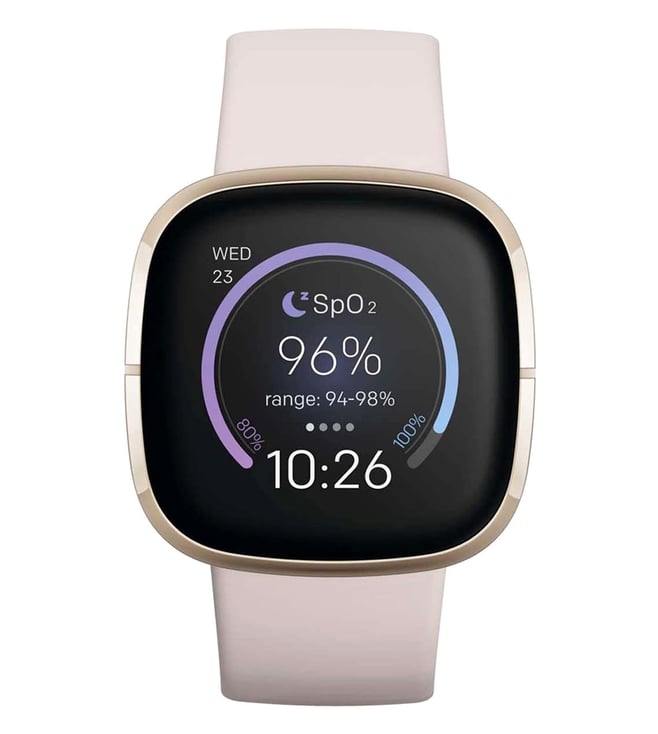
Health & Biometric Sensors: Fitbit is unequivocally the technologically superior brand in this department. High-end Fitbit models boast multi-path optical heart rate sensors, an Electrocardiogram (ECG) app for detecting atrial fibrillation, Electrodermal Activity (EDA) sensors for stress detection, and skin temperature sensors. Motorola offers the baseline standards—photoplethysmography (PPG) for heart rate tracking, SpO2 blood oxygen monitoring, and accelerometer-based step counting—but lacks the medical-grade validation, stress tracking sophistication, and advanced sleep architecture algorithms that make Fitbit a market leader.
Battery Life and Charging Dynamics: Motorola takes a distinct lead in battery efficiency and rapid charging. Because Moto Watch OS minimizes background processing, Motorola smartwatches routinely achieve 7 to 14 days of battery life on a single charge and incorporate quick-charge capabilities that can replenish a significant percentage of battery in under an hour. Modern Fitbit devices generally offer 4 to 6 days of battery life—impressive compared to the Apple Watch, but notably shorter than Motorola's endurance-focused configurations.
Materials and Build Quality: Motorola emphasizes classic chronographic styling. Models commonly feature durable aluminum alloy casings, standard interchangeable 20mm straps, and circular, bezel-conscious displays that mimic traditional timepieces. Fitbit emphasizes lightweight, ergonomic "squircle" designs engineered specifically to be unobtrusive while sleeping, working out, or sitting at a desk, featuring aerospace-grade aluminum and water resistance ratings capable of surviving deep swim sessions.
Pros & Cons Comparison
Motorola
- Pros:
- Exceptional battery life spanning up to two weeks per charge.
- Classic, attractive watch designs that easily blend into professional environments.
- Aggressive, budget-friendly pricing that lowers the barrier to entry.
- Rapid charging technology significantly cuts down dock time.
- Cons:
- No native third-party app ecosystem.
- Biometric tracking and sleep analytics lack clinical depth.
- Inconsistent software updates and limited integration with third-party fitness platforms.
Fitbit
- Pros:
- Industry-leading sleep tracking and recovery metrics (Daily Readiness Score).
- Advanced health hardware, including ECG, EDA stress tracking, and skin temperature sensors.
- Native integration with Google ecosystem tools (Google Wallet, Google Maps).
- Vibrant social community and comprehensive mobile companion app.
- Cons:
- Several key analytical features locked behind the paid Fitbit Premium paywall.
- Shorter battery life compared to Motorola's streamlined OS.
- Higher initial hardware investment.
Performance, Durability & Value Analysis
When assessing long-term performance and durability, Fitbit benefits immensely from mature engineering pipelines and deep enterprise-level software support backed by Google. Fitbit devices undergo rigorous thermal, structural, and waterproofing QA testing to withstand heavy sweat and open-water swimming. Over a multi-year lifecycle, Fitbit models routinely receive over-the-air firmware updates that optimize sensor accuracy and resolve software regressions. In contrast, Motorola smartwatches deliver robust aluminum chassis and high-tensile screen resistance relative to their entry-level cost, but their software support roadmap is comparatively conservative, meaning users may see fewer feature additions over time.
From a value perspective, Motorola is an outstanding proposition for the pragmatic, cost-conscious buyer. For under $100, consumers receive a visually refined timepiece that handles basic notifications, daily step tracking, and basic vital signs without demanding frequent visits to a charging puck. Fitbit operates at a higher price bracket, typically ranging from $130 to $300, and monetizes its deepest data insights via Fitbit Premium. However, the value Fitbit yields through proactive health alerts, sophisticated sleep stage metrics, and seamless Google integration more than justifies the premium for users treating their smartwatch as an active health intervention tool.
Final Verdict: Which Brand Should You Choose?
The choice between Motorola and Fitbit boils down to whether you prioritize a traditional-looking, low-maintenance accessory or a dedicated, scientifically focused health tracker.
Choose Motorola if: Your primary goals are affordable access, sleek traditional design, and minimal charging anxiety. If you want a stylish wearable that delivers call/text notifications, handles core fitness counting, looks natural with formal wear, and only needs to be charged twice a month, Motorola delivers tremendous value for the dollar.
Choose Fitbit if: Your priority is comprehensive health tracking, holistic sleep optimization, and active lifestyle management. If you want actionable insights into your heart rhythm, stress levels, recovery capacity, and workout intensities, alongside handy software perks like contactless Google payments, Fitbit is unequivocally the superior choice for your wrist.
Battery Life
When evaluating battery life between Motorola and Fitbit smartwatches, the architectural differences in their operating systems and hardware engineering dictate drastically different consumer experiences. Motorola, particularly through modern iterations like the Moto Watch 100 and Moto Watch 70, transitioned away from the power-hungry Google Wear OS to its proprietary Moto Watch OS. This pivot drastically reduced background processing overhead, allowing their devices to stretch battery longevity to an impressive 10 to 14 days under typical usage conditions. Motorola achieves this through aggressive power-budgeting, utilizing low-power ARM Cortex processors and basic LCD or streamlined AMOLED displays that prioritize static energy conservation over fluid, high-refresh-rate animations. However, this battery endurance comes at the functional cost of a closed ecosystem, lacking third-party application support, offline music storage, and rich interactive notifications.
Fitbit, by comparison, strikes an engineered balance between active health sensor polling and energy efficiency, offering sustained performance rather than extreme longevity. Flagship devices such as the Fitbit Sense 2 and Versa 4 consistently deliver between 5 to 7 days of continuous use on a single charge, despite running a far more complex biometric telemetry suite. Fitbit achieves this multi-day metric through proprietary, lightweight firmware optimized specifically for high-frequency PPG optical sensors, continuous electrodermal activity (cEDA) tracking, and multi-path skin temperature monitoring. While Fitbit’s raw runtime falls short of Motorola’s two-week ceiling, Fitbit's engineering excels in continuous health monitoring without devastating the battery. The trade-off is clear: enabling Fitbit’s Always-On Display (AOD) or intensive built-in multi-satellite GPS tracks will slash longevity down to roughly two to three days or 12 continuous hours, respectively, requiring a more proactive charging routine than Motorola's set-it-and-forget-it approach.
From an operational standpoint, both brands offer rapid-charging capabilities, but their real-world trade-offs cater to fundamentally distinct user profiles. Motorola uses standard pogo-pin magnetic charging docks that replenish roughly a full charge in 60 minutes, appealing to budget-conscious users who view aggressive metric-gathering as secondary to basic activity logging and sheer convenience. Fitbit features a more advanced fast-charging mechanism via its proprietary magnetic cable, generating roughly a full day's worth of runtime from a 12-minute charge. Ultimately, Motorola wins on pure endurance, serving consumers seeking an ultra-low-maintenance wearable, whereas Fitbit provides the superior balance of robust, medical-grade biometrics and respectable week-long stamina for data-driven wellness tracking.
Build Quality & Durability
When assessing build quality and structural durability, Motorola (via its Moto Watch licensee, eBuyNow) and Fitbit diverge significantly in their material choices and manufacturing philosophies. Motorola generally leverages traditional horological aesthetics, employing robust materials such as aircraft-grade aluminum alloy or stainless steel for cases (seen in models like the Moto Watch 100 and Moto Watch 70), paired with scratch-resistant curved glass lenses. In contrast, Fitbit—now backed by Google’s industrial design engineering—prioritizes lightweight, ergonomic utility. Flagship devices such as the Fitbit Sense 2 and Versa 4 utilize an aerospace-grade aluminum chassis with a satin finish, protected by chemically strengthened Corning Gorilla Glass 3. While Motorola’s rigid metal casings provide superior defense against torsional stress and lateral impacts, Fitbit’s tight tolerance machining and seamless, button-less or haptic-recessed geometries minimize creak and moisture ingress points, resulting in a more refined and unified chassis.
Environmental sealing and component-level resilience reveal distinct trade-offs between the two ecosystems. Fitbit standardizes 50-meter (5 ATM) water resistance across nearly its entire modern lineup, ensuring reliable survivability for lap swimming, high-humidity environments, and open-water exposure. Fitbit’s internal structural ribbing and biometric sensor array coatings are proven to resist degradation from sweat acidity and chlorine over prolonged periods. Motorola matches the 5 ATM rating on its premium circular models, but budget-oriented iterations frequently compromise with an IP67 rating, making them vulnerable to sustained hydrostatic pressure and high-velocity water sports. Furthermore, while Motorola’s conventional mechanical buttons offer satisfying tactile feedback, their physical seals represent potential long-term points of failure compared to Fitbit’s solid-state inductive and low-profile actuators, which reduce mechanical wear-and-tear.
From a longevity and everyday wear perspective, Fitbit holds an engineering advantage in modular resilience, whereas Motorola excels in cosmetic survival against blunt abrasions. Fitbit’s proprietary quick-release band mechanisms are reinforced with robust locking clasps, preventing detachment under physical strain; however, the soft-touch elastomer bands provided in Fitbit packaging remain notoriously prone to cosmetic shine and structural snapping after 12 to 18 months of intensive use. Motorola implements universal 20mm standard spring-bar lugs, allowing users to swap compromised straps effortlessly with ruggedized, aftermarket third-party bands. Ultimately, consumers seeking a watch that mimics the physical resilience and heavy metal heft of conventional wristwear will appreciate Motorola’s structural casing, while those prioritizing precision sealing, scratch-resistant crystal integration, and active-lifestyle endurance will find Fitbit’s refined composite-and-aluminum engineering superior for sustained wear.
Health & Fitness Tracking
When evaluating the health and fitness tracking capabilities of Motorola and Fitbit, the two brands represent fundamentally different engineering philosophies. Motorola—primarily manufacturing wearables through licensing partners under the Moto Watch banner—delivers a utilitarian, baseline tracking suite. Their devices offer standard biometric monitoring, such as dynamic heart rate tracking, SpO2 measurements, accelerometer-based step counting, and basic sleep stage analysis. While adequate for casual users seeking general wellness metrics, Motorola’s proprietary Moto Watch OS lacks the granular algorithm refinement required for high-accuracy athletic tracking. In contrast, Fitbit, backed by Google’s extensive digital health infrastructure, is an established industry pioneer built explicitly around physiological computation. Fitbit devices leverage advanced photoplethysmography (PPG) sensors, electrodermal activity (EDA) sensors for stress management, and, in select models, ECG capabilities for detecting irregular heart rhythms (AFib). The technical strength of Fitbit’s hardware lies in its sensor fusion, which cross-references heart rate variability (HRV), skin temperature variation, and breathing rates to deliver clinically relevant consumer insights.
The disparity between the two brands becomes even more pronounced in their algorithmic maturity and software ecosystems. Motorola's platform provides immediate, on-device metrics without a paywall, but the companion application remains relatively rudimentary, offering limited historical context, basic workout logs, and static sleep scoring that rarely influences behavioral change. Fitbit’s ecosystem, conversely, excels in longitudinal data interpretation. Its sophisticated algorithms produce predictive and actionable recovery metrics, notably the Daily Readiness Score, which calculates how physical exertion, HRV, and sleep patterns impact current physical capacity. Furthermore, Fitbit’s sleep tracking architecture remains among the most accurate in the consumer smart watch landscape, capable of detecting subtle disruptions and sleep apnea risk indicators via oxygen variation graphs. Motorola’s fitness features serve as ancillary smart watch functions, whereas Fitbit treats health optimization as the central operational core of its entire platform.
The practical trade-offs for consumers center on intent, accuracy, and ecosystem longevity. Motorola provides a straightforward, no-subscription-required experience with sufficient baseline tracking for individuals who prioritize essential step and calorie counts alongside smart watch notifications and extended battery life. However, serious fitness enthusiasts and health-conscious users will find Motorola’s lack of third-party platform integration (such as deep Strava sync or comprehensive corporate wellness links) and basic sensor array restrictive. Fitbit demands a higher initial investment and gates several advanced algorithmic insights behind the Fitbit Premium paywall, yet it provides far superior data fidelity, sophisticated stress and heart health diagnostics, and a vibrant community framework. Ultimately, Fitbit remains the authoritative choice for holistic, medically oriented health tracking, while Motorola offers a competent, low-maintenance option for casual, day-to-day activity monitoring.
Smart Features & Connectivity
When evaluating smart features and connectivity, Motorola and Fitbit represent starkly different engineering philosophies, dictated primarily by their respective operating systems. Motorola, historically aligned with Google’s Wear OS (most prominently in its Moto 360 lineage) and more recently leveraging streamlined proprietary RTOS platforms in devices like the Moto Watch series, prioritizes deep integration with the broader Android ecosystem. Wear OS-powered Motorola devices excel in standalone intelligence, offering full Google Play Store access, rich interactive notifications with voice-to-text dictation via Google Assistant, robust third-party app integration, and native Google Maps navigation. In contrast, Fitbit smartwatches—such as the Sense and Versa series—run on Fitbit OS, which purposefully limits third-party application breadth to prioritize battery longevity and core health tracking. While newer Fitbit models benefit from Google’s acquisition by integrating Google Wallet and Google Maps, their smart ecosystems remain fundamentally utilitarian, lacking the high-tier multitasking and extensive app variety found on standard Wear OS platforms.
Connectivity engineering highlights further technical trade-offs between the two brands. Motorola devices frequently leverage dual-channel Wi-Fi, low-energy Bluetooth (BLE 5.0 and above), and standalone GPS/GLONASS arrays, facilitating rapid data synchronization and tether-free media playback. This setup delivers a high-bandwidth pipeline that seamlessly handles on-wrist call management via integrated microphones and speakers. Fitbit counters with exceptional multi-platform parity, engineering its Bluetooth connectivity to interface equally well with both iOS and Android devices, a distinct advantage over many dedicated Wear OS wearables that strictly penalize Apple users. However, Fitbit’s data pipeline is strictly throttled to preserve power; background syncing can occasionally suffer from latency, NFC payments are tethered strictly to supported banking partners through Fitbit Pay/Google Wallet, and offline audio support has been heavily curtailed in recent hardware generations.
Ultimately, the consumer trade-off between Motorola and Fitbit centers on whether a user desires an interactive digital companion or an autonomous wellness tracker with secondary smart capabilities. Motorola provides the more conventional "miniature smartphone" experience on the wrist, featuring superior interactive notification handling, sophisticated app ecosystems, and native productivity utilities, albeit at the expense of frequent charging cycles. Conversely, Fitbit presents a more disciplined, passive connectivity suite that reliably delivers basic call alerts, calendar pingbacks, and quick text replies without the complexity—or power-hungry overhead—of a desktop-class wearable operating system.