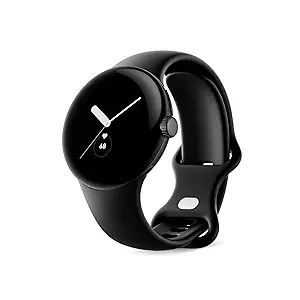
Google vs Motorola: Overview & Brand Philosophy
The smartwatch market represents a collision between Silicon Valley software innovation and traditional mobile hardware legacy. Google, a titan in data, artificial intelligence, and operating systems, entered the first-party wearable space strategically by acquiring Fitbit and subsequently launching the Google Pixel Watch series. Google's philosophy centers on ambient computing: integrating users seamlessly into the Google ecosystem through rich AI-driven services, refined Wear OS experiences, and clinical-grade health diagnostics powered by Fitbit's proprietary algorithms.
Motorola, conversely, approaches the wrist from a perspective rooted in pragmatism, legacy telecommunications, and high-value accessibility. While Motorola previously produced early Wear OS milestones like the pioneering Moto 360, its contemporary wearable strategy—frequently executed through licensing partnerships like eBuyNow—focuses on delivering essential fitness tracking, everyday notifications, and exceptional battery endurance at approachable price points. Motorola strips away complex, resource-heavy computing to prioritize the fundamental utilities modern consumers expect from wearable tech.
The fundamental contrast lies in ambition versus utility. Google positions its wearables as premium, intelligent extensions of the smartphone, trading battery longevity for computing power, advanced biometric sensors, and deep app integration. Motorola operates on the principle of pragmatic functionality, aiming to satisfy users who want dependable activity tracking, high-end aesthetics, and multi-day battery performance without paying flagship prices or dealing with nightly recharging cycles.
Key Differences & Technological Comparison
Technologically, these two brands occupy entirely different tiers of the wearable architecture spectrum. Google's Pixel Watch line runs on the full-featured Wear OS platform, backed by powerful modern silicon (such as the Qualcomm Snapdragon W5+ Gen 1 platform paired with a custom co-processor). This architecture enables smooth animations, rich interactive notifications, native Google Assistant support, third-party application installations via the Google Play Store, and direct NFC contactless payments via Google Wallet.
Motorola's contemporary lineup, such as the Moto Watch 70 and Moto Watch 100, typically bypasses power-hungry operating systems in favor of lightweight, RTOS-based (Real-Time Operating System) software, known commercially as Moto Watch OS. While this limits third-party app support and voice assistant capabilities, it delivers an ultra-efficient computing footprint that allows Motorola devices to run up to 10 to 14 days on a single charge—drastically outperforming Google's 24-to-36-hour operational window.
Biometrics and health tracking also showcase deep philosophical divergence. Google leverages Fitbit's comprehensive health tracking ecosystem, offering advanced sensors capable of continuous electrodermal activity (cEDA) tracking for stress management, ECG readings for detecting atrial fibrillation, and SpO2 monitoring backed by extensive medical research. Motorola provides core health tracking—standard heart rate, basic sleep staging, and blood oxygen levels—which is suitable for general fitness enthusiasts but lacks the clinical precision, comprehensive data analysis, and regulatory clearances seen in Google's ecosystem.
Pros & Cons Comparison
Google Smart Watches
- Pro: Rich Software Ecosystem: Full access to Wear OS with Google Assistant, Google Maps turn-by-turn navigation, YouTube Music, and hundreds of third-party apps via the Play Store.
- Pro: Advanced Fitbit Health Suite: Unlocks best-in-class health metrics, including ECG, cEDA stress tracking, irregular heart rhythm notifications, and deep sleep architecture analysis.
- Pro: Premium Build & Display: Features custom 3D Corning Gorilla Glass, vibrant AMOLED displays with high peak brightness, and premium stainless steel or aluminum casing options.
- Con: Underwhelming Battery Life: Demanding hardware necessitates daily or near-daily charging, making consistent sleep tracking cumbersome.
- Con: Premium Pricing & Subscriptions: Higher hardware entry costs compounded by Fitbit Premium subscriptions required to unlock deep historical health insights.
Motorola Smart Watches
- Pro: Exceptional Battery Endurance: Lightweight operating systems enable up to two weeks of battery life on a single charge, completely eliminating battery anxiety.
- Pro: High Value Proposition: Competitively priced, offering premium-looking hardware finishes, aluminum cases, and essential tracking at a fraction of Google's cost.
- Pro: Cross-Platform Compatibility: Seamlessly pairs with both Android and iOS devices, whereas Google heavily restricts optimal functionality to Android devices.
- Con: Limited App Ecosystem: RTOS architecture prevents downloading third-party applications, standalone navigation tools, or interactive media apps.
- Con: Basic Health Analytics: Lacks medical certifications such as FDA-cleared ECGs, advanced stress metrics, and comprehensive algorithmic fitness coaching.
Performance, Durability & Value Analysis
From an absolute performance and durability perspective, the Google Pixel Watch delivers a modern, high-tier user experience. Navigating its interface is smooth and lag-free, backed by substantial RAM and high-end processing units. However, its signature domed glass design, while visually striking, leaves the perimeter of the display inherently vulnerable to direct impacts against doorframes or gym equipment. While the water resistance ratings (5 ATM) match industry standards, repairability is practically non-existent. Over a two- to three-year lifecycle, the Pixel Watch maintains its value through robust software updates and deep Android feature drops, though internal battery degradation will eventually require users to charge even more frequently.
Motorola focuses on practical durability and exceptional cost-per-day value. Its watches often feature recessed screens, protective bezels, and aircraft-grade aluminum housings that withstand typical abrasions far better than exposed domed crystals. While the UI speed is noticeably slower—limited by lightweight processors optimized for efficiency rather than high frame rates—the underlying hardware experiences less thermal stress and fewer deep battery recharge cycles, typically yielding excellent battery health retention over several years. For budget-conscious consumers, Motorola offers phenomenal upfront value, delivering standard notifications and step tracking for under $100, whereas Google charges upwards of $350 for its flagship computing platform.
Final Verdict: Which Brand Should You Choose?
Choosing between Google and Motorola comes down to whether you want an intelligent computing extension of your smartphone or a low-maintenance, health-focused daily utility.
Choose Google if: You are an Android user looking for an elite, fully featured smartwatch experience. If you prioritize accurate, clinical-grade health metrics, frequent software updates, fluid voice control via Google Assistant, NFC contactless payments, and direct wrist navigation via Google Maps—and you do not mind establishing a daily charging routine—the Google Pixel Watch is comfortably the superior device.
Choose Motorola if: You value functional simplicity, multi-day or multi-week battery life, and high hardware durability at an accessible price. Motorola is the ideal choice for everyday fitness tracking, basic smartphone notifications, and cross-platform flexibility with an iPhone or budget Android device, all without paying a premium for computing features you may rarely use.
Battery Life
When evaluating battery performance in the smartwatch category, Google and Motorola represent fundamentally divergent engineering philosophies and operating ecosystem choices. Google’s Pixel Watch lineup (such as the Pixel Watch 2 and 3) utilizes full-fledged Wear OS, relying on a sophisticated dual-chipset architecture that pairs a primary application processor (Qualcomm Snapdragon W5 Gen 1) with an ultra-low-power Cortex-M33 co-processor. This hardware configuration is designed to dynamically distribute operational loads, yielding roughly 24 to 36 hours of continuous use with the Always-On Display (AOD) active. While this delivers consistent all-day reliability alongside resource-heavy background processes—such as high-frequency heart-rate tracking, continuous electrodermal activity (cEDA) monitoring, and seamless Google Assistant integration—it fundamentally requires a daily charging cadence, creating a friction point for power users who prioritize continuous multi-day sleep and activity metrics.
Conversely, modern Motorola offerings—such as the Moto Watch 70, 100, and 120—prioritize raw operational longevity through hardware austerity, utilizing a proprietary, lightweight operating system (Moto Watch OS) rather than a battery-intensive platform like Wear OS. By intentionally omitting a third-party app ecosystem, high-overhead background APIs, and continuous LTE connectivity, Motorola extracts anywhere from 7 to 14 days of uptime from comparatively modest battery capacities (ranging from 355mAh to 400mAh). Motorola’s trade-off is stark: users sacrifice advanced computing power, interactive notification handling, and deep smart home integration in exchange for a device that demands minimal domestic charging overhead, appealing broadly to pragmatic consumers focused strictly on basic telemetry, core notifications, and set-it-and-forget-it reliability.
From a practical consumer standpoint, the decision between Google and Motorola hinges on whether one prioritizes ambient intelligence or maintenance-free uptime. Google compensates for its limited single-charge duration through rapid-charging engineering—its proprietary magnetic pucks can restore up to 80% capacity in approximately 30 to 45 minutes—allowing dedicated users to integrate top-ups into brief periods, such as morning showers. Motorola relies on basic Pogo-pin charging, which, while slower on a per-minute basis, is rendered inconsequential by its weekly recharge cycle. Ultimately, Google is the superior platform for users demanding a rich, integrated smartwatch experience who do not mind daily docking, whereas Motorola provides superior battery life for consumers seeking traditional timepiece stamina paired with lightweight digital fitness tracking.
Build Quality & Durability
When evaluating build quality and engineering philosophy, Google and Motorola approach the smartwatch category from fundamentally different tiers. Google’s Pixel Watch lineup emphasizes premium, jewelry-like craftsmanship, utilizing custom 3D Corning Gorilla Glass 5 that seamlessly slopes into an aerospace-grade recycled aluminum or polished stainless steel chassis. The seamless dome aesthetic yields a refined, high-end in-hand feel with tight tolerances, complemented by haptic feedback driven by a sophisticated linear resonant actuator. In contrast, modern Motorola smartwatches—largely licensed under the Moto Watch banner—target the budget-to-midrange segment. Motorola typically employs standard sandblasted aluminum alloy casings paired with flat or 2.5D tempered glass. While the structural integrity of Motorola's metal cases is commendable for everyday wear, the overall fit, finish, and material refinement lag behind Google’s flagship-level industrial design, often feeling more utilitarian and prone to displaying minor machining seams.
Durability in real-world conditions reveals distinct trade-offs between aesthetic design and practical vulnerability. Google equips its watches with a certified 5 ATM water resistance rating and IP68 dust protection, allowing them to withstand swimming and submersion up to 50 meters. However, the Pixel Watch’s defining visual feature—its edge-to-edge curved glass dome—is inherently susceptible to lateral impacts, scratching, and catastrophic fracturing, as it lacks a protective raised bezel. Conversely, Motorola’s design language incorporates flat display profiles often flanked by protective metal bezels, significantly reducing the likelihood of direct screen impacts against door frames or gym equipment. Motorola devices usually offer either IP67 or 5 ATM water resistance depending on the model, providing reliable protection against moisture and dust, though their cheaper display coatings tend to pick up micro-scratches more readily than Google’s higher-grade Gorilla Glass.
From a long-term longevity and technical durability perspective, Google holds a decisive advantage in component quality and post-purchase support, offset somewhat by repairability concerns. Google’s proprietary band-attachment mechanism is precision-engineered, locking securely with zero play, although the unibody glass-heavy design makes consumer screen replacements virtually impossible. Motorola opts for industry-standard 20mm quick-release spring bars, which offer vastly superior compatibility and inexpensive third-party hardware replacements. However, Motorola's cost-optimized internal components, lower-tier water-sealing gaskets, and notoriously shorter firmware lifecycle support detract from its sustained, multi-year durability. Ultimately, Google delivers a vastly superior, luxury-grade device built with top-tier materials that demands careful handling to preserve its exposed glass, whereas Motorola offers an affordable, pragmatically durable tool that trades premium engineering for lower-stakes, everyday resilience.
Health & Fitness Tracking
When evaluating health and fitness tracking, Google stands in a vastly different engineering tier compared to Motorola, primarily due to Google’s integration of the proprietary Fitbit ecosystem into its Pixel Watch lineup. Google deploys a sophisticated multi-path optical heart rate sensor paired with an electrical sensor (ECG) and a continuous skin temperature (cEDA) monitor. This hardware suite enables advanced diagnostic-level metrics, such as atrial fibrillation detection via ECG, real-time physiological stress tracking through electrodermal activity, and SpO2 monitoring. Motorola, with its Moto Watch series, approaches biometric tracking from an entry-level utility perspective, utilizing basic photoplethysmography (PPG) arrays and standard accelerometer suites. While the Moto Watch accurately captures daily metrics like continuous heart rate, blood oxygen saturation, step counts, and broad sleep stages, it completely lacks clinical-adjacent features like ECG and advanced body-response algorithms, targeting passive wellness rather than proactive health intervention.
The discrepancy in technical depth is equally apparent in algorithmic processing and software intelligence. Google leverages Fitbit’s mature, machine-learning-driven analytics, which translate complex biometric inputs into actionable recovery frameworks such as the Daily Readiness Score, Active Zone Minutes, and nuanced sleep profiles that factor in heart rate variability (HRV) and restless cycles. In contrast, Motorola's proprietary Moto Watch OS processes data linearly, providing straightforward, descriptive logs of historical activity rather than predictive or interpretive health insights. Motorola supports basic workout tracking for dozens of sports, yet it lacks Google’s precision in auto-detecting exercises or measuring high-intensity strain accurately, where Motorola's PPG sensor often demonstrates significant latency during rapid pulse fluctuations. Furthermore, Google’s platform continuously receives updates that refine anomaly detection and fall/crash monitoring, whereas Motorola's lower-powered RTOS ecosystem remains largely static post-launch.
Ultimately, the consumer trade-off centers on clinical-grade precision versus utility and battery overhead. Google offers an industry-leading health platform that rivals dedicated sports wearables, but this technical excellence requires substantial power draw—limiting battery life to roughly 24 to 36 hours—and often gates deep statistical historical trends behind a Fitbit Premium subscription paywall. Motorola, conversely, sacrifices deep algorithmic insights, cross-sensor correlations, and regulatory-cleared diagnostics to achieve an exceptionally low-power architecture that can deliver up to 10 to 14 days of battery life on a single charge with zero ongoing subscription costs. For consumers prioritizing granular recovery data, cardiovascular health tracking, and lifestyle-altering insights, Google is objectively superior, whereas Motorola serves buyers wanting casual, low-maintenance pedometer and heart rate basics without the friction of daily charging.
Smart Features & Connectivity
When evaluating smart features and connectivity, Google and Motorola represent fundamentally divergent philosophies in the smartwatch sector. Google’s Pixel Watch lineup acts as the premier showcase for Wear OS, delivering an extensively integrated ecosystem driven by deep Google Assistant functionality, standalone Google Maps navigation, Google Wallet, and third-party app access via the Google Play Store. The engineering strength of Google's platform lies in its powerful system-on-chip architectures that support rich interactivity, advanced voice recognition, and dedicated LTE configurations capable of unlinking the watch entirely from the smartphone. In contrast, Motorola’s modern entries—such as the Moto Watch series—have largely abandoned the resource-intensive Wear OS platform in favor of proprietary, lightweight operating systems like Moto Watch OS. While this shift dramatically improves battery endurance, it inherently strips Motorola watches of true smart device status, leaving them largely confined to passive notification mirroring, basic music controls, and rudimentary quick-reply functionality strictly tethered to Android devices.
The technical trade-offs between connectivity architectures further accentuate the divide between these two brands. Google equips its timepieces with high-throughput dual-band Wi-Fi (2.4GHz and 5GHz), Bluetooth 5.0/5.3, full NFC payment compatibility, and integrated multi-constellation GPS, ensuring low-latency cloud synchronization and reliable standalone performance. Motorola relies primarily on basic Bluetooth connectivity (typically Bluetooth 5.0 or 5.2) with select models featuring standalone GPS, but completely omits Wi-Fi networking, cellular data alternatives, and NFC transaction capabilities. Furthermore, Motorola’s closed ecosystem severely curtails software upgradability, dynamic widgets, and interoperability with sophisticated smart home protocols like Google Home. For consumers demanding true ambient computing, cross-device multitasking, and autonomous cellular connectivity, Google stands uncontested; however, Motorola provides an ultra-simplified, battery-efficient interface suitable for users who prioritize bare-minimum tethered notifications over a fully realized wrist-bound digital assistant.
Compare current retail pricing, active promotions, and verified stock availability directly from authorized stores: