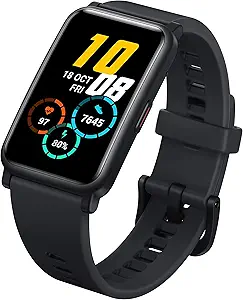
Honor vs Amazfit: Overview
Comparing Honor and Amazfit helps you determine which brand is best suited for your needs in Smart Watch. Both brands offer strong choices depending on your budget and key feature requirements.
Key Features & Comparison
Evaluate factors such as build quality, warranty, customer satisfaction, and total value before making your final purchase choice between Honor and Amazfit.
Battery Life
Battery performance is a foundational pillar of the Amazfit ecosystem, where low-power microcontrollers and the proprietary Zepp OS are tuned to minimize background energy drain. Across flagships like the Balance and rugged lines like the T-Rex, Amazfit watches routinely achieve between 10 to 24 days of operational uptime under typical use conditions. Even with continuous photoplethysmography (PPG) monitoring, nightly sleep analysis, and occasional GPS tracking enabled, the devices exhibit remarkably flat discharge curves. Advanced power management settings, including smart display timeout adjustments and granular frequency control for biosensors, allow power users to stretch battery longevity even further without entirely disabling core smart functions.
Honor approaches power conservation through an efficient dual-chip architecture running a streamlined version of MagicOS, engineered to dynamically switch processing loads based on activity states. Models such as the Honor Watch GS and Honor Watch 4 consistently yield between 10 and 14 days of battery life under standard profiles, though this window contracts to approximately 3 to 4 days if independent cellular eSIM functionality is engaged. While Honor delivers highly competitive longevity that eclipses conventional Wear OS and watchOS platforms, Amazfit holds a distinct operational advantage for extreme use cases, expedition tracking, and multi-week expeditions where recharge cycles must be minimized.
Build Quality & Durability
Amazfit offers a broad structural spectrum that spans ultra-refined business aesthetics to military-grade utilitarian toughness. Premium models like the Amazfit Balance utilize lightweight aircraft-grade aluminum alloy mid-frames paired with fiber-reinforced polymers, striking a balanced strength-to-weight ratio for daily wear. In contrast, the outdoor-centric T-Rex series achieves MIL-STD-810G certification, featuring high-strength polymer bezels, metal-coated bridge guards, and 10 ATM water resistance capable of withstanding extreme thermal shock, humidity, and immersion up to 100 meters. The attention to tactile button engineering, anti-fingerprint glass coatings, and strap retention mechanisms ensures Amazfit hardware remains structurally reliable under rigorous physical stress.
Honor leverages the high-end industrial design legacy of its parentage, emphasizing sleek, minimalist luxury with materials typically associated with traditional horology. Devices like the Honor Watch GS 3 and GS 4 incorporate 316L low-carbon stainless steel chassis polished to a mirror finish, complemented by subtly curved 3D sapphire or tempered glass dials. While Honor also produces rugged iterations with MIL-STD ratings, the brand's primary portfolio prioritizes ergonomic thinness, high-density metal casings, and premium leather or fluoroelastomer straps designed for urban and professional environments. Honor's build philosophy excels in tactile elegance and refined assembly tolerances, whereas Amazfit provides a wider variety of purpose-built, impact-resistant enclosures tailored for harsh outdoor environments.
Health & Fitness Tracking
Amazfit has invested heavily in its proprietary BioTracker biometric sensor suite, which combines multi-LED optical arrays with sophisticated algorithmic interpretations for comprehensive 24/7 health tracking. The system continuously evaluates heart rate, blood oxygen saturation (SpO2), heart rate variability (HRV), and breathing rates, synthesizing this data into actionable metrics like the PAI (Personal Activity Intelligence) score and daily Readiness scores. For athletic performance, Amazfit utilizes the PeakBeats engine, which calculates specialized metrics including VO2 Max, training load, full recovery time, and aerobic/anaerobic training effects. Coupled with dual-band circularly polarized GPS antennas that rival dedicated sports computers in track recording accuracy, Amazfit proves exceptionally capable for endurance athletes and data-driven fitness enthusiasts.
Honor approaches wellness through high-precision sensor calibration backed by clinical partnerships, notably integrating multi-channel PPG algorithms that suppress optical signal noise during erratic physical movement. The brand offers robust continuous health monitoring, tracking resting heart rate, stress levels via autonomic nervous system indicators, and comprehensive sleep stage breakdowns with sleep breathing quality analysis. For exercise tracking, Honor provides dozens of standardized workout modes alongside professional fitness assessments that track running posture, cadence, and pace consistency. While Honor's health dashboard is intuitive and visually refined for the mainstream fitness demographic, it offers fewer granular data-export capabilities and biomechanical analytics compared to Amazfit's deep sports-science integrations.
Smart Features & Connectivity
Amazfit watches powered by Zepp OS deliver an expandable software experience underpinned by a dedicated, lightweight app store that hosts hundreds of mini-applications, from productivity tools to sports utilities. Communication is supported via integrated microphones and speakers for Bluetooth telephony, offline voice control through a localized assistant, and generative AI features via Zepp Flow for natural language interactions. While the platform does not natively support full standalone cellular connectivity across most models, it excels in operating system interoperability, offering identical functionality, comprehensive push notification management, and deep health data synchronization with both Android and iOS smartphones.
Honor excels in smartphone-ecosystem synergy, particularly when paired with Android and MagicOS devices, often incorporating standalone eSIM capabilities on key models like the Honor Watch 4 to allow independent calls, SMS, and data streaming untethered from a mobile device. Its interface is deeply integrated with mobile productivity features, allowing seamless notification responses, quick-reply templates, calendar syncing, and local music playback control. However, Honor's smart capability set is noticeably asymmetrical across platforms; pairing an Honor wearable with iOS frequently results in restricted features, such as the inability to respond to notifications or access the watch face market, giving Amazfit the edge in cross-platform versatility and third-party developer expansion.