Fitbit vs Coros: Overview
Comparing Fitbit and Coros helps you determine which brand is best suited for your needs in Smart Watch. Both brands offer strong choices depending on your budget and key feature requirements.
Key Features & Comparison
Evaluate factors such as build quality, warranty, customer satisfaction, and total value before making your final purchase choice between Fitbit and Coros.
Battery Life
When evaluating power endurance, Coros operates in an entirely different tier compared to Fitbit, driven by its focus on endurance athletics. Coros wearables, such as the Pace and Vertix series, utilize memory-in-pixel (MIP) display technology and hyper-optimized firmware that prioritize energy efficiency above all else. In typical smartwatch operation, standard Coros devices comfortably last anywhere from 14 to 30 days on a single charge, while high-end models like the Vertix 2 can exceed 40 days. More crucially for outdoor enthusiasts, their GPS tracking battery life ranges from 30 to over 100 continuous hours. This allows users to track ultramarathons or multi-day backcountry expeditions without the anxiety of battery depletion or the need to carry external charging cradles.
Fitbit, conversely, caters to lifestyle and everyday wellness tracking, which reflects in its respectable yet conventional battery longevity. Most Fitbit devices—such as the Charge, Versa, and Sense series—deliver between 4 to 7 days of typical use on a full charge. However, this lifespan shrinks precipitously to approximately 5 to 12 hours when continuous onboard GPS tracking is activated or when utilizing the always-on mode on their brighter AMOLED displays. While Fitbit significantly outperforms true smartwatches like the Apple Watch in battery duration, it falls short of Coros's industrial-grade longevity. Users who prioritize sporadic, multi-day GPS workouts will find Fitbit adequate, but those demanding weeks of uninterrupted tracking and extensive GPS telemetry must look to Coros.
Build Quality & Durability
Coros designs its hardware with extreme environments and rugged outdoor athletics at the forefront. The brand employs utilitarian, robust materials across its lineup; entry-level models utilize high-density fiber-reinforced polymers to keep weight exceptionally low, while flagship models incorporate aerospace-grade titanium bezels and scratch-resistant sapphire crystal glass. Water resistance is exemplary, with most units rated to 5 ATM and expedition models certified to 10 ATM, alongside resistance to severe temperature fluctuations. The physical interface relies heavily on tactile buttons and an oversized digital crown dial, an intentional engineering choice that ensures full operational reliability while wearing thick winter gloves or navigating torrential rain.
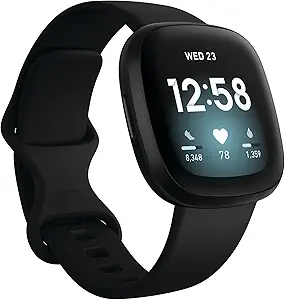
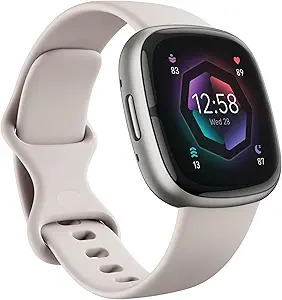
Fitbit takes a distinctly lifestyle-oriented design approach, prioritizing sleek aesthetics, minimal wrist presence, and all-day comfort. Models like the Sense 2 and Versa 4 feature lightweight aluminum chassis with soft, curved glass edges that slide effortlessly under clothing cuffs and feel non-intrusive during sleep. However, this focus on urban elegance comes at the expense of extreme durability. Fitbit devices typically use standard Gorilla Glass, which is more prone to surface scratching and impact damage when subjected to rugged outdoor use. Furthermore, Fitbit’s reliance on capacitive touchscreens and flush inductive side buttons can prove frustratingly unresponsive when exposed to heavy sweat, water immersion, or cold weather, reinforcing its identity as an everyday health tracker rather than an expedition tool.
Health & Fitness Tracking
In the realm of physical performance tracking, Coros functions as a dedicated training computer engineered specifically for runners, cyclists, and multisport athletes. The Coros EvoLab platform delivers deep physiological metrics, including training load, base fitness, fatigue levels, threshold heart rate, and race pace predictors. Rather than simply logging workouts, Coros algorithms evaluate training efficiency and recovery timelines to prevent overtraining. While the devices include basic health sensors like continuous heart rate, SpO2, and sleep tracking, these are framed through the lens of athletic readiness and athletic performance. The ecosystem is completely open, with no subscription tiers or paywalls required to access comprehensive data analytics.
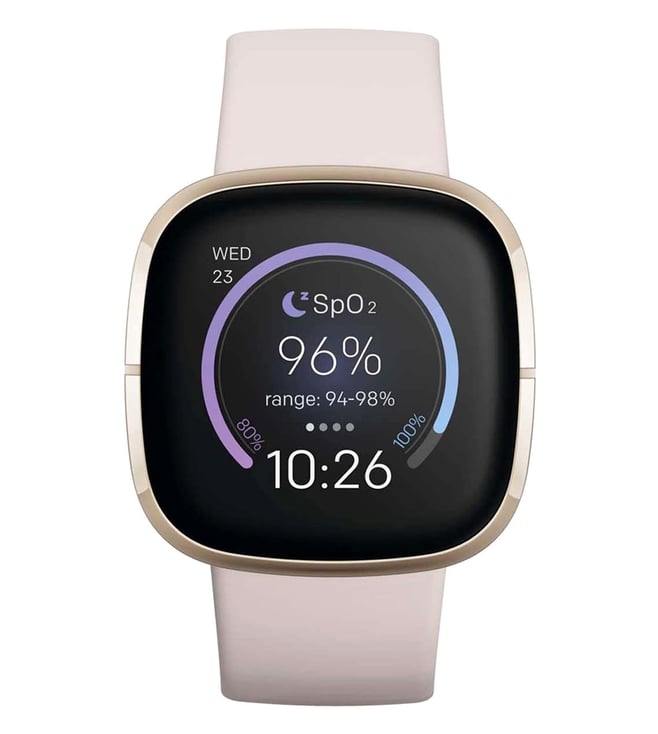
Fitbit takes the inverse approach, excelling brilliantly at holistic, passive health monitoring and wellness habit formation. It tracks detailed sleep stages, resting heart rate, heart rate variability (HRV), skin temperature, and electrodermal activity (cEDA) for stress management with superior consumer-friendly accuracy. However, Fitbit’s fitness metrics are aimed at general wellness rather than advanced athletic conditioning; it lacks deep training load analytics and granular sports performance data. A major drawback of the Fitbit ecosystem is the Fitbit Premium paywall, which locks critical long-term health trends, detailed sleep profiles, and the Daily Readiness Score behind a recurring monthly fee, creating an ongoing cost of ownership absent in Coros.
Smart Features & Connectivity
Coros purposefully minimizes smart features to conserve energy and keep the user's attention anchored on athletic training. While modern Coros devices offer essential conveniences such as phone notifications, basic music storage for offline MP3 playback, and seamless third-party sync with platforms like Strava and TrainingPeaks, they lack sophisticated lifestyle integrations. There is no support for interactive voice assistants, contactless payments, rich app stores, or the ability to dictate replies to incoming text messages. Coros does, however, maintain exceptional sensor connectivity, supporting broad ANT+ and Bluetooth connections to external heart rate straps, power meters, stride sensors, and cycling trainers, as well as direct integration with action cameras like GoPro and Insta360.
Fitbit offers a significantly more capable daily smartwatch experience, particularly through its integration with the Google ecosystem. Devices like the Sense 2 and Versa 4 feature vibrant AMOLED color touchscreens, support for Google Wallet contactless payments, on-wrist Google Maps turn-by-turn navigation, and built-in voice assistants like Amazon Alexa. Users can take Bluetooth calls directly on the wrist and respond to smartphone notifications with quick text or voice replies on Android. However, Fitbit’s athletic connectivity is notably restricted; the platform does not natively pair with external cycling power meters, foot pods, or chest straps, cementing its role as a capable everyday consumer smartwatch rather than an open sports-telemetry hub.