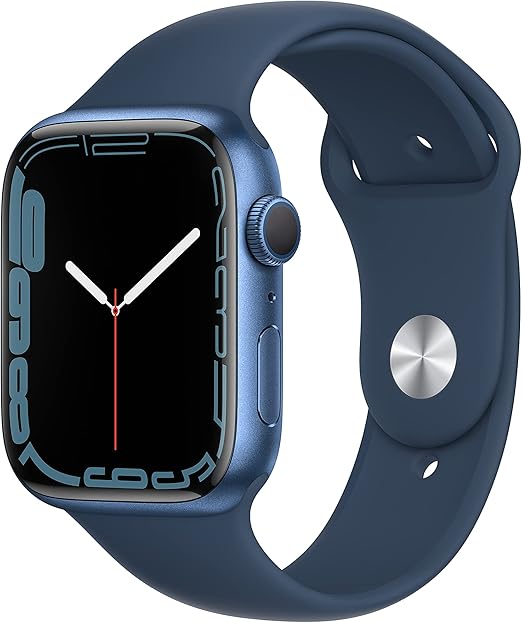
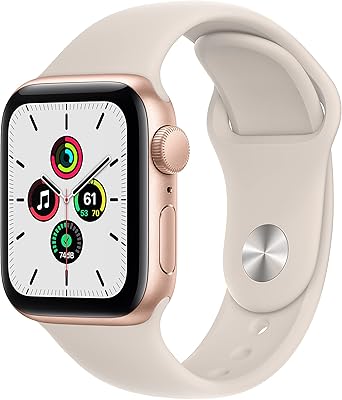
Apple vs Amazfit: Overview
Comparing Apple and Amazfit helps you determine which brand is best suited for your needs in Smart Watch. Both brands offer strong choices depending on your budget and key feature requirements.
Key Features & Comparison
Evaluate factors such as build quality, warranty, customer satisfaction, and total value before making your final purchase choice between Apple and Amazfit.
Battery Life
Battery longevity represents the single most dramatic divergence in engineering philosophy between Apple and Amazfit. Apple prioritizes peak computational power, fluid display rendering, and continuous background processing, resulting in an endurance profile that demands frequent charging. The standard Apple Watch Series models generally achieve roughly 18 hours of normal operation on a single charge, requiring a daily charging ritual to maintain continuous use. Even the specialized Apple Watch Ultra, which incorporates a significantly larger lithium-ion cell and sophisticated power-management states, reaches roughly 36 to 72 hours depending on ambient conditions and GPS usage. While Apple offsets these constraints with fast-charging pucks capable of restoring an 80% charge in approximately 45 minutes, battery anxiety remains an inherent operational reality for power users.
Conversely, Amazfit engineers its wearables around ultra-low-power proprietary architectures and custom micro-OS environments, yielding extraordinary battery endurance that routinely measures in days or weeks rather than hours. Mainstream flagships such as the Amazfit GTR, Balance, and rugged T-Rex series effortlessly operate between 7 and 24 days under standard conditions, and even deliver dozens of hours of continuous dual-band GPS satellite tracking. Amazfit achieves this exceptional efficiency by aggressively duty-cycling sensor arrays, utilizing high-efficiency display controllers, and stripping away energy-taxing full-scale application runtimes. For endurance athletes, travelers, and consumers who find daily charging cycles impractical, Amazfit offers a distinct functional advantage over the entire Apple ecosystem.
Build Quality & Durability
Apple sets an industry benchmark for industrial design, metallurgical precision, and tactile refinement. Across both standard models and the Ultra line, Apple utilizes premium materials including aerospace-grade recycled aluminum, mirror-finished stainless steel, and forged titanium. Tolerances are exceptionally tight, producing seamless transitions between the sapphire crystal or Ion-X front glass, the housing, and the ceramic-and-sapphire sensor back. On the rugged front, the Apple Watch Ultra provides 100 meters of water resistance (WR100), EN13319 certification for recreational diving, and MIL-STD 810H environmental testing. The digital crown and haptic engine provide unmatched physical feedback, exemplifying mechanical and sensory sophistication that feels decidedly high-end on the wrist.
Amazfit covers a broader physical spectrum, tailoring its chassis designs specifically to target demographics ranging from budget-conscious urbanites to extreme outdoor adventurers. While entry-level Amazfit variants lean heavily on polycarbonate compositions with aluminum alloy bezels, upper-tier models incorporate titanium bezels, stainless steel accents, and synthetic sapphire display covers. The rugged T-Rex series in particular demonstrates exceptional durability, boasting up to 15 military-grade MIL-STD-810G/H certifications against freezing temperatures, shock, and extreme moisture alongside 10 ATM pressure resistance. However, while Amazfit's construction is durable and functionally resilient against harsh conditions, it lacks the millimeter-perfect micro-machining, seamless material integration, and luxurious in-hand weight of Apple's flagship assemblies.
Health & Fitness Tracking
Apple approaches health and biometric tracking with rigorous clinical validation and high-grade sensor fidelity. Its heart rate monitor consistently ranks among the most accurate photoplethysmography (PPG) sensors in consumer hardware, retaining fidelity across rapid interval spikes. Apple integrates FDA-cleared electrocardiogram (ECG) technology, irregular rhythm notifications, blood oxygen estimation, and dual-temperature skin sensors designed primarily for retrospective ovulation estimation and sleep tracking. In terms of fitness metrics, watchOS delivers sophisticated running analytics, automatic workout detection, and comprehensive training load assessments. However, Apple typically defers deep recovery interpretation to third-party applications, keeping its native Activity rings focused on daily behavioral consistency rather than exhaustive athletic strain analysis.
Amazfit utilizes its proprietary BioTracker PPG optical sensor arrays to offer an expansive, all-in-one health suite centered around holistic recovery and readiness. Rather than siloed metrics, Amazfit relies on its Readiness Score and Personal Activity Intelligence (PAI) framework, which aggregate sleep stages, heart rate variability (HRV), resting pulse, and skin temperature to generate actionable recovery recommendations directly out of the box. Athletic metrics are backed by the PeakBeats algorithm, tracking VO2 max, training effect, and full recovery time windows. While Amazfit's raw sensor accuracy can experience minor latency during high-intensity interval workouts compared to Apple's instant response, it compensates by providing deep, detailed algorithmic recovery analysis without requiring third-party subscriptions or fragmented utilities.
Smart Features & Connectivity
In the domain of smart capabilities and connected ecosystem synergy, Apple remains practically peerless. Powered by bespoke S-series silicon and running watchOS, the Apple Watch acts as a true independent computing terminal. Users benefit from deep cellular integration, allowing untethered voice calls, SMS, and rich streaming without a nearby iPhone. The integration of native Apple Pay, rich interactive notifications, comprehensive voice control via on-device Siri, and a vast third-party App Store ecosystem enables users to manage smarthome devices, hail transit, and manage productivity tasks seamlessly. Additionally, Apple's proprietary Taptic Engine delivers subtle, contextual vibrations that convey critical information quietly and distinctly, cementing its role as an elite smartwatch extension.
Amazfit operates under a lighter smart framework, trading extensive standalone functionality for battery longevity and universal platform compatibility. Running on Zepp OS, Amazfit devices support basic smart conveniences such as Bluetooth voice calling (on mic-equipped variants), local music storage, Alexa integration, and simple canned message replies, though full two-way communication and rich app experiences are notably limited on iOS due to Apple's sandbox restrictions. Zepp OS features a burgeoning micro-app store, but the utilities are predominantly lightweight widgets rather than full-fledged applications. Amazfit's premier smart advantage is its cross-platform parity, offering uniform performance and metric logging whether paired with an Android or iOS smartphone, a flexibility Apple strictly denies.
Compare current retail pricing, active promotions, and verified stock availability directly from authorized stores: