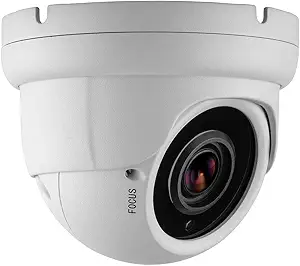
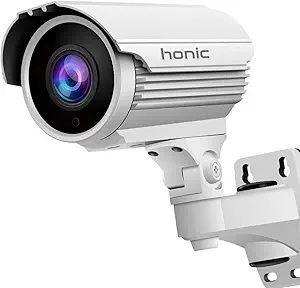
Arlo vs Honic: Overview
Comparing Arlo and Honic helps you determine which brand is best suited for your needs in Security Cameras. Both brands offer strong choices depending on your budget and key feature requirements.
Key Features & Comparison
Evaluate factors such as build quality, warranty, customer satisfaction, and total value before making your final purchase choice between Arlo and Honic.
Picture Quality
Arlo establishes a premium benchmark in imaging performance, offering camera models that scale up to 4K Ultra HD resolution with high-dynamic-range (HDR) processing. Its engineering excels in low-light and high-contrast environments; the integrated spotlights illuminate scenes effectively, enabling clear Color Night Vision that preserves vital evidentiary details like clothing colors and vehicle finishes. Wide optical fields of view—reaching up to 180 degrees with de-warping algorithms—ensure wide coverage without distracting fish-eye distortion. Sharp edge detection, fast auto-focus tracking, and finely tuned digital zoom capabilities allow users to isolate distant subjects without severely degrading pixel density.
Honic, catering more directly to cost-conscious residential and small commercial deployments, typically operates within standard 1080p Full HD to 2K resolution brackets. While Honic cameras deliver adequately sharp images for general perimeter monitoring during daylight, they lack the advanced HDR rendering found in Arlo's flagship hardware, occasionally causing blown-out highlights or crushed shadows in challenging direct sunlight. Its night vision implementation leans heavily on traditional infrared (IR) cut-filter illumination, which yields reliable monochrome video but forfeits color detail unless paired with external supplemental lighting. For baseline surveillance, Honic offers functional clarity, yet Arlo holds a decisive edge in optical engineering and high-fidelity detail capture.
Smart Features & Connectivity
Arlo delivers an exceptionally sophisticated software ecosystem driven by cloud-based artificial intelligence. The system's computer vision algorithms accurately differentiate between people, vehicles, animals, and package deliveries, drastically reducing false alert fatigue. In terms of integration, Arlo excels across major smart home environments, offering seamless interoperability with Amazon Alexa, Google Assistant, Apple HomeKit, and Samsung SmartThings. Arlo also provides versatile connectivity pathways, supporting dual-band Wi-Fi, direct-to-cloud connections, and proprietary base stations that enhance battery longevity and local RF signal strength throughout larger properties.
Honic relies on a simpler, more utilitarian smart feature framework that predominantly leverages hardware-based passive infrared (PIR) sensors or basic onboard video motion detection. While modern Honic models may include standard human-shape detection, the depth of AI filtering is noticeably less granular than Arlo's machine-learning suite, often leading to a higher rate of false-positive notifications during inclement weather or moving foliage. Connectivity is straightforward, generally limited to 2.4 GHz Wi-Fi networks without advanced mesh routing or HomeKit integration. Users looking for turnkey, plug-and-play simplicity will find Honic manageable, but those investing in tightly orchestrated, cross-platform smart home automation will find Arlo far more capable.
Privacy & Data Control
Arlo maintains an enterprise-grade posture regarding data governance, highlighted by its formalized 'Privacy Pledge' which guarantees that user video streams will not be monetized or accessed without explicit consent. Video feeds are protected both in transit and at rest using bank-grade AES 128/256-bit encryption along with mandatory two-factor authentication (2FA). However, Arlo's design architecture is heavily cloud-centric; although certain SmartHub configurations permit local USB or microSD storage, the interface is deliberately optimized around cloud transmission, which introduces a philosophical trade-off for users who prioritize completely air-gapped data retention.
Honic approaches data control from a fundamentally different angle, prioritizing decentralized, local-first storage solutions. Most Honic devices feature built-in microSD card slots and native support for open-source streaming protocols such as RTSP and ONVIF. This open-architecture paradigm grants privacy-focused users complete sovereignty over their footage, allowing them to route video streams directly into third-party Network Video Recorders (NVRs) or local NAS appliances without external network exposure. The compromise lies in management: securing a Honic system requires greater network-level expertise, as user-side firmware patching, port management, and password hygiene fall entirely on the end consumer.
Subscription Plans
Arlo's business model is tethered to its recurring subscription ecosystem, Arlo Secure. While the cameras can functionally broadcast live views and transmit basic motion pings without a monthly fee, essential high-tier capabilities—including cloud-stored event histories, 30-day video archives, custom activity zones, and advanced object recognition—are locked behind tiered subscription paywalls. This recurring operational expenditure can quickly compound for multi-camera installations, effectively transforming the hardware into an ongoing software-as-a-service investment that some budget-minded consumers may find prohibitive over a multi-year lifecycle.
Honic distinguishes itself by offering an exceptionally cost-effective alternative that virtually eliminates ongoing monthly fees. The vast majority of Honic's core functionalities—continuous 24/7 recording, motion alerts, and historical playback—are executed locally via onboard storage media or network appliances free of charge. While some Honic firmware variants may offer optional third-party cloud storage subscriptions through generic management apps, there is zero platform pressure to enroll. Consumers seeking a transparent, one-time hardware purchase with zero recurring cost burdens will find Honic substantially more economical than Arlo's subscription-dependent framework.