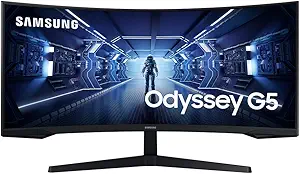




Samsung vs Sceptre: Overview
Comparing Samsung and Sceptre helps you determine which brand is best suited for your needs in Monitors. Both brands offer strong choices depending on your budget and key feature requirements.
Key Features & Comparison
Evaluate factors such as build quality, warranty, customer satisfaction, and total value before making your final purchase choice between Samsung and Sceptre.
Affordability
When analyzing price-to-performance ratios, Sceptre is widely recognized as an entry-level disruptor, consistently undercutting mainstream competitors across the board. The brand focuses heavily on cost minimization by stripping away non-essential luxury features, proprietary operating systems, and premium aesthetic materials. As a result, budget-conscious consumers, students, and entry-level PC gamers can purchase high-refresh-rate curved or ultrawide displays at price points that traditional tier-one brands simply do not target. Sceptre delivers functional hardware—often utilizing off-the-shelf panel assemblies—that democratizes basic gaming specs like 144Hz refresh rates and AMD FreeSync compatibility without imposing a financial strain.
Samsung, conversely, occupies a tiered market strategy that ranges from mid-tier mainstream offerings to ultra-premium display flagships like the Odyssey Neo and OLED series. While Samsung does manufacture baseline office displays, their entry-level units typically carry a brand-equity premium over similarly spec'd Sceptre alternatives. Consumers investing in Samsung are paying for proprietary panel innovations, advanced backlighting arrays, integrated smart TV operating systems, and broader color gamut certifications. While Samsung cannot compete with Sceptre purely on bottom-dollar pricing, it provides significantly higher ceiling value, offering cutting-edge display technology that justifies its elevated cost for professionals and serious gaming enthusiasts.
Customer Support & Warranty
Samsung's customer support and warranty network benefits from the expansive infrastructure of a global electronics conglomerate, though the user experience can vary widely. Samsung typically offers a standard one- to three-year warranty depending on the product tier and regional market, with extended coverage options available through Samsung Care+. The brand provides extensive technical documentation, robust firmware update pipelines, and diverse contact vectors including live chat, telephone lines, and authorized service centers for physical repairs. However, high-volume consumer traffic can sometimes result in bureaucratic delays, outsourced service handling, and friction when negotiating panel defect claims such as dead pixels or localized backlight anomalies.
Sceptre operates on a much leaner, direct-to-consumer domestic support model, typically backed by a standard one-year limited warranty. Because Sceptre is a smaller operation headquartered in California, reaching a technical representative can often feel more direct and less automated than navigating Samsung's complex enterprise ticketing systems. Nevertheless, Sceptre's support capabilities are inherently more restricted due to smaller service teams, fewer regional repair facilities, and limited digital self-service resources. While Sceptre resolves basic RMA requests efficiently, users rarely see post-launch firmware enhancements, and replacement units are often the only recourse for hardware malfunctions due to the absence of physical certified repair networks.
Picture Quality
Picture quality represents the most pronounced technological divergence between these two manufacturers. Samsung stands as an industry leader in panel fabrication and engineering, pioneering QD-OLED, Mini-LED (Quantum Matrix), and high-efficiency VA technologies. Samsung monitors frequently achieve benchmark-setting peak brightness, class-leading contrast ratios, deep black levels, and wide color gamuts encompassing 99% DCI-P3. Their advanced local dimming solutions effectively suppress blooming in HDR environments, while precision factory calibration ensures faithful color accuracy out of the box, making them exceptional candidates for high-fidelity content creation and cinematic HDR gaming.
Sceptre primarily sources third-party budget IPS and VA panels that satisfy fundamental computing requirements but exhibit technical compromises under scrutiny. While Sceptre displays deliver vibrant sRGB reproduction and competitive SDR contrast suitable for general productivity and casual gaming, they struggle with sophisticated visual demands. Backlight uniformity issues, noticeable edge-lit light bleed, and restrictive viewing angles are common, particularly on their curved models. Furthermore, HDR capability on Sceptre monitors is often merely software-emulated rather than hardware-driven, lacking the requisite nit brightness, wide color volume, and local dimming zones necessary to provide genuine dynamic range.
Build Quality & Durability
Samsung displays feature sophisticated mechanical engineering and industrial design, reflecting their higher price bracket. Chassis construction incorporates robust plastics, brushed metallic accents, and strategically engineered passive thermal dissipation systems. Flagship and upper-tier Samsung displays come equipped with highly adjustable, heavy-duty ergonomic stands featuring fluid tilt, swivel, pivot, and height articulation, alongside integrated cable management routes. While some high-curvature models (such as 1000R displays) have historically faced user reports concerning panel-housing separation or thermal creaking, Samsung's internal componentry, power delivery boards, and panel seal integrity generally adhere to rigorous high-end manufacturing tolerances.
Sceptre adopts a strictly utilitarian, cost-reduction approach to structural hardware, relying almost exclusively on lightweight, thin plastics and minimalist internal framing. While their monitors are functionally adequate and fit well in standard desktop setups, they often feel flimsy compared to Samsung's sturdier frames. The most glaring compromise is frequently found in the included stands, which are commonly static metal or plastic pedestals that offer limited tilt functionality without height adjustment or swivel capabilities. While Sceptre monitors support VESA mounting to mitigate stand limitations, the long-term durability of the internal capacitors and power boards does not match the resilience of Samsung's premium commercial-grade engineering.