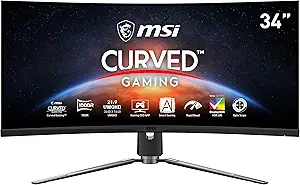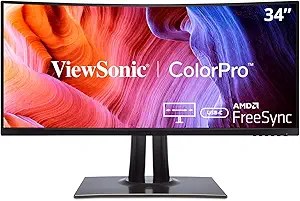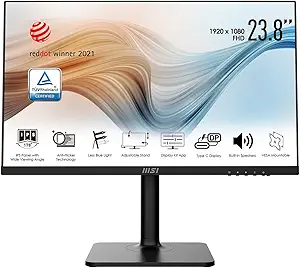





MSI vs ViewSonic: Overview & Brand Philosophy
In the contemporary display market, MSI (Micro-Star International) and ViewSonic represent two distinct design philosophies that cater to overlapping yet diverse consumer bases. MSI, historically recognized as a titan in PC gaming components and motherboards, aggressively expanded into the monitor space with an uncompromising gaming-first identity. The company emphasizes high refresh rates, cutting-edge panel technology—such as Rapid IPS and QD-OLED—and aggressive aesthetics tailored to competitive esports enthusiasts, streamers, and hardcore gamers. MSI designs its monitors to function as performance-enhancing peripherals, prioritizing low response times, frame-rate synchronization, and software-driven gaming suites.
Conversely, ViewSonic is a legacy display manufacturer with roots stretching back to the CRT era, traditionally known for reliability, business deployments, and professional color fidelity. While ViewSonic has diversified into gaming via its "Elite" and "VX" sub-brands, its core philosophy remains grounded in versatile, utilitarian engineering. ViewSonic prioritizes ergonomics, panel uniformity, eye-care certifications (such as TÜV Rheinland), and out-of-the-box color accuracy across its extensive ColorPro and Omni lineups. Rather than chasing every bleeding-edge trend, ViewSonic typically refines proven display technologies to deliver consistent, dependable hardware for creative professionals, educational institutions, and office environments.
Understanding these foundational trajectories is essential when comparing both brands. MSI is an iterative, fast-moving innovator driven by modern enthusiast demands, often bringing high-tier panel advancements to consumer price points faster than legacy competitors. ViewSonic, by contrast, relies on decades of color science, dependable warranty support, and enterprise-grade reliability, serving users who view a monitor as an investment in daily productivity, sustained color accuracy, or steady hybrid performance.
Key Differences & Technological Comparison
The technological divide between MSI and ViewSonic manifests across several key domains: panel selection, color processing, firmware ecosystems, and physical ergonomics.
Panel Technology and Motion Clarity: MSI has heavily invested in next-generation Quantum Dot enhancements and advanced OLED implementations (including third-generation QD-OLED panels). Their high-end offerings frequently push refresh rates to 240Hz, 360Hz, and beyond, with specialized firmware features like MSI OLED Care 2.0 to mitigate burn-in. ViewSonic primarily champions Fast-IPS, high-end IPS Black, and traditional Mini-LED arrays in their professional segments. For motion clarity, MSI generally yields superior gray-to-gray (GtG) transition speeds and minimal overshoot tuning through aggressive overdrive profiles, whereas ViewSonic focuses on motion blur reduction without inducing luminance degradation or artifacting.
Color Calibration and Creative Workflows: ViewSonic holds an advantage in dedicated color science with its ColorPro (VP) series. These displays frequently ship with factory calibration reports guaranteeing a Delta E < 2, integrated hardware calibration lookup tables (14-bit 3D LUTs), and direct compatibility with industry-standard colorimeters. MSI does provide high DCI-P3 and sRGB coverage through Quantum Dot layers in its Creator and high-end MAG/MPG lines, but their consumer-facing color software is often more basic, targeting vivid, saturated gamuts suited for entertainment rather than strict DCI-P3/Rec.709 color grading workflows.
Connectivity and Hardware Ecosystem: MSI displays are heavily integrated with peripheral software. Features like the Gaming Intelligence app allow users to control monitor settings directly via Windows rather than fiddling with on-screen display (OSD) joysticks. MSI also frequently incorporates full-featured USB-C hubs with Power Delivery (PD) ranging from 65W to 90W on creative and upper-tier gaming monitors. ViewSonic excels in ergonomic physical design and enterprise I/O; many ViewSonic professional models feature daisy-chaining via DisplayPort Out, integrated KVM switches, ambient light sensors, and even custom magnetic shading hoods designed to block reflections in color-critical environments.
Pros & Cons Comparison
MSI: Pros
- Aggressive adoption of advanced panels, including rapid refresh rate QD-OLED and Rapid IPS displays.
- Superior out-of-the-box motion handling, pixel response times, and esports-oriented overdrive modes.
- Comprehensive desktop software integration (Gaming Intelligence) for seamless OSD adjustments.
- High color saturation and wide color gamuts driven by mature Quantum Dot implementations.
MSI: Cons
- Gamer-centric aesthetics and aggressive chassis designs may not suit corporate or minimalist office spaces.
- Factory color accuracy in lower-to-mid tier models often favors oversaturation over chromatic neutrality.
- Ergonomic stands on budget and mid-tier models frequently lack swivel or height adjustment options.
ViewSonic: Pros
- Superb factory color accuracy, uniform luminance, and hardware calibration support on ColorPro models.
- Excellent ergonomic adjustability, enterprise build durability, and anti-glare panel coatings.
- Diverse product catalog covering budget-friendly office monitors to specialized color-grading monitors.
- Extensive eye-care features, including hardware low blue light and flicker-free certifications.
ViewSonic: Cons
- Slower rollout of premium display technologies like QD-OLED compared to enthusiast competitors.
- On-screen display (OSD) interfaces can feel dated, clunky, and unintuitive to navigate.
- High-end gaming options (ViewSonic Elite) carry premium pricing that sometimes struggles to compete with MSI's value-per-frame metrics.
Performance, Durability & Value Analysis
From an operational standpoint, both brands exhibit distinct performance profiles. MSI leads the price-to-performance ratio in the gaming segment. An MSI monitor typically offers higher refresh rates, lower motion blur, and faster response times at any given price point compared to an equivalent ViewSonic. MSI's thermal dissipation design on higher-end monitors—specifically custom graphene heat-sinks on OLED models—demonstrates proactive engineering to enhance long-term durability. However, long-term consumer feedback indicates that MSI's entry-level monitors can occasionally suffer from quality control inconsistencies, such as backlight bleed or dead pixels, necessitating vigilant inspection upon purchase.
ViewSonic demonstrates exceptional long-term stability and hardware longevity. Because the brand maintains a massive footprint in commercial, governmental, and academic sectors, its monitors are built to withstand rigorous daily use. ViewSonic's power supply units and internal driver boards are engineered for extended thermal cycles, often leading to fewer catastrophic panel failures over five-to-seven-year lifespans. Furthermore, ViewSonic's return policies and corporate warranties generally surpass MSI's in responsiveness and leniency, providing added peace of mind for professionals whose daily livelihoods depend on operational uptime.
Final Verdict: Which Brand Should You Choose?
Your ultimate decision between MSI and ViewSonic should be dictated by your primary use case, aesthetic preference, and tolerance for calibration management.
Choose MSI if: You are an esports enthusiast, competitive gamer, or media consumer looking for the highest possible refresh rates, deepest blacks, and most vibrant color rendition. MSI delivers peerless value in the high-performance space, especially if you are seeking a QD-OLED or ultra-fast Rapid IPS panel for PC or console gaming. If your desk already features gaming peripherals and you value fast panel response over factory-certified chromatic neutrality, MSI is the definitive winner.
Choose ViewSonic if: Your workflow revolves around graphic design, photography, video production, spreadsheet management, or multi-monitor corporate setups. ViewSonic's ColorPro series is uniquely suited for visual professionals who need absolute color fidelity, hardware calibration, and understated hardware design. Additionally, if you need a reliable, ergonomically adjustable everyday work monitor that protects against eye strain during 8-to-10-hour workdays, ViewSonic remains the more practical, dependable investment.
Affordability
When evaluating affordability in the monitor space, MSI and ViewSonic approach cost-efficiency through distinctly different engineering philosophies and target demographics. MSI heavily concentrates its value proposition within the gaming and performance sectors, particularly through its Optix and MAG series. Rather than stripping down performance to achieve a low price point, MSI focuses on maximizing specification density per dollar, offering high refresh rates (144Hz to 240Hz), low response times, and rapid VA or IPS panels at prices that frequently undercut tier-one gaming competitors. Consequently, the trade-offs on budget-tier MSI monitors rarely impact core gaming metrics; instead, cost-cutting measures manifest in utilitarian aesthetics, heavier use of ABS plastics, and minimalist stands that often lack ergonomic height or swivel adjustments, requiring consumers to leverage VESA mounts for optimal positioning.
Conversely, ViewSonic commands a unique advantage in absolute baseline affordability and broad-spectrum utility, excelling in office, educational, and general productivity environments. Through its long-standing VA and OMNI series, ViewSonic aggressively optimizes bill-of-materials costs to deliver functional, no-frills displays at prices often accessible to bulk enterprise buyers and budget-conscious home-office users. While ViewSonic’s low-cost gaming monitors do not consistently boast the cutting-edge panel technology found in MSI’s aggressive pricing tiers, their ultra-budget productivity monitors provide exceptional durability, reliable power delivery, and eye-care technologies like flicker-free backlighting and blue-light filters. The primary trade-off with entry-level ViewSonic monitors lies in conservative contrast ratios, lower peak brightness, and basic chassis engineering, trading premium visual fidelity for operational longevity and rock-bottom entry pricing.
Ultimately, the determination of superior affordability hinges on the end-user's technical requirements. MSI represents the superior "value-for-performance" investment, delivering high-speed gaming specs, wide color gamuts, and gamer-centric firmware features at price-to-performance ratios that traditional office brands struggle to match. ViewSonic, on the other hand, wins the battle of "pure affordability," maintaining a virtually unbeatable floor on standard 60Hz to 100Hz panels designed for daily administrative tasks. For consumers seeking maximum graphical and mechanical performance on a strict budget, MSI offers the richer feature set, whereas ViewSonic remains the undisputed benchmark for users seeking the lowest possible barrier to functional desktop real estate.
Customer Support & Warranty
When evaluating monitor reliability and post-purchase protection, ViewSonic maintains a distinct, enterprise-grade advantage over MSI in terms of warranty architecture and technical support. ViewSonic backs the vast majority of its consumer and professional monitors with an industry-standard three-year limited warranty covering parts, labor, and the LCD backlight. Crucially, ViewSonic enforces one of the most generous pixel policies in the display market, offering an "ISO 9241-307 Class 1" standard on select professional and enterprise models that guarantees zero bright-dot defects. Furthermore, their support ecosystem is enterprise-tailored, featuring dedicated domestic call centers, robust online ticketing, and, on enterprise-grade ColorPro and commercial lines, advanced exchange services that dispatch replacement units before defective hardware is returned. This infrastructure drastically minimizes downtime, presenting a low-risk proposition for creators and corporate environments.
MSI’s warranty framework, by contrast, is more fragmented and tailored primarily to the high-performance gaming ecosystem. While MSI typically offers three-year warranties on their premium display portfolio—and has notably integrated a standard three-year burn-in protection warranty for their newer QD-OLED gaming displays—their coverage terms fluctuate significantly across budget and regional lines. MSI's dead-pixel policies are comparatively conservative; their standard dead-pixel thresholds often require several dark or bright subpixels before qualifying for an RMA, and the process is strictly bound to standard repair turns rather than instantaneous cross-shipping. From an engineering and operational standpoint, MSI prioritizes proprietary software diagnostics within the monitor's OSD and Windows-based gaming centers over live, high-touch support agents, frequently steering users through automated web portals that can lead to frustrating turnaround times for RMA approval.
Ultimately, the trade-off centers on user priorities: cutting-edge gaming protection versus comprehensive operational dependability. MSI provides tailored, critical peace-of-mind for enthusiasts adopting volatile panel technologies like QD-OLED, engineering their warranty to alleviate burn-in anxiety, though consumers must contend with slower RMA cycles and outsourced regional service centers. ViewSonic, leveraging decades of commercial display manufacturing, delivers superior engineering consistency, institutional support quality, and accessible customer service lines with faster logistical resolutions. For enterprise users, color-critical professionals, and risk-averse consumers, ViewSonic’s standardized coverage and superior pixel defect guarantees offer a far safer, higher-value aftercare experience.
Picture Quality
When evaluating picture quality between MSI and ViewSonic, the comparison reflects two distinct engineering philosophies tailored to different primary use cases. MSI approaches visual fidelity through a performance-driven, gaming-centric lens. The brand heavily leverages modern Rapid IPS and high-contrast Quantum Dot (QD) VA and OLED panels to achieve exceptional motion clarity, wide color gamuts, and striking dynamic range. Monitors in MSI’s MAG and MPG lineups regularly achieve well over 95% DCI-P3 and Adobe RGB coverage, yielding punchy, highly saturated visuals. Furthermore, MSI’s aggressive push into QD-OLED technology delivers inky blacks, virtually infinite contrast ratios, and instantaneous pixel response times. However, this focus on dynamic vibrancy occasionally comes at the cost of out-of-the-box color accuracy; MSI displays often exhibit an oversaturated profile that requires manual calibration to rein in delta-E variances for professional work.
Conversely, ViewSonic prioritizes optical accuracy, panel uniformity, and natural color reproduction, largely rooted in its heritage in professional and enterprise computing. While ViewSonic offers capable gaming options under its Omni and Elite lines, the brand’s visual zenith is found in its ColorPro (VP) series. These displays undergo rigorous factory calibration to guarantee Delta E < 2 precision and encompass advanced hardware calibration support with internal Look-Up Tables (LUTs). ViewSonic’s panel engineering excels at luminance and chrominance uniformity, mitigating edge bleed and dirty screen effect better than most mainstream competitors. The trade-off is primarily found in the high-end contrast and consumer excitement spectrum: ViewSonic has been slower to adopt mass-market consumer OLED technologies compared to MSI, meaning standard ViewSonic IPS panels cannot replicate the true black levels, HDR impact, or hyper-responsive motion clarity that MSI’s top-tier gaming displays command.
Ultimately, the choice in picture quality hinges on whether your visual priority is dynamic impact or clinical fidelity. MSI holds the competitive edge for consumers seeking deep contrast, cinematic saturation, and cutting-edge panel technology like OLED, making it the superior choice for high-immersion gaming, HDR media consumption, and general entertainment. ViewSonic remains the benchmark for graphic designers, video editors, and precision-oriented creators who demand linear grayscale tracking, wide-angle color stability without artificial boosting, and absolute color fidelity straight out of the box.
Build Quality & Durability
When evaluating build quality and engineering philosophy, MSI and ViewSonic diverge significantly, reflecting their primary target demographics. MSI, deeply rooted in the enthusiast gaming sphere, engineers its monitors with aggressive styling and modern chassis designs. While MSI’s entry-level models feature predominantly plastic outer shells that can occasionally exhibit minor flex around the bezels, their mid-to-high-end offerings—specifically the MEG and MPG series—showcase exceptional structural integrity. These premium units incorporate metal-reinforced frames, heavy-duty stands with fluid articulation, and advanced heatsink designs or custom thermal management to prolong the operational lifespan of high-refresh-rate components. However, this gaming-forward approach often results in sprawling desk footprints and stylized venting that, while effective for heat dissipation, requires frequent maintenance to prevent dust accumulation within the internal circuitry.
Conversely, ViewSonic prioritizes industrial-grade utilitarian durability, a hallmark developed over decades of serving enterprise, educational, and professional creative markets. Across both its ColorPro line and commercial displays, ViewSonic relies on high-impact, rigid matte plastics and solid internal metal sub-chassis that resist wear, scuffs, and torsion better than MSI's glossier accents. ViewSonic stands are renowned for their exceptional counterbalanced engineering, offering robust height, pivot, and swivel adjustments that maintain tension over years of heavy daily use. While ViewSonic's gaming monitors (such as the Omni and Elite sub-brands) may lack the futuristic aesthetic flair of MSI, their chassis are generally built with more conservative, highly reliable thermal tolerances, leading to lower internal component stress and minimal plastic creaking during rapid temperature fluctuations.
Ultimately, the practical trade-offs regarding durability center on aesthetic ambition versus utilitarian longevity. MSI delivers superior thermal engineering in specialized, high-performance segments—crucial for mitigating burn-in and panel degradation on their cutting-edge QD-OLED models—but requires users to tolerate more complex mechanical assemblies and occasional frame flex in lower tiers. ViewSonic offers a more consistent baseline of ruggedness across its entire catalog, trading off sleek, zero-bezel illusionism for reinforced borders that protect panels against accidental edge impacts. For long-term physical deployment where resistance to daily physical wear and stable mechanical joints are paramount, ViewSonic holds the technical advantage, whereas MSI provides a more sophisticated, though slightly more fragile, integration of premium materials for performance enthusiasts.