LG vs Corsair: Overview
Comparing LG and Corsair helps you determine which brand is best suited for your needs in Monitors. Both brands offer strong choices depending on your budget and key feature requirements.
Key Features & Comparison
Evaluate factors such as build quality, warranty, customer satisfaction, and total value before making your final purchase choice between LG and Corsair.
Affordability
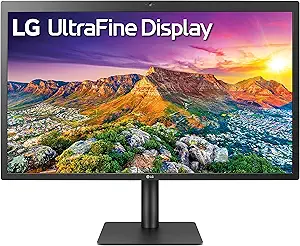
When analyzing affordability, LG holds a decisive advantage due to its expansive catalog that spans from entry-level budget displays to ultra-premium workstation panels. As an integrated manufacturer producing its own display hardware, LG leverages massive economies of scale to keep prices competitive at every tier. Budget-conscious consumers can readily find feature-rich IPS monitors under the LG UltraGear and UltraFine banners for well under $300, delivering high refresh rates, competent color accuracy, and reliable ergonomics without demanding an enthusiast premium. Even in the higher-end enthusiast market, LG's pricing remains aggressive relative to the broader display landscape, frequently offering promotional price drops and mid-cycle discounts on their popular OLED and Nano IPS configurations.
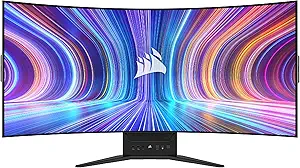
Corsair, by contrast, operates almost exclusively in the premium enthusiast segment, meaning it offers virtually no budget or entry-level options. The company entered the display market targeting hardcore gamers and content creators with high-spec devices such as the Xeneon series and the bendable Xeneon Flex, both of which command substantial upfront costs often exceeding $700 and reaching well beyond $1,500. Because Corsair procures its panels from third-party fabricators (frequently LG Display itself) and engineers bespoke chassis, specialized cooling solutions, and custom stands around them, its margins require a higher retail price floor. For buyers seeking raw performance per dollar spent, Corsair represents an aspirational luxury rather than an economical purchase, making LG the clear victor for diverse financial budgets.
Customer Support & Warranty
Warranty structures and customer support capabilities highlight divergent corporate models between an agile PC hardware brand and a massive multinational electronics conglomerate. Corsair shines remarkably well regarding post-purchase security, particularly in the OLED segment. Corsair provides a comprehensive 3-year warranty that explicitly covers burn-in and dead pixels—a critical assurance for buyers investing in fragile organic light-emitting diode technology. Furthermore, Corsair maintains an active, community-driven support ecosystem including direct engagement on forums, streamlined online RMA submission pipelines, and responsive technical help tailored specifically for desktop PC enthusiasts who value clear, personalized troubleshooting.
LG provides a robust but occasionally bureaucratic support network that varies significantly by product line and geographic region. Standard LG UltraGear monitors typically come with a 1- to 2-year limited warranty covering parts and labor, which falls somewhat short of Corsair's standard 3-year term. While LG has added burn-in protections to certain recent OLED panels to counter market pressure, warranty claims often require dealing with broad customer service centers rather than specialized gaming divisions. Resolving complex issues can involve lengthy RMA turnaround times, contracted third-party repair technicians, and strict return criteria, making LG’s support infrastructure feel more corporate and less bespoke than Corsair’s dedicated enthusiast service.
Picture Quality
Picture quality presents a fascinating technical comparison, primarily because Corsair monitors often source their actual underlying panel assemblies directly from LG Display. As the primary innovator in WOLED and Nano IPS production, LG possesses direct architectural control over its visual output. LG's UltraGear and UltraFine monitors deliver industry-leading color calibration out of the box, exceptionally low response times, and peerless black levels on its OLED models. Technologies like Nano IPS ensure a wide DCI-P3 color gamut coverage, while LG’s proprietary image processors allow for granular color profile manipulation, making their screens a top choice not just for competitive gamers seeking pure speed, but also for color-critical digital creators.
Corsair compensates for sourcing third-party panels by implementing distinct display engineering, aggressive factory overclocks, and unique thermal designs. In models like the Corsair Xeneon 27QHD240 OLED, Corsair combines LG’s pristine panel technology with dedicated anti-reflective coatings and advanced heat spreaders that enable prolonged peak brightness without thermal throttling. Additionally, Corsair’s firmware tunings are tailored directly for competitive gaming, delivering ultra-crisp motion clarity and zero frame skipping. However, while Corsair maximizes the capabilities of panels it purchases, LG ultimately leads the technological frontier by premiering the newest subpixel layouts, higher native contrast iterations, and proprietary backlighting systems before selling those technologies to external clients.
Build Quality & Durability
Corsair commands immense respect in build quality and mechanical durability, treating its monitors more like structural PC hardware components than consumer appliances. Corsair displays often feature substantial cast-aluminum desk stands, integrated cable management routing (RapidRoute), and integrated standard mounting threads for cameras, lights, and microphones via standard 1/4-inch elgato Multi Mount connections. The chassis are robust, resistant to flex, and built with dense polymers and metal framing. Even in unique form factors like the bendable Xeneon Flex, the physical hinges and manual mechanical handles are engineered for thousands of cycles, demonstrating a heavy-duty design ethos aimed at lasting through multiple PC build iterations.
LG exhibits a more conventional consumer electronics approach, blending durable internal hardware with relatively lightweight plastic exteriors. While LG's high-tier UltraGear monitors feature stable bases and smooth height, tilt, and pivot mechanisms, the structural materials rely heavily on molded polycarbonate, which can feel less premium and occasionally creak under stress compared to Corsair's metal-heavy construction. However, LG's long-term internal component longevity—such as internal power supply regulation, capacitor quality, and panel life—is exceptionally mature thanks to decades of high-volume manufacturing experience. Corsair wins the tactile, premium aesthetic and structural rigidity contest, while LG offers battle-tested reliability wrapped in a more utilitarian, plastic-forward frame.