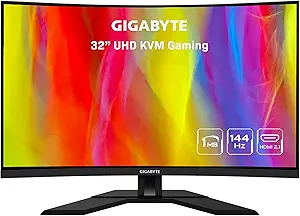







GigaByte vs Sceptre: Overview
Comparing GigaByte and Sceptre helps you determine which brand is best suited for your needs in Monitors. Both brands offer strong choices depending on your budget and key feature requirements.
Key Features & Comparison
Evaluate factors such as build quality, warranty, customer satisfaction, and total value before making your final purchase choice between GigaByte and Sceptre.
Affordability
When evaluating affordability, Sceptre stands out as an aggressive disruptor focused almost entirely on driving down entry-level pricing. The brand achieves market-leading cost efficiency by prioritizing high-demand basic metrics—such as high refresh rates and standard 1080p or 1440p resolutions—while shedding non-essential premium features. Sceptre displays routinely undercut nearly all competitors, making competitive gaming specs accessible to shoestring budgets and casual office users. However, this cutthroat pricing comes with noticeable trade-offs, particularly in backlighting uniformity, ergonomic adjustability, and advanced input/output options, meaning buyers are trading refinement for pure dollar-to-spec value.
GigaByte, by contrast, operates with an emphasis on price-to-performance within the mid-range and enthusiast tiers rather than absolute bottom-dollar budget pricing. While higher in price than Sceptre, GigaByte models offer significantly higher engineering value per dollar by bundling advanced capabilities like built-in KVM switches, robust on-screen display (OSD) controls, USB-C power delivery, and superior color-calibrated panels. For budget-conscious consumers who still demand high-end utility, color accuracy, and flexible connectivity, GigaByte represents a balanced long-term investment, whereas Sceptre remains the undisputed champion for immediate, minimal upfront capital expenditure.
Customer Support & Warranty
GigaByte offers a structured, professional-tier warranty infrastructure that reflects its standing as a major global computer hardware manufacturer. Most GigaByte monitors are backed by a competitive three-year limited warranty covering parts and labor, which provides significant peace of mind over prolonged operational lifecycles. Their support ecosystem benefits from an established RMA pipeline, online support ticketing, and a dedicated user forum community. Nevertheless, GigaByte's customer support can suffer from bureaucratic friction, with users sometimes reporting lengthy RMA turnaround times, rigid criteria for dead pixel replacements, and communication delays depending on regional service hubs.
Sceptre handles post-purchase support with a more streamlined but restrictive framework. Most Sceptre monitors include a standard one-year limited warranty, which falls short of the industry standard three-year coverage offered by GigaByte. While their customer service team based in North America is often praised for accessible telephone support and quick initial contact, the brand enforces strict warranty policies regarding shipping costs, repair claims, and dead pixel allowances. For consumers who prioritize prolonged multi-year protection against hardware failures, GigaByte provides a considerably safer safety net, while Sceptre's shorter warranty term remains a calculated risk for the sake of lower initial prices.
Picture Quality
Picture quality reveals a clear divide in technical execution and visual fidelity between the two brands. GigaByte heavily leverages advanced IPS and high-grade VA panels across its lineup, frequently delivering wide color gamuts covering over 90% DCI-P3, factory color calibration, and certified HDR support (such as VESA DisplayHDR 400). Motion clarity is a notable strength for GigaByte, as their monitors employ superior pixel overdrive tuning to minimize ghosting, inverse ghosting, and smearing, resulting in crisp imagery during rapid motion. Deep contrast, accurate color reproduction, and wide viewing angles make GigaByte monitors competent not just for high-refresh-rate gaming, but also for semi-professional color work and media consumption.
Sceptre predominantly utilizes cost-effective VA and entry-level IPS panels engineered to meet surface-level specifications like high refresh rates and standard contrast ratios. While their displays often deliver deep blacks thanks to VA technology, they frequently exhibit noticeable motion smearing and black level smearing during fast-paced sequences due to less sophisticated overdrive algorithms. Color reproduction out of the box is typically oversaturated or cool-shifted, requiring manual calibration by the user to achieve acceptable balance, and maximum brightness levels rarely exceed the threshold needed for true HDR performance. Sceptre delivers adequate, vibrant visuals for casual gaming and daily tasks, but GigaByte vastly outperforms it in visual fidelity, color precision, and motion handling.
Build Quality & Durability
In terms of structural integrity and materials, GigaByte demonstrates noticeably higher manufacturing standards. Their chassis designs use high-grade matte plastics, rigid metal-reinforced internal frames, and substantial desktop footprints that resist wobbling. A primary engineering advantage of GigaByte is its ergonomic stand design, which routinely offers full height, tilt, and swivel adjustments without necessitating immediate aftermarket VESA mounts. The thermal design inside GigaByte displays is also built to handle sustained high-refresh operation, contributing to better long-term reliability of internal components like the power supply board and LED backlights.
Sceptre prioritizes cost reductions in its external engineering, which is reflected in its lighter, more utilitarian construction. Sceptre monitors typically feature thin plastic housings that can creak under stress and rely on minimalist stands that offer only basic tilt adjustment, frequently omitting height or swivel articulation entirely. The reliance on external power bricks is common, which simplifies the chassis but adds cable clutter. While Sceptre monitors are durable enough for static desktop environments that remain undisturbed, GigaByte exhibits far superior industrial design, better heat dissipation, and an overall premium tactile quality that promises greater durability under daily heavy use.