




Asus vs Sceptre: Overview
Comparing Asus and Sceptre helps you determine which brand is best suited for your needs in Monitors. Both brands offer strong choices depending on your budget and key feature requirements.
Key Features & Comparison
Evaluate factors such as build quality, warranty, customer satisfaction, and total value before making your final purchase choice between Asus and Sceptre.
Affordability
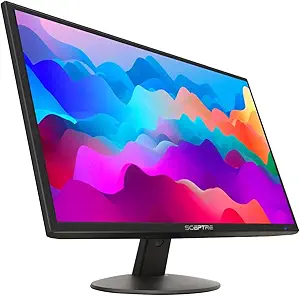
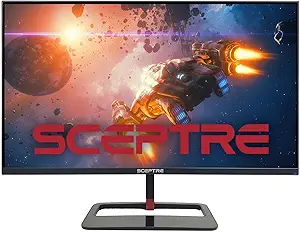
When evaluating price-to-performance ratios, Sceptre stands as one of the most aggressive budget-oriented brands in the display market. The company operates by minimizing overhead, omitting premium ergonomic adjustments, and sourcing cost-effective panels to deliver essential specifications—such as 1080p or 1440p resolutions with elevated refresh rates—at price points that frequently undercut the wider industry. For students, entry-level gamers, and general office users operating on strict financial constraints, Sceptre provides an accessible entry point to modern display standards, often offering high refresh rate curved monitors for the price of standard 60Hz panels from tier-one competitors.
Asus covers a far broader pricing spectrum, maintaining a presence in the entry-level bracket through its Eye Care and basic TUF Gaming lines while scaling up to exorbitant price tiers with its premium Republic of Gamers (ROG) and ProArt lineups. While Asus displays often command a notable price premium over equivalent Sceptre models, this financial difference generally translates into tangible engineering upgrades. Consumers purchasing Asus monitors pay for proprietary technologies like ELMB (Extreme Low Motion Blur), superior scalar processing, broader color gamut coverage, and comprehensive ergonomic stands. Consequently, while Sceptre easily claims the victory in pure upfront affordability, Asus presents stronger long-term value for users requiring specialized visual features and versatile hardware.
Customer Support & Warranty
Warranty coverage and customer support infrastructure expose a stark divergence in operational scale between the two manufacturers. Sceptre offers standard one-year limited warranties on the majority of its consumer displays, reflecting its bare-bones cost model. While the company provides domestic phone and email support, users frequently report a relatively rudimentary RMA (Return Merchandise Authorization) process. Sceptre's dead pixel policies are standard but firm, sometimes requiring a notable cluster of defective pixels before approving an exchange, and consumers often bear the initial shipping costs when sending units in for service.
Conversely, Asus provides a much more robust enterprise-level support structure, typically backing its retail monitors with a three-year limited warranty that covers parts and backlights. For creative professionals, the ProArt series frequently includes specialized services like the Asus Advanced Replacement program, minimizing downtime by cross-shipping replacement hardware. Furthermore, Asus adheres to stricter Zero Bright Dot (ZBD) guarantees on high-end models. While Asus has historically faced occasional criticism regarding customer service bureaucracy and communication delays during peak RMA cycles, its longer warranty duration, global infrastructure, and formal defect policies offer significantly better consumer protection than Sceptre's minimal coverage.
Picture Quality
Picture quality highlights the fundamental difference between high-volume budget tuning and precision optical engineering. Sceptre displays predominantly leverage VA (Vertical Alignment) panels sourced to meet strict price ceilings, which natively provide strong contrast ratios and deep black levels advantageous for dark-room viewing. However, these panels frequently suffer from noticeable black-smearing in fast-motion scenes, narrow optimal viewing angles, and mediocre out-of-the-box factory calibration. Sceptre's color accuracy often exhibits saturated profiles or gamma irregularities that require extensive manual fine-tuning, and their peak brightness levels are generally modest, resulting in lackluster HDR performance that is often HDR-compatible in processing only rather than physical luminance.
Asus demonstrates superior picture performance across virtually all segments by employing higher-tier IPS, Fast-IPS, and OLED panels paired with advanced hardware-level color management. The Asus ProArt series is calibrated at the factory to achieve exceptional Delta E values (often under 2), ensuring rigorous color fidelity across sRGB, Adobe RGB, and DCI-P3 color spaces for photo and video editing. In gaming, Asus integrates sophisticated overdrive algorithms that minimize ghosting and halo artifacts without introducing aggressive inverse overshoot. Combined with true multi-zone local dimming or per-pixel OLED illumination on high-tier models, Asus provides a dynamic, color-accurate, and motion-stable viewing experience that significantly outperforms Sceptre's cost-constrained optical implementations.
Build Quality & Durability
Structural integrity and chassis construction reveal substantial engineering differences between these brands. Sceptre cuts costs primarily through mechanical design choices, utilizing lightweight, all-plastic chassis that can feel hollow and exhibit noticeable flexing under pressure. Sceptre stands are notorious for their lack of adjustability; most entry-level models offer only basic forward and backward tilt, completely lacking height, swivel, or pivot capabilities. Furthermore, the internal power supplies and passive thermal cooling configurations in Sceptre displays are engineered strictly to meet minimum tolerance thresholds, which can occasionally lead to premature component failure or capacitor wear over years of sustained, heavy use.
In contrast, Asus engineering prioritizes durability, physical ergonomics, and thermal dissipation. Even the mid-range TUF Gaming displays feature heavy, steel-reinforced bases and stands that provide comprehensive four-way ergonomic articulation (height, tilt, swivel, and 90-degree pivot), promoting proper posture and workspace flexibility. The materials used in Asus chassis feel dense, with textured matte plastics that resist scratches and premium brushed aluminum accents on flagship models. Internally, Asus designs custom heatsinks and ventilation pathways to manage heat buildup—a critical factor in extending the lifespan of the display controller and LED backlight arrays—making Asus monitors far more durable investments capable of surviving extensive daily workloads.