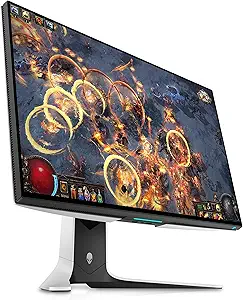





Alienware vs Sceptre: Overview
Comparing Alienware and Sceptre helps you determine which brand is best suited for your needs in Monitors. Both brands offer strong choices depending on your budget and key feature requirements.
Key Features & Comparison
Evaluate factors such as build quality, warranty, customer satisfaction, and total value before making your final purchase choice between Alienware and Sceptre.
Affordability
Sceptre has built its entire brand identity around aggressive affordability, dominating the budget sector of the monitor market. The company minimizes costs by utilizing mature panel technologies—predominantly budget-tier VA and basic IPS panels—and eliminating non-essential luxuries such as ergonomic stands, complex backlighting arrays, and internal USB hubs. Consequently, Sceptre offers high-refresh-rate displays (144Hz to 240Hz) and ultra-wide form factors at a fraction of the cost of mainstream competitors. For cash-strapped students, entry-level esports players, or office workers seeking extra screen real estate without a heavy investment, Sceptre delivers functional specs that lower the barrier to entry remarkably well.
In stark contrast, Alienware operates entirely within the premium and luxury tiers, catering to enthusiasts with substantially higher budgets. An Alienware monitor can easily cost three to five times more than a comparably sized Sceptre display. However, Alienware justifies this high expenditure through cutting-edge engineering, featuring bleeding-edge QD-OLED panels, bespoke industrial designs, highly functional connectivity suites, and advanced G-Sync modules. While Sceptre clearly wins the raw price-to-performance equation for budget-conscious consumers, Alienware does not compete on price; it targets those willing to pay a premium for technological supremacy and flagship performance.
Customer Support & Warranty
Alienware, bolstered by the global enterprise infrastructure of its parent company Dell, provides one of the most comprehensive and reliable customer service experiences in the consumer electronics industry. Alienware monitors generally come standard with a robust 3-year Advanced Exchange Service, which includes doorstep panel replacements before you even have to return the defective unit. Crucially, their OLED lineups include specialized burn-in coverage, mitigating the most significant anxiety associated with organic light-emitting diode technology. Their support portal offers seamless driver downloads, comprehensive diagnostic tools, and 24/7 technical assistance across phone and live chat.
Sceptre’s customer service and post-purchase support are considerably more Spartan, reflecting its low-margin business model. The company offers standard limited warranties—typically lasting one to two years depending on the model—but claims handling can be an exercise in patience. Users often report slower response times, basic technical troubleshooting, and a requirement to ship units back at the customer's expense for repairs or evaluations. While Sceptre honors legitimate defects and RMA requests, it simply lacks the global logistical footprint, proactive replacements, and burn-in protections that make Alienware’s support ecosystem an industry benchmark.
Picture Quality
Picture quality represents an astronomical divergence between the two brands, demarcating entry-level compromise from top-tier visual excellence. Sceptre displays predominantly leverage conventional edge-lit backlights with budget VA and IPS panels. While these panels can achieve acceptable contrast ratios and serviceable sRGB color coverage suitable for general productivity and casual gaming, they routinely struggle with color accuracy out of the box, black level uniformity, and HDR performance. HDR on Sceptre models is often "HDR ready" in software only, lacking the local dimming zones and peak brightness necessary to create impactful dynamic range, frequently leading to washed-out highlights and clipped shadows.
Alienware monitors, conversely, are engineered for visual fidelity, color precision, and exceptional dynamic contrast. Their flagship models feature state-of-the-art Quantum Dot OLED (QD-OLED) panels that boast infinite contrast ratios, true inky blacks with zero haloing, and factory-calibrated DCI-P3 color gamuts reaching near 99% coverage. The pixel response times on Alienware's OLEDs are virtually instantaneous (sub-0.1ms), eliminating the ghosting and black smearing commonly visible on Sceptre’s budget high-refresh VA panels. For content creators, cinephiles, and discerning gamers who demand stunning HDR reproduction and absolute color fidelity, Alienware operates in an entirely different league.
Build Quality & Durability
Sceptre achieves its aggressive price points by making noticeable concessions in structural materials, industrial design, and chassis refinement. Sceptre monitors feature lightweight, hollow-feeling plastic enclosures, basic trim pieces, and notably minimalist stands that frequently offer only tilt adjustments while omitting height, swivel, or pivot capabilities. The internal cooling solutions are utilitarian, and external power bricks are common to keep the monitor casing thin and cheap. While Sceptre monitors are generally durable enough to sit undisturbed on a desk for years without mechanical failure, they feel inherently delicate and lack premium aesthetic appeal.
Alienware treats industrial design as a core pillar of its brand identity, demonstrated through its signature "Legend" design language. Their monitors are constructed from high-density, rigid plastics with reinforced metal internal frames, weighted ergonomic stands offering full articulation, and integrated cable routing channels. Furthermore, Alienware integrates active cooling systems—including quiet fans and dedicated thermal heatsinks—to disperse heat generated by high-performance panels, significantly improving long-term component longevity and panel health. The buttons, joysticks, RGB lighting zones, and I/O ports all exhibit a level of refinement and tactile durability that far exceeds Sceptre's functional minimalism.