












No matchup in the massage chair world represents a bigger clash of philosophies than Osaki vs Fujiiryoki. On one side, you have Osaki, the most recognized name in the U.S. massage chair market—an aggressive, feature-packed brand that dominates online listings, warehouse showrooms, and big-box retailers alike. With dozens of models spanning from entry-level recliners to ultra-luxurious 4D massage pods, Osaki’s strategy is clear: offer every feature you could want, at nearly every price point imaginable.
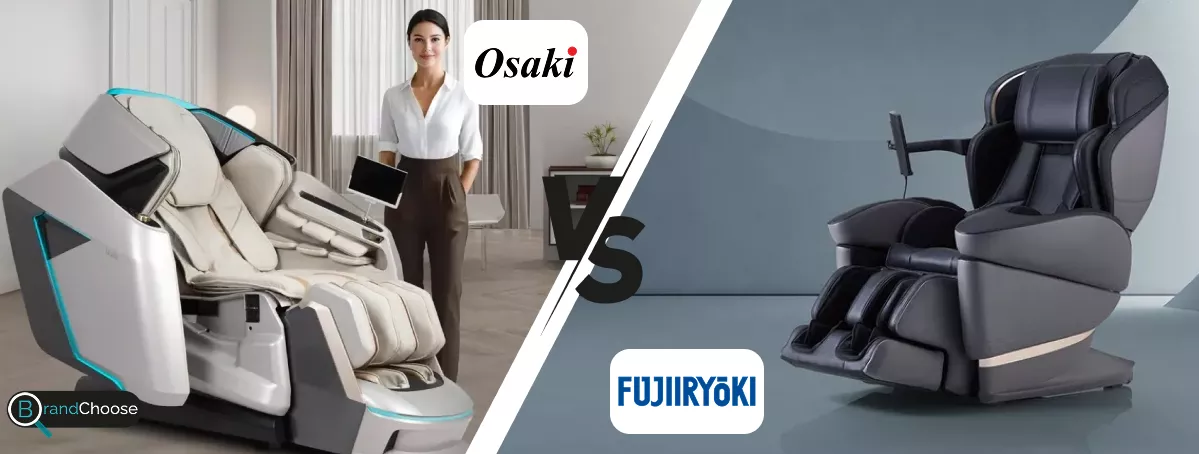
On the other side stands Fujiiryoki—not just a massage chair brand, but the inventor of the category itself. Based in Japan and operating since 1954, Fujiiryoki is revered for its clinical-grade therapy systems, meticulous build quality, and medical wellness integrations that go far beyond what most Western brands even attempt. While their catalog is smaller and more expensive, their focus on AI-powered real-time adjustment, muscle stiffness detection, and true shiatsu replication makes their chairs some of the most respected in the industry.
If Osaki is the Tesla of massage chairs—bold, modern, and everywhere—then Fujiiryoki is the Lexus of long-distance luxury: quieter, rarer, and obsessed with subtle perfection. But which brand actually delivers the better experience when you look at price, massage depth, comfort, and tech? To answer that, we spent time comparing their most relevant current models in entry, mid, and flagship tiers. Below, you’ll find a tier-aligned breakdown, followed by a nine-aspect comparison that goes deep into performance, quality, coverage, and real-world user experience.
Customer Support & Warranty
Service quality can make or break the long-term ownership experience—especially when shipping, installation, or parts are involved.
🟦 Osaki offers a 1-year in-home labor warranty, 2–3 years parts, and 5 years frame on most models. Service is U.S.-based, and with such a large dealer network, parts are readily available. However, service experiences can vary depending on where you buy the chair—authorized dealers usually provide smoother claims than third-party retailers. In general, Osaki gets good marks for parts availability and response speed.
🟪 Fujiiryoki chairs in the U.S. are distributed by Synca Wellness, which provides a 3-year parts and labor warranty, with a 5-year extension available for premium models. The chairs are registered by serial, ensuring traceability and qualified service partners. Because Fujiiryoki only sells a few models at a time, service agents are deeply familiar with each one. The downside is slower parts turnaround, especially for less common fixes.
✅ Verdict: Osaki delivers broader service reach and better logistics, while Fujiiryoki wins on specialist-level care and higher base warranty.
Massage Variety
Massage diversity is about more than just the number of auto programs — it’s about technique depth, roller fluidity, and how well a chair transitions between modes and pressure zones.
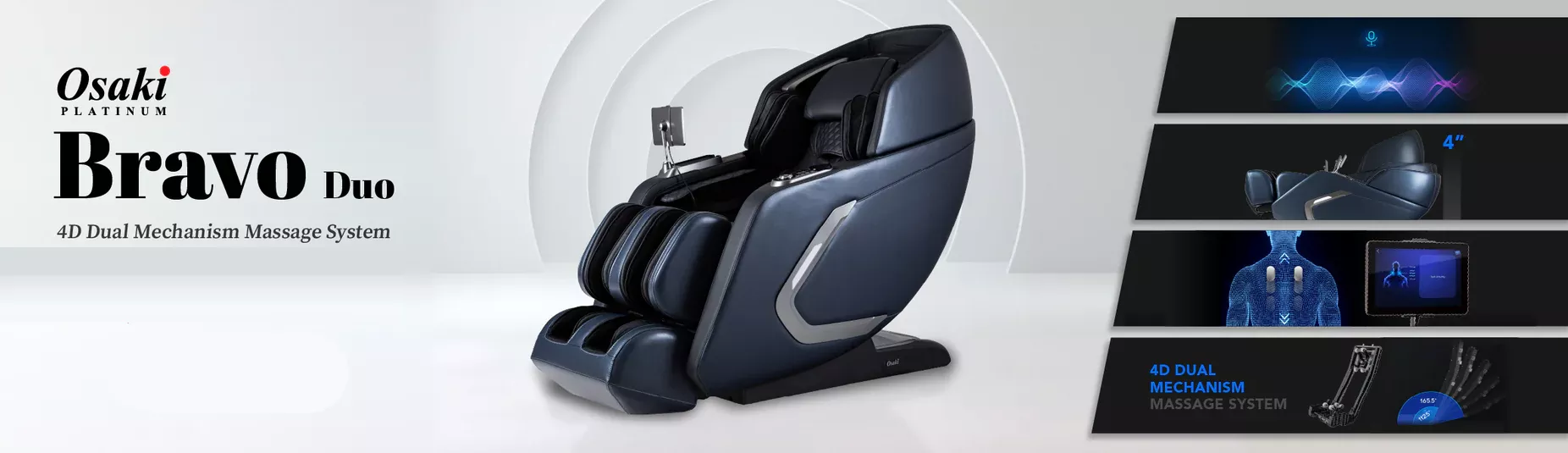
🟦 Osaki, true to its reputation, offers no shortage of options. The OS-Champ includes basic rolling, kneading, and shiatsu with a handful of full-body routines that target the back and shoulders. The Admiral II, a fan favorite in the $4–6k bracket, ramps things up with 15 auto programs and a 3-D roller system, letting users explore everything from “Recovery Mode” to “Office Stretch.” At the high end, the Maestro LE 2.0 delivers heated 4-D rollers—allowing real-time adjustments to speed, depth, and rhythm—along with refined presets like Sports Relief and Gentle Relaxation. Every tier supports a decent set of manual modes for tinkerers.
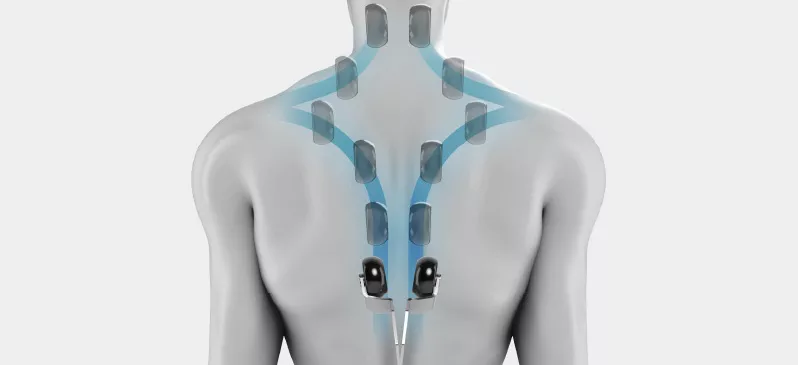
🟪 Fujiiryoki, however, takes a different approach: fewer gimmicks, more authenticity. The MR-3000 Hisho provides an impressive variety of roller styles that emulate actual shiatsu and deep-knead therapy—rare in sub-$4,000 chairs. The J6900 KAGRA steps things up with a more refined 4-D mechanism, intelligent roller pacing, and modes that simulate finger-pressure transitions with extraordinary realism. But the flagship JP-3000 is where things get elite: 17 massage techniques, many rooted in Eastern therapeutic practice, and 33 pre-programmed sessions—including “Fatigue Release,” “Neck Recovery,” and “Pelvic Rebalance.” These routines don’t just target areas—they follow therapeutic flows developed in clinical settings.
✅ Verdict: Fujiiryoki wins on massage authenticity and program depth, especially at the flagship level. Osaki still dominates on broad, user-friendly variety with more room for customization.
Body Coverage & Adjustability
From head to toe, a chair’s ability to adapt its massage coverage to your body’s unique shape is a major differentiator.
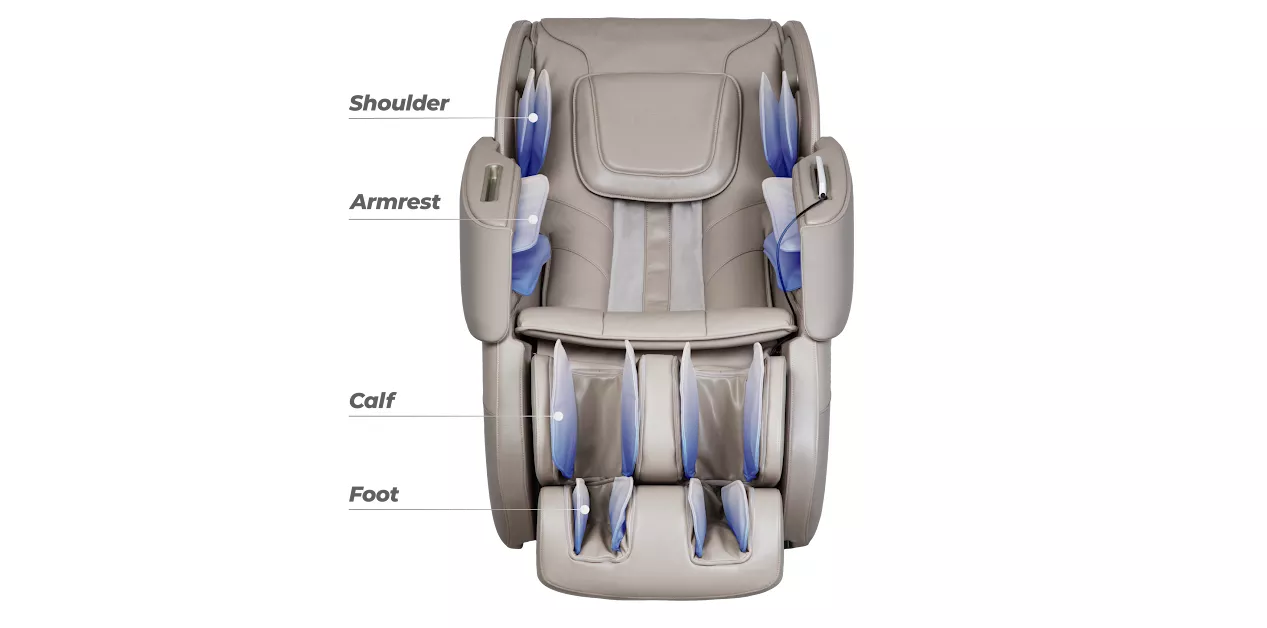
🟦 Osaki’s chairs hit nearly every major coverage metric. Even the OS-Champ uses a decent 47" SL-track that reaches from neck to mid-thigh. The Admiral II upgrades to a longer roller path (~52"), plus independent foot rollers, 38 airbags, and user-controlled zone intensity for shoulders, arms, hips, and calves. The Maestro LE 2.0 pulls out all the stops: heated 4-D SL rollers, motorized foot and leg extension, dual foot rollers, and full-body scanning that adjusts roller height, shoulder width, and compression pattern. You can also manually tune roller zone, width, and strength.
🟪 Fujiiryoki’s coverage philosophy is very different. The MR-3000 uses a slightly shorter L-track (~42–45"), but executes with pinpoint precision. The J6900 KAGRA features a smart dual-lift mechanism, allowing roller speed and depth to shift along different parts of the spine based on muscle resistance. Its 21 airbags are larger and more strategically placed, covering hips, lumbar, and shoulders rather than simply inflating around the arms or legs. The JP-3000 uses posture-sensing AI to map muscle tightness, adjust angle pressure, and even alter the recline arc based on user height and back stiffness. You don’t “set” much yourself—the chair does it for you.
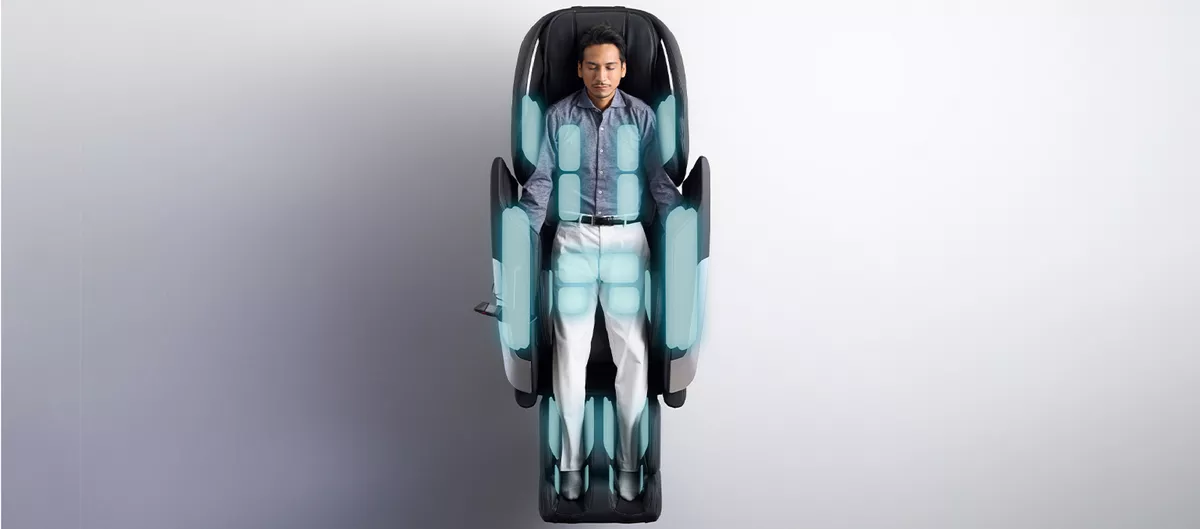
✅ Verdict: Osaki wins for manual adjustability and full-body extremity coverage. Fujiiryoki provides adaptive, zone-smart targeting, favoring nuanced accuracy over total-body spread.
Comfort & Ergonomics
This is where materials, recline engineering, user posture, and long-session endurance all collide to either make or break the experience.
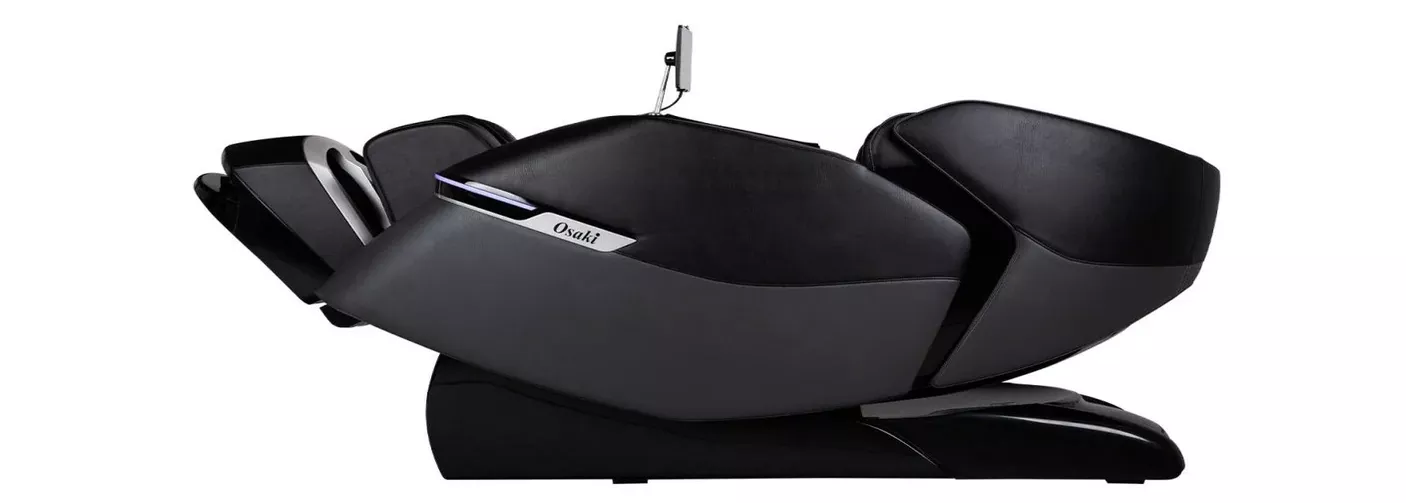
🟦 Osaki’s chairs are generally soft, roomy, and forgiving. The OS-Champ caters to users under 6′1″ with a Zero Gravity recline and basic lumbar heating. The Admiral II improves seat depth, hip width, and lumbar curvature, offering three recline stages and a well-padded shell that suits a wide user base. At the high end, the Maestro LE 2.0 refines all of these — adding plush headrest zones, shoulder-sensing roller adjustment, and a deeply cradled seating angle that stays comfortable during even hour-long sessions. There’s a softness to the Osaki ecosystem that invites daily relaxation.
🟪 Fujiiryoki takes a more corrective stance. The MR-3000 is supportive, firm, and structurally disciplined — designed to encourage upright spine alignment while still relaxing the muscles. The J6900 KAGRA brings in dual-layer padding, contoured shoulder wings, and auto-adjusting calf and foot modules. The JP-3000 goes even further with active pelvic support, body tilt detection, and dynamic backrest micro-shifts—creating the feel of a therapist adjusting posture in real time. Comfort here isn’t about pillowy softness—it’s about long-term joint and back health.
✅ Verdict: Osaki leans toward casual comfort and plushness, ideal for leisure use. Fujiiryoki offers structured, postural comfort better suited to health-oriented or therapeutic users.
Quick Buyer Match Guide
🟦🟦 Choose Osaki if you
• Looking for advanced features at lower prices.
• Interested in voice control, Bluetooth, and modern tech.
• Needing more user-friendly chairs for multiple household members.
• Shopping across multiple price tiers—from budget to flagship.
• Prefer visual interfaces and customization.
🟪🟪 Choose Fujiiryoki if you
• Seeking deeply therapeutic, medical-grade massage.
• Prioritizing build quality and 10+ year durability.
• Looking for AI-powered routines that adapt to your body.
• Wanting authentic Japanese shiatsu-style treatment.
• Comfortable investing in a smaller, elite selection.
Conclusion
This matchup between Osaki and Fujiiryoki underscores a broader choice: breadth vs. depth.
Osaki is built for buyers who want tech, variety, and value across the board. Whether you’re hunting for an affordable starter chair or an elite 4-D heated beast, Osaki gives you options—many of them brimming with smart features and full-body coverage. It’s the brand for multitaskers, families, or anyone who loves fiddling with presets and custom profiles.
Fujiiryoki, in contrast, is for the massage purist. Their chairs feel less like gadgets and more like health instruments, focused on deliberate therapeutic effect, perfect posture, and long-haul dependability. They’re ideal for users who don’t want a touchscreen—they want relief that’s felt in the spine, not just the UI.
Both are top-tier in their own way—but they’ll appeal to very different kinds of buyers.



.png)