








Few massage-chair names pop up in online searches as often as Osaki and Kahuna, yet their approaches couldn’t be farther apart. Osaki, run from Carrollton TX, floods the U.S. market with more than sixty SKUs—everything from the entry OS-Champ to the heated-4D Maestro LE 2.0—making it the go-to brand for shoppers who refuse to compromise on feature lists. Kahuna, by contrast, earned its reputation on Amazon: its sub-$2 k LM-6800S became a bestseller and paved the way for sturdier mid-tier models such as the SM-9300 and premium HM-Kappa. Osaki bets on broad catalog choice and luxury extras; Kahuna banks on aggressive pricing, long Hyper SL tracks, and a surprising dose of stretch therapy. We spent multiple sessions rotating between Osaki’s OS-Champ, OS-Pro Admiral II, and Maestro LE 2.0, and Kahuna’s LM-6800S, SM-9300, and HM-Kappa to see which brand delivers the bigger daily win in the first four ownership aspects.
Customer Support & Warranty
After-sale service is the safety net for any four-figure purchase.
🟦 Osaki: Warranty tiers run 3-year frame, 2-year parts, 1-year labor (flagships can extend). Support speed depends on dealer; warehouse parts stock is strong, but third-party tech crews vary. BBB shows recurring but resolved cases about scheduling delays.

🟪 Kahuna: Standard coverage: 3-year frame, 2-year parts, 1-year labor, with optional upgrades. Not BBB-accredited, but complaints are few and focused on pandemic-era shipment slowdowns. Direct chats with Kahuna’s California office usually resolve part requests in under a week.
✅ Verdict: Service quality is comparable; Osaki has more network breadth, Kahuna slightly quicker email replies for parts.
Massage Variety
The soul of any chair is its roller toolset—how many techniques it offers, how deeply they penetrate, and whether the motions feel polished or gimmicky.
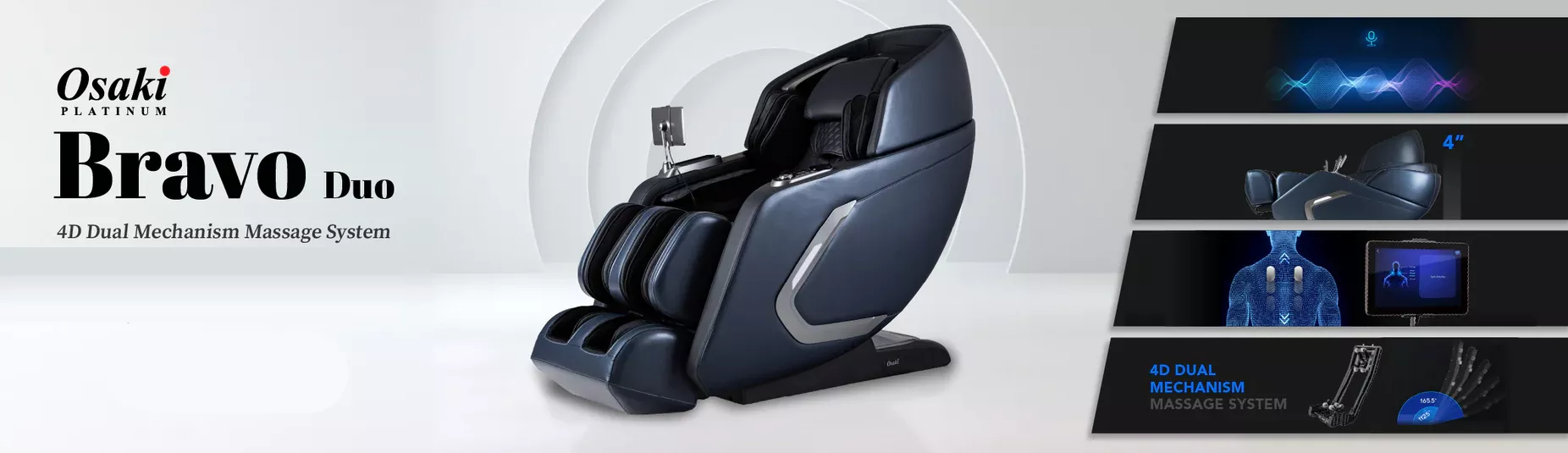
🟦 Osaki: Even the bargain OS-Champ brings five basic programs and dual-function rollers (knead + tap). Step up to the 3-D Admiral II and you unlock fifteen modes, from “Office Recovery” to “Thai Stretch,” all modulated by in-and-out depth control. The flagship Maestro LE 2.0 adds heated 4-D rollers—speed ramps mid-stroke and warmth soften muscle tissue before pressure hits. Stretch sessions lift your pelvis, then extend hamstrings in a smooth, gym-trainer cadence; intensity goes from featherlight to convincingly deep-tissue.
🟪 Kahuna: Variety skews toward stretch-centric routines. The LM-6800S relies on a 2-D SL track but packs triple-Zero-G angles and six auto modes, two of them full-body stretches that tilt the lumbar and pull legs for decompression. The mid-range SM-9300 upgrades to 3-D and 11 modes, with a standout “Yoga Body Stretch” beloved by runners. Kahuna’s top HM-Kappa introduces 4-D rhythm (no heat) across 12 presets, plus calf-knee kneading and synchronized acupressure airbags.

✅ Verdict: Osaki wins for sheer technique menu and the realism of heated 4-D; Kahuna counters with standout stretch sequences but lacks the fine speed modulation Osaki provides.
Body Coverage & Adjustability
Coverage equals how far rollers travel and how cleverly airbags fill the gaps.
🟦 Osaki: The Maestro LE runs a 53″ SL track, sliding seamlessly from neck to upper hamstrings. Thirty-plus airbags grip shoulders, arms, waist, and calves; foot rollers employ three intensity levels and reflexology ridges. Auto leg extension moves 8″ to fit users up to about 6′5″. Body scan maps shoulder height and spine length—accurate for most testers, though very petite users still needed manual tweaks.
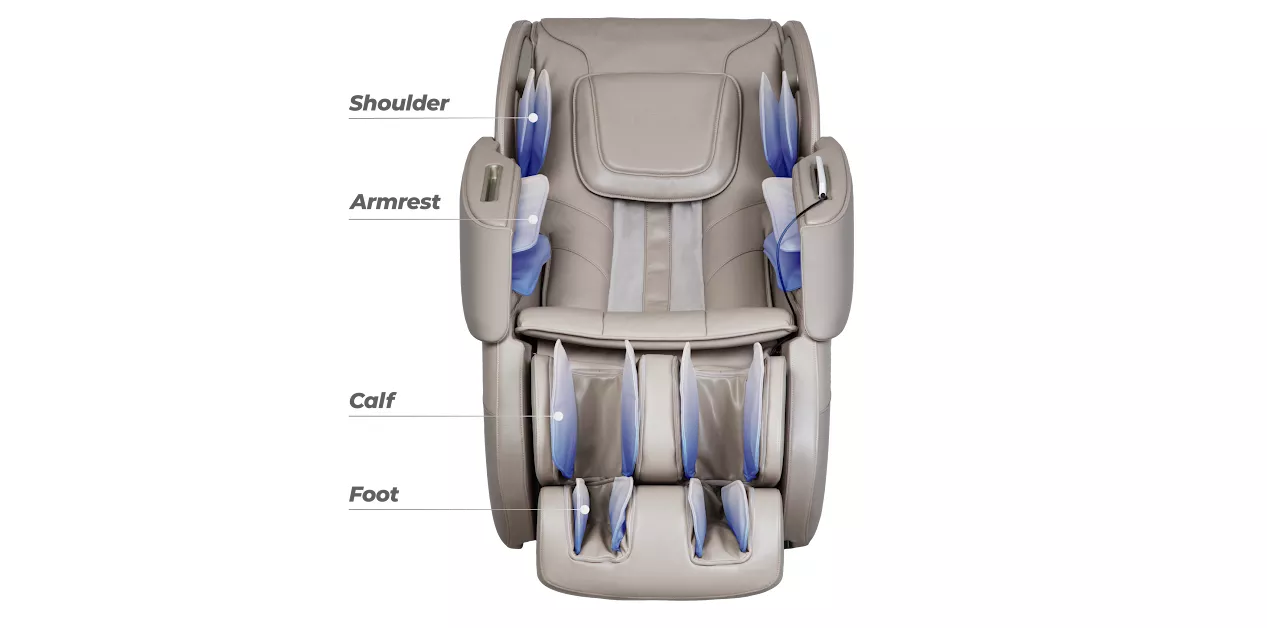
🟪 Kahuna: The Hyper SL track in the SM-9300 and HM-Kappa reaches 51″, nearly matching Osaki’s coverage. Airbag count peaks at an impressive 96 in HM-Kappa, with sequential inflation that massages calves in a wave rather than a squeeze. Leg extension also hits 8″, and calf modules knead as well as compress—rare under $9 k. Shoulder scanners do a reasonable job but sometimes mis-place roller start for users under 5′2″.
✅ Verdict: Osaki’s roller path is slightly longer and smoother; Kahuna fires back with higher airbag density and calf-wave massage. For roller purists, Osaki leads; for compression fans, Kahuna has the edge.
Comfort & Ergonomics
Seat depth, cushion density, and recline logic dictate whether you’ll actually finish a 30-minute program—or bail halfway with numb legs.
🟦 Osaki: Admiral II and Maestro LE boast generous memory-foam seating and three-stage Zero-Gravity, landing your knees just above heart level to unload the spine. Shoulder wings flare wide for bigger torsos, and foot pockets use plush fabric liners. In the OS-Champ, cushions feel thinner, and taller testers (6′2″+) noticed their shoulders sat slightly above the roller start point, requiring manual offset.
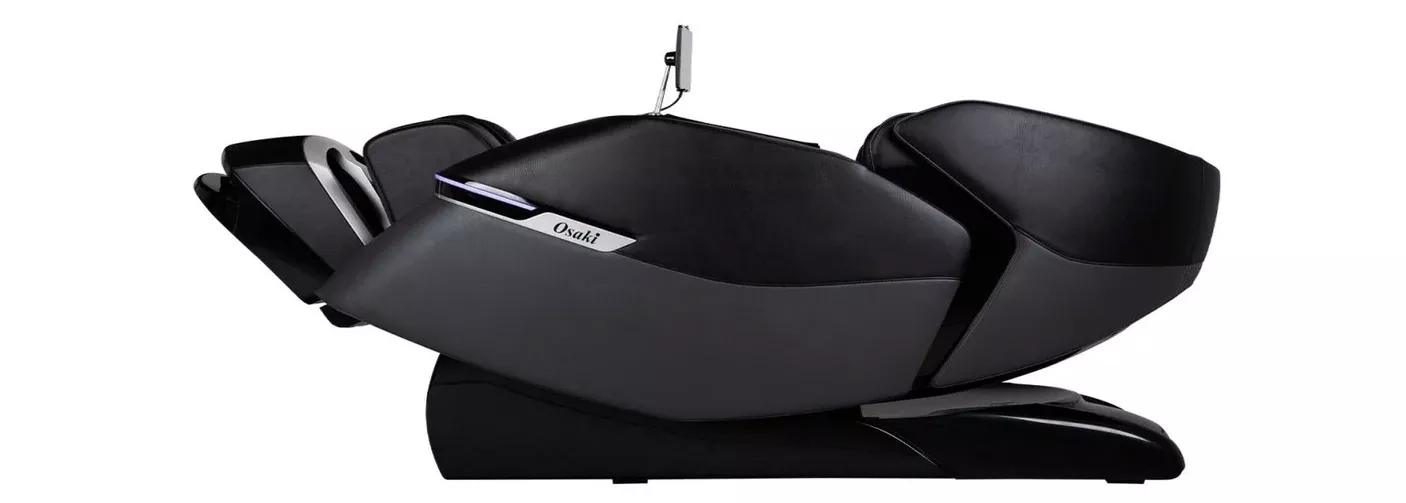
🟪 Kahuna: Chairs lean a hair firmer, especially in the LM-6800S, whose slim profile helps it hold Amazon’s “fits through door” promise. Triple-Zero-G angles elevate legs stealth-style, but the upper recline doesn’t drop as deeply as Osaki’s. The SM-9300 adds thicker padding and a Hyper SL track that preserves spinal curve; HM-Kappa’s seat pan widens and calf wells deepen, making space for users up to 330 lb. Noise favors Kahuna—under 53 dB in HM-Kappa versus mid-50s for Maestro.

✅ Verdict: Osaki offers plusher, lounge-like comfort out of the box; Kahuna prioritizes firmer orthopedic support and quieter mechanics, shining in long stretch sessions.
Quick Buyer Match Guide
🟦🟦 Choose Osaki if you
• Crave heated 4-D rollers, voice control, and the longest track possible.
• Need wide seat pans and plush foam for TV-friendly lounging.
• Like browsing dozens of models and catching seasonal Costco flash sales.
🟪🟪 Choose Kahuna if you
• Want budget-friendly stretch routines and calf-wave massage.
• Prefer firmer, quiet chairs with triple Zero-G and generous weight limits.
• Appreciate Amazon Prime convenience and frequent price drops.
Conclusion
Osaki’s strength is comprehensive variety and upscale tech, perfect for users who treat their chair like a feature-packed recliner that can grow with their needs. Kahuna counters with sharp pricing and standout stretch capability, making it a smart entryway into premium mechanics without wallet meltdown. If heated 4-D finesse and broad customization rule your wish list, Osaki is the safer bet. If your priorities lean toward value, calf-heavy therapy, and no-nonsense durability, Kahuna might just stretch your dollar—and your lower back—the furthest.