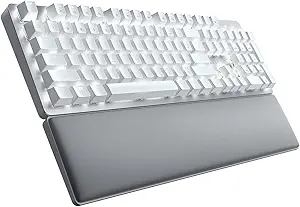




Razer vs FNATIC: Overview
Comparing Razer and FNATIC helps you determine which brand is best suited for your needs in Keyboards. Both brands offer strong choices depending on your budget and key feature requirements.
Key Features & Comparison
Evaluate factors such as build quality, warranty, customer satisfaction, and total value before making your final purchase choice between Razer and FNATIC.
Features
In terms of peripheral features, Razer clearly outpaces FNATIC through the sheer depth of its proprietary hardware additions and extensive software ecosystem. Razer keyboards frequently boast features such as magnetic plush wrist rests, dedicated multi-function digital dials, analog optical switch configurations with adjustable actuation, and multi-device wireless connectivity via Razer HyperSpeed and Bluetooth. Furthermore, Razer Synapse, while resource-heavy, offers an unmatched level of customization for macro creation, advanced lighting schemes via Chroma RGB, and seamless integration with third-party smart home technologies like Philips Hue.
Conversely, FNATIC takes a deliberate, minimalist approach to feature integration, focusing strictly on additions that improve tournament performance without distracting the player. FNATIC's OP software is remarkably lightweight compared to Synapse, prioritizing rapid adjustments to actuation points, key remap profiles, and clean RGB setups without requiring constant background system overhead. Hardware features like detachable USB-C cables, integrated sound-dampening foam, and competition mode toggles that disable disruptive system keys take precedence over media wheels and ambient lighting strips, resulting in a lean, utilitarian feature set that appeals to competitive minimalists.
Performance
Performance benchmarks reveal distinct technical philosophies, with both brands excelling at input latency, debounce management, and switch actuation. Razer has invested heavily in cutting-edge switch mechanics, introducing Gen-2 Linear Optical switches and analog optical technology capable of true 8000Hz HyperPolling. This translates to near-zero input latency, rapid trigger reset capabilities, and customizable actuation depths ranging from 0.1mm to 4.0mm in models like the Huntsman V2 Analog. For players demanding absolute actuation precision and hyper-fast input registration, Razer's top-tier optical offerings remain at the cutting edge of competitive hardware.
FNATIC counters this with exceptional mechanical and Hall-effect analog engineering that emphasizes consistency, key feel, and practical responsiveness under tournament conditions. Models like the FNATIC STREAK65 and miniSTREAK utilize factory-lubricated switches and low-profile switch designs that dramatically shorten total travel distances, effectively matching optical switches in real-world human reaction scenarios. While FNATIC generally caps out at standard 1000Hz polling rates, the tactile consistency, acoustic dampening, and switch stability provided by their precision-tuned stabilizers often provide a more reliable, fatigue-reducing typing and gaming experience over marathon sessions.
Design
Design language sharply differentiates the two brands, with FNATIC favoring sleek, functional European styling against Razer's aggressive, gamer-centric aesthetics. FNATIC keyboards typically showcase an understated, industrial look characterized by rounded anodized aluminum top plates, subtle branding, low-profile frames, and compact footprints designed to maximize desk space for mouse movement. The focus on portable, compact form factors (such as 65% and tenkeyless layouts) demonstrates an engineering priority toward ergonomics, easy packing for LAN events, and clean cable management.
Razer's design portfolio is substantially more diverse, spanning full-sized mechanical behemoths with magnetic side underglow to ultra-minimalist 60% form factors. Razer utilizes matte aluminum construction, double-shot PBT keycaps with crisp legends, and deeply recessed key wells that amplify per-key RGB illumination. While Razer keyboards offer unmatched visual flair and broad aesthetic variety—including Mercury White and Quartz Pink editions—they often carry a larger spatial footprint and heavier chassis weights, reflecting a design ethos geared primarily toward permanent desktop showpieces rather than portable tournament gear.