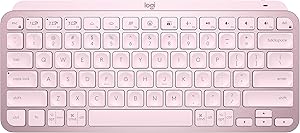
Logitech vs Cherry: Overview
Comparing Logitech and Cherry helps you determine which brand is best suited for your needs in Keyboards. Both brands offer strong choices depending on your budget and key feature requirements.
Key Features & Comparison
Evaluate factors such as build quality, warranty, customer satisfaction, and total value before making your final purchase choice between Logitech and Cherry.
Features
From a feature-set perspective, Logitech is an industry leader in software-driven productivity and cross-platform flexibility. The company’s proprietary Lightspeed wireless technology sets the benchmark for latency-free connectivity, while Bluetooth multi-host switching allows users to toggle between multiple devices effortlessly. Flagship productivity models like the MX Keys line integrate smart ambient backlighting that activates upon hand proximity, context-sensitive media controls, and integration with the Logitech Logi Options+ ecosystem, which enables cross-computer copy-pasting via Flow. On the gaming side, Logitech G keyboards offer deeply customizable LIGHTSYNC RGB ecosystems, onboard profile storage, and proprietary low-profile mechanical switches, representing a fully modernized approach to user utility.
Cherry takes a markedly hardware-first, utilitarian approach to its feature sets. Rather than relying on expansive software suites, Cherry keyboards frequently emphasize plug-and-play functionality, full N-key rollover, robust anti-ghosting matrices, and integrated hardware-based locking features tailored to data security and uninterrupted typing. While recent enthusiast lines like the MX Board series have integrated RGB lighting, wireless modes, and hot-swappable switch sockets, Cherry remains intentionally conservative with peripheral bloatware. The trade-off is clear: Logitech offers a sophisticated, highly customizable software layer and best-in-class multi-device utility, whereas Cherry provides stable, firmware-level reliability with minimal reliance on external software suites.
Performance
In terms of raw input performance, Logitech demonstrates exceptional diversity across distinct keyboard categories. In gaming benchmarks, Logitech's mechanical offerings utilizing optical or linear mechanical switches deliver ultra-fast polling rates, near-zero wireless latency, and customizable actuation points in select flagship models. For office environments, their scissor-switch implementations offer quiet, tactile feedback optimized for high-speed typing with minimal finger fatigue. However, some mechanical keyboards across Logitech’s gaming range utilize proprietary or integrated switches that lack the tactile refinement, stem stabilization, or spring consistency demanded by hardcore mechanical keyboard enthusiasts, sometimes resulting in slight key wobble or audible chassis pinging under heavy typing sessions.
Cherry’s performance legacy is built on the sheer consistency and mechanical perfection of its switches. Featuring the celebrated Cherry MX series—such as Red, Blue, Brown, and specialized variations like the MX Black Clear-Top or MX Ultra Low Profile—Cherry keyboards deliver unmatched tactile integrity and actuation accuracy across decades of use. Rated for up to 100 million keystrokes with Gold Crosspoint contact technology, Cherry switches offer predictable, uniform force curves that prevent accidental keypresses and maximize input precision. While Cherry’s wireless latency and gaming actuation speeds may not aggressively target the competitive esports niche like Logitech G does, their boards provide a firmer, more authentic typing experience that retains performance integrity over years of intensive daily operation.
Design
Logitech’s design methodology emphasizes sleek modern minimalism, user ergonomics, and structural efficiency. Their productivity line features sculpted, concave keycaps designed to match natural fingertip geometry, ultra-slim profiles, and curved integrated palm rests seen on ergonomic models like the Ergo K860. The materials used prioritize lightweight aluminum faceplates and smooth matte plastics that look at home in contemporary corporate workspaces or minimalist home offices. However, Logitech’s push for proprietary low-profile form factors occasionally limits user customizability, as finding aftermarket keycaps or replacing individual switches can be challenging due to non-standard stabilizers and stem footprints.
Cherry adopts a design language rooted in industrial German engineering, classic utilitarian aesthetics, and structural durability. Cherry keyboards are generally heftier, utilizing thick, impact-resistant ABS or PBT plastic housings, internal steel backplates, and standard ANSI or ISO layouts that offer total compatibility with custom aftermarket keycaps. While older legacy models lean heavily into retro, no-nonsense aesthetics resembling classical terminal keyboards, modern offerings like the Cherry KC and MX series strike a balance with clean, low-profile metal frames and double-shot PBT keycaps. For users who prioritize repairability, structural rigidity, and classic keyboard ergonomics, Cherry’s design architecture offers an unyielding standard of physical craftsmanship that avoids transient consumer trends.