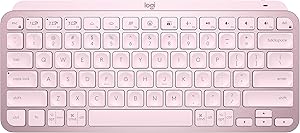
Logitech vs Keychron: Overview
Comparing Logitech and Keychron helps you determine which brand is best suited for your needs in Keyboards. Both brands offer strong choices depending on your budget and key feature requirements.
Key Features & Comparison
Evaluate factors such as build quality, warranty, customer satisfaction, and total value before making your final purchase choice between Logitech and Keychron.
Features
Logitech’s feature architecture centers around productivity, multi-device management, and software integration through applications like Logi Options+ and G HUB. Standout capabilities include Logitech Flow, which allows users to move text, images, and files seamlessly across multiple computers and operating systems using a single keyboard and compatible mouse. Logitech also focuses heavily on specialized hardware additions such as programmable contextual dials (found on the Craft), automated backlighting proximity sensors, and dedicated macro profiles optimized for video conferencing tools and creative suites like Adobe Creative Cloud.
Keychron prioritizes enthusiast-oriented, hardware-level features that function independently of background computer processes. A defining feature across most Keychron models is QMK/VIA or Keychron Launcher web-based support, which allows users to remap any key, build layered profiles, and assign complex macros directly to the keyboard's onboard micro-controller without needing permanent corporate software installations. Additionally, Keychron leads heavily in hardware versatility by offering full 3-pin and 5-pin hot-swappable switch sockets, integrated physical operating system toggle switches (Mac/Windows), acoustic multi-layer silicone dampening, and integrated sound-absorbing gasket mounts that Logitech rarely matches.
Performance
From an input latency and wireless stability standpoint, Logitech holds a definitive technological edge with its proprietary Lightspeed and Logi Bolt protocols. Lightspeed offers an exceptionally stable 1000Hz (1ms) polling rate over 2.4 GHz that matches wired connections, making their gaming boards class leaders in competitive responsiveness. Furthermore, Logi Bolt delivers encrypted, high-security connections ideal for congested corporate enterprise environments. Battery life is another major Logitech strength; by utilizing aggressive, intelligent sleep states and power-efficient LEDs, many of their flagship office boards last several months to years on a single charge or set of standard batteries.
Keychron’s performance is judged through the lens of pure typing ergonomics, acoustic satisfaction, and mechanical feedback. Keychron keyboards, particularly the Q and V series, deliver a substantially superior tactile experience characterized by smooth, factory-lubed mechanical switches, rigid stabilizer balance, and gasket-cushioned bottoming-out feel that reduces finger fatigue during all-day typing sessions. However, Keychron's wireless performance leans predominantly on standard Bluetooth 5.1 alongside 2.4 GHz in newer 'Max' variants. While their newer 2.4 GHz implementations achieve 1000Hz polling, Keychron keyboards generally offer shorter battery runtimes due to power-hungry per-key RGB backlighting and less aggressive power-saving firmware.
Design
Logitech’s design philosophy emphasizes sleek, modern minimalism, industrial efficiency, and ultra-low profiles. Products like the MX Keys and G915 showcase slim chassis built with anodized aluminum plates over lightweight plastic frames, prioritizing thin form factors that encourage flat, ergonomic wrist angles without the need for supplementary palm rests. Logitech also heavily integrates sustainable design, utilizing post-consumer recycled plastics and responsible packaging. While visually sophisticated and modern, Logitech’s construction is typically integrated and closed-source, making switch replacements, modding, or self-repair exceedingly difficult or impossible.
Keychron adopts an unapologetic mechanical industrial aesthetic, celebrated for its heavyweight, structural rigidity, and tactile heft. Their premium Q and Q Pro series feature fully CNC-machined 6063 aluminum bodies that weigh several pounds, anchoring the keyboard firmly to the desk to eliminate hollow reverberations. Keychron designs prioritize user repairability and modular assembly; boards are easily disassembled with standard hex screws, encouraging users to swap switches, tune screw-in stabilizers, and experiment with different mounting plates (such as polycarbonate or FR4). Keycaps are typically thick, double-shot PBT in retro and modern colorways that resist shine far better than Logitech’s ABS coatings.