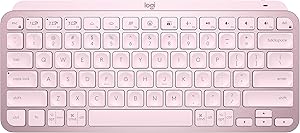
Logitech vs Drop: Overview
Comparing Logitech and Drop helps you determine which brand is best suited for your needs in Keyboards. Both brands offer strong choices depending on your budget and key feature requirements.
Key Features & Comparison
Evaluate factors such as build quality, warranty, customer satisfaction, and total value before making your final purchase choice between Logitech and Drop.
Features
Logitech approaches its feature set with a strong focus on automation, connectivity, and ecosystem synergy. Their high-end productivity boards feature multi-device Bluetooth and proprietary Logi Bolt/Unifying receivers, enabling swift transitions across multiple operating systems with Flow technology. Gamers benefit from low-latency Lightspeed wireless and LIGHTSYNC RGB ecosystems managed through the intuitive Logitech G HUB software. Furthermore, Logitech frequently innovates with purpose-built utility features, such as smart proximity sensors that illuminate key backlighting as hands approach, dedicated media docks, and specialized macro integrations that appeal directly to office multitaskers and fast-paced gamers.
Drop takes a radically different route, focusing its feature suite on mechanical adaptability and low-level programmatic control. The standout feature across most Drop boards is the inclusion of hot-swappable switch sockets, empowering users to mix, match, and modify switches without needing a soldering iron. In terms of software, rather than relying on proprietary background applications, Drop utilizes open-source firmware including QMK and VIA compatibility. This allows for deep, hardware-level key remapping, layer assignments, and complex macro configurations stored directly on the onboard memory, ensuring OS-agnostic persistence at the expense of an intuitive, point-and-click user interface.
Performance
From a raw input and responsiveness standpoint, Logitech remains an industry benchmark, particularly within its gaming division. The brand's proprietary Lightspeed wireless protocol delivers true 1ms report rates that effectively eliminate the latency deficit traditionally associated with wireless inputs, matching or exceeding wired connections. Logitech's switches—ranging from their proprietary Romer-G and GL low-profile switches to customized standard mechanical options—are engineered for rapid actuation and extreme consistency over tens of millions of keystrokes. For office users, membrane and scissor-switch mechanisms in boards like the MX Keys provide exceptional stability with whisper-quiet, low-fatigue actuation ideal for prolonged work sessions.
Drop’s performance is defined by superior switch articulation, acoustics, and mechanical integrity rather than ultra-low wireless latency. Because Drop designs its keyboards with standard plate-mount or PCB-mount architectures, they readily accept community-favorite switches from manufacturers like Kaihua, Gateron, and Holy Panda. The result is a richer, more satisfying bottom-out feel, highly consistent actuation curves, and significantly reduced key wobble. While Drop keyboards typically operate over traditional wired USB-C connections with standard 1000Hz polling rates, the tactile feedback and acoustic dampening offer a level of physical typing precision and pleasure that mass-produced Logitech boards rarely replicate.
Design
Logitech’s design language is sleek, modern, and utilitarian, calibrated for ergonomic comfort and spatial efficiency. Whether crafting the ultra-thin, low-profile silhouettes of the G915 or the contoured, minimalist footprint of the MX Keys, Logitech emphasizes lightweight portability and refined desk aesthetics. However, to maintain mass-production efficiency and lightweight profiles, Logitech often incorporates high-grade ABS plastics and thin aluminum top plates. While structurally sound and aesthetically clean, this construction method can sometimes lead to a hollow acoustic profile, and their proprietary keycap stems or non-standard bottom rows frequently limit aftermarket keycap customization.
Drop approaches industrial design with a commitment to heft, premium metallurgy, and community-driven aesthetics. Keyboards like the Drop CTRL are defined by substantial, dual-anodized CNC aluminum frames that eliminate flex and ground the keyboard securely on the desk. Drop integrates diffusers for vivid perimeter underglow RGB lighting, alongside south-facing or north-facing switch arrangements tailored for premium, thick PBT keycap profiles. The structural density results in a deeper, more refined acoustic signature ("thock"). Drop’s open platform and standard key layouts invite users to freely personalize keycaps, plate foams, and stabilizers, offering a showcase-quality centerpiece for high-end desktop setups.
Compare current retail pricing, active promotions, and verified stock availability directly from authorized stores: