Keychron vs Ducky: Overview
Comparing Keychron and Ducky helps you determine which brand is best suited for your needs in Keyboards. Both brands offer strong choices depending on your budget and key feature requirements.
Key Features & Comparison
Evaluate factors such as build quality, warranty, customer satisfaction, and total value before making your final purchase choice between Keychron and Ducky.
Features
In terms of feature sets, Keychron holds a decisive advantage for productivity enthusiasts, while Ducky appeals to hardware traditionalists. Keychron’s defining triumph is its deep cross-platform compatibility, offering physical toggle switches between Mac and Windows layouts alongside complete macOS-specific function row integration out of the box. Furthermore, Keychron has embraced QMK and VIA open-source firmware across the vast majority of its premium lines (such as the Q and V series), granting users unprecedented control over deep key remapping, multi-layer macros, and custom rotary encoder behaviors without bloatware. Wireless utility is another pillar of the Keychron ecosystem, standardizing reliable multi-device Bluetooth and low-latency 2.4 GHz wireless across their product tiers to streamline clean, cable-free workspaces.
Ducky takes a radically different engineering approach, famously rejecting desktop software suites entirely in favor of robust, onboard hardware-level micro-programming. Through the Ducky Macro engine, users can configure RGB lighting modes, debounce times, and complex macro sequences directly through key combinations stored natively on the onboard memory. While this ensures complete plug-and-play parity across any tournament or enterprise system that forbids third-party drivers, the configuration process requires memorizing dense key chords from a user manual. Additionally, Ducky has been noticeably slower to adopt wireless technology across their primary lineups, predominantly sticking to high-integrity, detachable USB-C wired connections that guarantee instantaneous, uninterrupted signal transmission.
Performance
Performance benchmarks reveal diverging engineering priorities, with Ducky historically tuning its boards for competitive gaming latency and Keychron optimizing for typing acoustics and flexibility. Ducky keyboards are engineered with true N-key rollover (NKRO) via USB and an aggressive 1000Hz polling rate managed by robust ARM microcontrollers, ensuring that rapid-fire inputs in high-stakes esports are processed with near-zero debounce latency. Paired predominantly with genuine German-engineered Cherry MX switches—and increasingly their own high-end proprietary switches—Ducky boards offer a consistent, tactile snap and unwavering stroke actuation that holds up to millions of aggressive keystrokes without failure.
Keychron has narrowed the latency gap significantly with their newer 2.4 GHz wireless and high-polling wired options, but their primary performance triumph lies in typing dynamics and acoustic tuning. Leveraging hot-swappable sockets on nearly every model, Keychron allows users to effortlessly swap out switches without soldering, catering to tactile preferences ranging from silent linear switches to heavy tactile variants. Moreover, Keychron's modern boards often utilize internal sound dampening, silicone pads, and factory-lubricated screw-in stabilizers that virtually eliminate wire rattle and hollow pings. While a hardcore gamer might still prefer Ducky's raw, no-nonsense hardware response, long-session typists and programmers often prefer the smoother, more acoustically refined keystroke profile of Keychron's recent offerings.
Design
The design languages of Keychron and Ducky illustrate contrasting aesthetic and material philosophies. Keychron champions a clean, Scandinavian-industrial design ethos, characterized by sleek low-profile aluminum frames, understated two-tone keycap colorways, and, in their flagship Q series, full CNC-machined solid aluminum chassis with integrated double-gasket mounts. These gasket-mounted assemblies provide intentional vertical flex during typing, drastically softening the bottom-out impact and delivering the coveted deep, thocky sound profile modern keyboard enthusiasts crave. Keychron also pioneered the mainstream ergonomic low-profile mechanical space, offering ultra-thin options that blend seamlessly with modern workspace aesthetics.
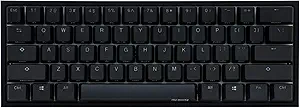
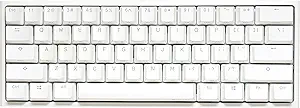
Ducky’s design signature, exemplified by legendary models like the One 2 and One 3 series, leans into playful enthusiast flair combined with structural rigidity. Ducky frequently embraces vibrant two-tone casing designs, limited Chinese Zodiac special editions, and exceptionally thick, double-shot PBT keycaps manufactured with seamless legends that resist shine and wear for years. Under the hood of their modern One 3 line, Ducky incorporates 'QUACK Mechanics,' a multi-layered acoustic design utilizing proprietary silicone dampeners and high-density EVA foam beneath a dual-layer PCB. While Ducky generally relies on ultra-durable, premium polycarbonate shells rather than the heavy, monolithic aluminum bodies seen in Keychron's Q series, their structural tolerances are immaculate, resulting in zero chassis creak and a rock-solid desk presence.
Compare current retail pricing, active promotions, and verified stock availability directly from authorized stores:
Compare current retail pricing, active promotions, and verified stock availability directly from authorized stores: