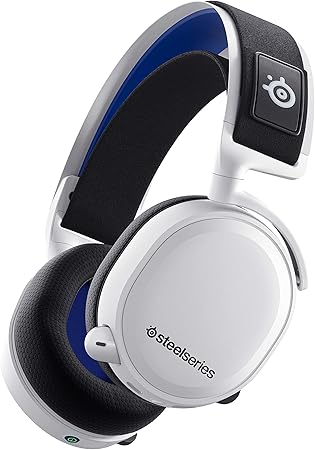






Sony vs SteelSeries: Overview
Comparing Sony and SteelSeries helps you determine which brand is best suited for your needs in Headphones & Earbuds. Both brands offer strong choices depending on your budget and key feature requirements.
Key Features & Comparison
Evaluate factors such as build quality, warranty, customer satisfaction, and total value before making your final purchase choice between Sony and SteelSeries.
Features
Sony’s feature ecosystem is heavily anchored in lifestyle automation, acoustic adaptation, and cutting-edge mobile processing. Driven by proprietary chips such as the Integrated Processor V1, V2, and the HD Noise Cancelling Processor QN1, Sony headphones boast intelligent functionalities like Speak-to-Chat, which automatically pauses audio and activates transparency mode when the user speaks, as well as Location-Based Adaptive Sound Control. Their companion application, Sony Headphones Connect, offers deep custom equalization, personalized 360 Reality Audio calibration, and multipoint Bluetooth pairing that transitions smoothly between mobile devices and laptops. Sony also leads in digital signal enhancement with DSEE Extreme, an AI-powered upscaling technology that restores high-frequency details to compressed streaming tracks, making their feature set distinctly commuter- and audiophile-centric.
SteelSeries counters with a feature architecture engineered specifically to optimize the desktop and console gaming experience. The brand's signature innovation is found within its multi-system connect hubs and the proprietary Sonar Audio Software Suite, a parametric EQ powerhouse that offers precise frequency manipulation tailored to specific video game titles. Flagship models like the Arctis Nova Pro Wireless feature an Infinity Power System with hot-swappable dual batteries, completely eliminating the downtime of charging via cable. Furthermore, SteelSeries shines by offering simultaneous 2.4GHz wireless and Bluetooth pairing, allowing users to balance Discord voice chat on a phone while receiving uncompressed low-latency game audio from a PC or PlayStation. While SteelSeries offers ANC on select high-end models, it functions primarily to hush PC fan noise rather than compete directly with Sony's all-encompassing acoustic isolation.
Performance
From an acoustic and active isolation perspective, Sony operates on an elite tier that few consumer brands can match. Sony's sound signature typically emphasizes a warm, full-bodied low-end coupled with exceptional mid-range clarity and detailed highs, making it an exceptional performer across broad musical genres from classical to electronic. Powered by high-resolution codecs like LDAC, Sony’s wireless transmission preserves an immense amount of source detail. However, its undisputed performance triumph lies in active noise cancellation. Sony's multi-microphone arrays and complex noise-filtering algorithms virtually eliminate low-frequency engine rumbles and high-frequency ambient chatter, creating an absolute vacuum of quiet that renders it the benchmark for air travel, urban commuting, and high-focus work environments.
SteelSeries shifts performance benchmarks toward spatial precision, transient response, and microphone fidelity. Rather than prioritizing pure musical warmth, SteelSeries tunes its neodymium drivers for competitive tactical awareness, emphasizing crisp upper-mid frequencies and distinct high transients so players can pinpoint spatial audio cues such as footsteps, weapon reloads, and directional movement. Their bi-directional ClearCast microphones utilize AI-powered background cancellation to filter out mechanical keyboard clicks and ambient room noise, offering substantially higher voice transmission clarity than Sony’s embedded beamforming pinhole microphones. However, in terms of sub-bass impact, passive seal isolation, and critical music reproduction, SteelSeries exhibits a flatter, more clinical profile that can sound somewhat sterile when compared to the rich, dynamic musicality of Sony’s flagship headphones.
Design
Sony favors an understated, minimalist aesthetic characterized by seamless surfaces, smooth contours, and premium, soft-touch materials that blend effortlessly into professional and travel environments. Recent iterations like the WH-1000XM5 have embraced an eco-friendly 'noiseless design' philosophy with stepless sliding headbands, synthetic leather earcups, and hidden hinges that reduce wind turbulence and mechanical creaks. The physical controls on Sony models are dominated by intuitive capacitive touch panels on the earcups, allowing users to swipe to change tracks, adjust volume, or cover the cup with a palm for quick ambient awareness. While Sony headphones look remarkably sleek and sophisticated, some users lament the departure from fully folding hinges found on older generations, which slightly impacts the compactness of their travel profile.
SteelSeries, by contrast, adopts a structural design rooted in functional ergonomics and extended wearability. Known for their ski-goggle-inspired suspension headband, SteelSeries headsets distribute clamping force exceptionally well, floating the weight off the crown of the head to eliminate hot spots during hours-long sessions. Earcups are typically lined with breathable AirWeave fabric or plush leatherette, prioritizing ventilation to keep ears cool under pressure. Tactile physical controls—such as physical volume wheels, chat-mix balance dials, and tactile mic-mute buttons—are prioritized over touch sensors, ensuring instantaneous adjustments mid-activity. Furthermore, their retractable boom microphones slide completely into the earcup chassis when not in use, offering a clean look that allows SteelSeries gear to transition to lifestyle use, even if its wider, bulkier silhouette remains undeniably gaming-oriented.