Sony vs Razer: Overview
Comparing Sony and Razer helps you determine which brand is best suited for your needs in Headphones & Earbuds. Both brands offer strong choices depending on your budget and key feature requirements.
Key Features & Comparison
Evaluate factors such as build quality, warranty, customer satisfaction, and total value before making your final purchase choice between Sony and Razer.
Features
In terms of feature sets, Sony emphasizes ambient intelligence and smart listening technologies that adapt continuously to the user's environment. Sony’s Headphones Connect application delivers granular control over adaptive sound control, personalized atmospheric pressure optimization, and advanced LDAC codec support for high-resolution streaming. Key proprietary features such as Speak-to-Chat automatically pause audio and engage ambient mode when the user speaks, while multipoint Bluetooth pairing allows seamless switching between office laptops and smartphones. Furthermore, Sony integrates DSEE Extreme (Digital Sound Enhancement Engine), utilizing edge-AI to upscale compressed digital audio files in real time, making their feature architecture inherently music- and travel-centric.
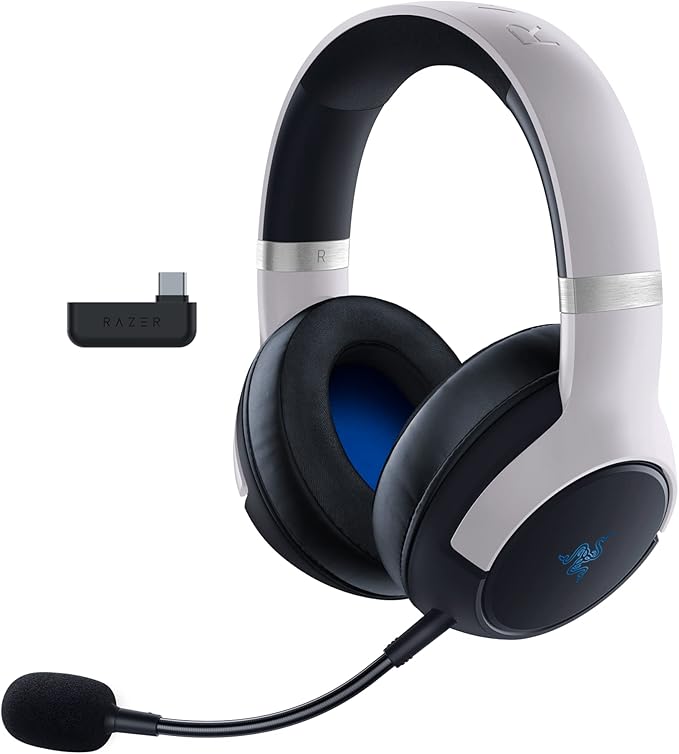
Razer counters with specialized features engineered specifically for gaming latency mitigation and spatial sound localization. Razer’s ecosystem prominently integrates THX Spatial Audio, delivering 7.1 surround sound mapping and custom-tuned gaming profiles optimized for specific game engines. On the connectivity front, Razer often includes dedicated 2.4GHz ultra-low latency wireless dongles alongside Bluetooth, eliminating the latency penalties that typically plague standard Bluetooth gaming. While Razer's companion software suite (Razer Synapse on PC and the Razer Audio app on mobile) offers robust EQ adjustments, microphone noise gates, and dynamic Chroma RGB lighting synchronization, it generally lacks the sophisticated ambient-aware automation and industry-leading ANC tuning found in Sony's consumer lineup.
Performance
Performance benchmarks reveal clear operational trade-offs dictated by acoustic tuning and transducer selection. Sony models are recognized for their warm, punchy, yet highly detailed sound signature, featuring deep sub-bass extension that rarely compromises mid-range clarity or high-frequency articulation. In terms of Active Noise Cancellation, Sony is virtually unmatched, employing dual-processor architectures (such as the Integrated Processor V1 and HD Noise Cancelling Processor QN1) that obliterate low-frequency engine rumbles and effectively attenuate erratic mid-frequency human speech. Battery performance on Sony wireless headphones routinely hits 30 hours with ANC activated, paired with exceptionally efficient rapid-charging capabilities.
Razer’s acoustic tuning traditionally focuses on emphasized mid-bass impact—rendering explosions and kinetic in-game events with visceral authority—coupled with elevated upper-mids to highlight audio cues like footsteps and reload sounds. While flagship lifestyle models like the Razer Opus exhibit surprisingly neutral audiophile tunings, they generally fall short of Sony's dynamic range and micro-detail retrieval. Razer's active noise cancellation is respectable for home office and LAN environments, but it struggles against broad-spectrum transit noise compared to Sony. Where Razer clearly outperforms Sony is in wireless latency via 2.4GHz wireless protocols, offering imperceptible input lag critical for competitive gaming, alongside superior boom microphone performance featuring cardioid pickup patterns and broadcast-grade vocal clarity.
Design
From a design and build perspective, Sony leans into an understated, minimalist executive aesthetic. Modern Sony models utilize lightweight, eco-friendly matte plastics, seamlessly integrated touch-sensor earcups, and plush synthetic leather memory foam pads that provide superior passive acoustic isolation and all-day ergonomic comfort. The structural silhouette is sleek and uncluttered, with hidden hinges and recessed microphones designed to minimize wind resistance and aerodynamic noise. Sony's design language prioritizes portability, with clever swiveling and folding mechanisms accompanied by rugged, compact carrying cases tailored for mobile professionals.
Razer’s industrial design presents a bolder, more aggressive silhouette that ranges from subtle urban stealth to overt gaming flair. Models in the BlackShark and Kraken families feature prominent wire-frame adjustments, exposed cabling, and high-density memory foam ear cushions often lined with heat-transfer fabric or cooling gel to combat thermal buildup during marathon sessions. While Razer's Opus and Barracuda series mimic mainstream lifestyle aesthetics, the brand frequently incorporates signature tactile volume rollers, detachable boom microphones, and customizable Chroma RGB accents. While Razer constructs durable, comfortable headsets well-suited for long-term desk use, they are generally bulkier and less travel-friendly than Sony's sleek, portable form factors.
Compare current retail pricing, active promotions, and verified stock availability directly from authorized stores: