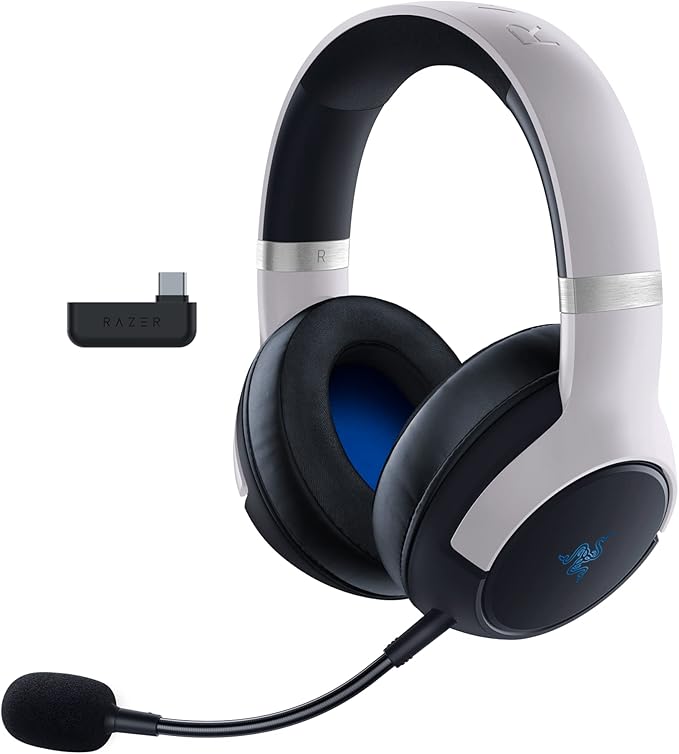
Razer vs Audio-Technica: Overview
Comparing Razer and Audio-Technica helps you determine which brand is best suited for your needs in Headphones & Earbuds. Both brands offer strong choices depending on your budget and key feature requirements.
Key Features & Comparison
Evaluate factors such as build quality, warranty, customer satisfaction, and total value before making your final purchase choice between Razer and Audio-Technica.
Features
Razer dominates the technological features matrix with an aggressive suite of gaming-oriented utilities and deep software customization. Centralized through Razer Synapse, users gain granular access to parametric EQ, customized dynamic range compression, THX Spatial Audio calibration, and broadcast-grade microphone modulation. Many Razer models feature dual-wireless connectivity—allowing simultaneous 2.4 GHz hyperspeed wireless for latency-free gaming and Bluetooth 5.2 for mobile devices—as well as on-ear haptic feedback systems (HyperSense) and customizable Chroma RGB lighting that syncs across peripheral ecosystems.
Audio-Technica approaches features with deliberate acoustic utility, focusing on hardware-level execution rather than expansive digital processing. Their wireless and lifestyle lines emphasize audiophile-grade codecs such as LDAC, aptX Adaptive, and AAC, paired with multi-point Bluetooth pairing and intuitive physical or touch controls. Noise cancellation across their lineup relies on proprietary hybrid active systems designed to minimize ear pressure while preserving low-end clarity. While their companion mobile apps offer basic equalization and low-latency switching, Audio-Technica purposefully avoids gimmicks, prioritizing fundamental technical utility like detachable professional-grade cables and robust microphone capsules over RGB integration and complex digital profiles.
Performance
In terms of performance, Razer designs its acoustic drivers with a distinct 'V-shaped' frequency response, characterized by punchy, reinforced sub-bass and bright treble peaks engineered to accentuate explosions, cinematic rumbles, and spatial positional cues such as footsteps. Their proprietary TriForce Titanium drivers allow tuning across low, mid, and high frequencies independently, reducing distortion at high volumes. While this profile yields an energetic and engaging environment for high-octane gaming and modern electronic genres, it often introduces coloration and sibilance that obscure the micro-details and organic timbral accuracy prized during critical music listening.
Audio-Technica delivers clinical precision and balanced acoustic staging that universally outperforms Razer in resolving power and fidelity. Flagship models, epitomized by the legendary ATH-M50x lineage, are built around proprietary large-aperture drivers that maintain a remarkably flat and uncolored frequency curve. Transient response is exceptionally fast, allowing the listener to dissect layered instrumental arrangements and subtle vocal harmonics without mid-bass bleed. While Audio-Technica’s soundstage can lean intimate in closed-back designs, their open-back studio variants deliver an expansive, three-dimensional acoustic space with natural airiness and accurate stereo imaging that software-rendered virtualization cannot authentically replicate.
Design
Razer’s industrial design language is immediately recognizable, leaning heavily into aggressive angles, matte black polycarbonate chassis, and neon green or RGB accents that align seamlessly with the gaming subculture. Ergonomics are engineered for grueling, multi-hour gaming marathons, utilizing cooling gel-infused memory foam ear cushions, breathable fabric weaves, and wide-suspension headbands to relieve clamp pressure. While modern iterations show significant improvements in structural integrity, the heavy reliance on plastic components and complex adjustment hinges can sometimes produce mechanical squeaks and long-term durability trade-offs compared to classic studio hardware.
Audio-Technica champions utilitarian, studio-proven engineering characterized by minimalist industrial aesthetics, understated branding, and exceptional mechanical longevity. Built to endure the rigors of commercial broadcast and studio abuse, their headphones heavily utilize metal-reinforced headbands, high-grade polymers, and 90-degree swiveling earcups for flexible monitoring. While their clamping force can initially feel tighter than Razer's plush approach, the design ensures superior passive sound isolation and an acoustic seal that maintains low-frequency extension. Ultimately, Audio-Technica represents timeless, functional tool-like craftsmanship, whereas Razer offers sleek, modern ergonomic lifestyle engineering.