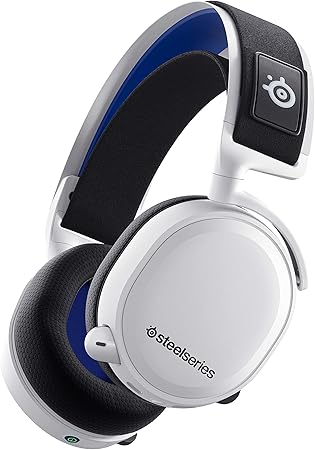
Bose vs SteelSeries: Overview
Comparing Bose and SteelSeries helps you determine which brand is best suited for your needs in Headphones & Earbuds. Both brands offer strong choices depending on your budget and key feature requirements.
Key Features & Comparison
Evaluate factors such as build quality, warranty, customer satisfaction, and total value before making your final purchase choice between Bose and SteelSeries.
Features
Bose focuses its feature set on environmental adaptation and acoustic tranquility, engineered primarily to enhance mobile lifestyle listening. The cornerstone of the Bose ecosystem—seen prominently in models like the QuietComfort series and the Ultra headphones—is its proprietary Active Noise Cancellation (ANC) architecture, paired with responsive transparency modes and cutting-edge spatial audio processing with head tracking. Bose's companion software emphasizes simplicity, offering streamlined EQ adjustments, preset sound modes, and multi-point Bluetooth pairing that effortlessly shifts between a smartphone and a laptop. However, Bose generally limits physical I/O options, rarely offering 2.4GHz wireless dongles, hot-swappable batteries, or detailed parametric equalization, reflecting its focus on streamlined, non-technical consumer use.
SteelSeries, by comparison, provides an extensive and technical feature matrix designed around the complex requirements of modern gamers. Flagship models like the Arctis Nova Pro Wireless feature a multi-input base station that acts as an audio hub, enabling instantaneous switching between PC, PlayStation, or Xbox alongside simultaneous Bluetooth connectivity for smartphones. Furthermore, SteelSeries distinguishes itself with dual-battery hot-swapping systems that eliminate charging downtime, fully retractable ClearCast bidirectional microphones, and the Sonar Audio Software Suite, which grants users access to professional-grade parametric EQ, individual channel mixing, and game-specific acoustic presets. While Bose offers a curated, hands-off feature experience, SteelSeries provides extensive technical granularity and hardware adaptability for power users.
Performance
In terms of acoustic performance and everyday fidelity, Bose delivers a warm, consumer-friendly sound signature characterized by deep, controlled low-end frequencies, rich mid-tones, and smooth, non-fatiguing highs. This tuning makes Bose exceptional for contemporary music genres, podcasts, and media consumption where vocal clarity and tonal warmth are paramount. Bose's true engineering triumph, however, lies in its digital signal processing (DSP) and active noise mitigation, which consistently outperform nearly every competitor by eliminating low-frequency engine rumbles and broad-spectrum ambient chatter with minimal acoustic artifacts. The trade-off is higher latency over standard Bluetooth codecs, making Bose headphones less than ideal for high-framerate competitive gaming where instantaneous audio cues are vital.
SteelSeries prioritizes competitive acoustic clarity, low-latency transmission, and spatial imaging over deep, cinematic bass. Through custom high-fidelity drivers and the proprietary 2.4GHz wireless protocol, SteelSeries headsets achieve sub-20ms latency and exceptional stereo separation, allowing users to pinpoint footsteps, reloads, and positional cues with pinpoint accuracy. While their default out-of-the-box tuning can sound somewhat bright and lean compared to Bose's fuller sound profile, the Sonar software allows users to sculpt the frequency response to match audiophile standards. Microphone performance is another area where SteelSeries comprehensively outperforms Bose; the bidirectional ClearCast mic leverages AI-powered noise removal to isolate spoken voice from keyboard clatter, whereas Bose's integrated beamforming microphones are tuned strictly for phone calls in moderately quiet settings.
Design
Bose adheres to an understated, minimalist design language that emphasizes lightweight ergonomics, premium materials, and compact portability. Utilizing glass-filled nylon, cast aluminum hinges, and plush synthetic leather over memory foam, Bose headphones are specifically engineered to minimize clamping force and eliminate pressure points during transcontinental flights or full workdays. Aesthetically, Bose products exude executive elegance, featuring muted matte finishes, discrete branding, and fully folding yokes that collapse neatly into protective travel cases. The tactile interfaces on Bose devices balance physical push-buttons with intuitive capacitive touch surfaces, ensuring reliable control in motion without overwhelming the user with unnecessary visual flair.
SteelSeries takes inspiration from functional Scandinavian industrial design, merging modern gamer aesthetics with premium desk-setup sensibilities. Characterized by ski-goggle suspension headbands, steel construction, and magnetic swappable ear cup plates, SteelSeries headsets distribute weight evenly across the crown of the head while maintaining high structural rigidity. The aesthetic is notably mature compared to traditional gaming peripherals, avoiding garish RGB lighting on high-end models in favor of sleek, dark metallic profiles. However, SteelSeries headsets are inherently bulkier, do not fold into ultra-compact profiles for travel, and feature higher clamping forces to maintain a secure seal during animated gaming sessions, making them fundamentally home- and office-bound instruments compared to the globetrotting portability of Bose.