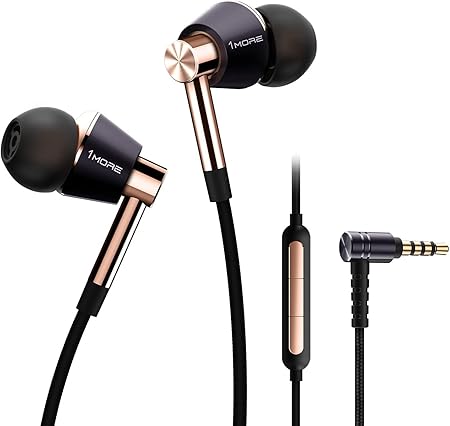
Bose vs 1MORE: Overview & Brand Philosophy
The consumer audio landscape represents a fascinating clash between legacy engineering pedigree and aggressive, modern value disruption. Bose Corporation, founded in Massachusetts in 1964, stands as one of the most recognized consumer audio giants in modern history. The company’s philosophy has consistently focused on psychoacoustics—the study of how humans perceive sound—prioritizing comfortable industrial design, advanced active noise cancellation (ANC), and approachable, crowd-pleasing sound signatures over strictly reference-grade neutrality. Bose positions itself as a premium lifestyle and travel staple, engineered for the daily commuter, frequent flyer, and corporate professional seeking seamless ease of use and isolation.
In contrast, 1MORE entered the market with a radically disruptive thesis: high-fidelity acoustic performance and cutting-edge wireless standards do not require an exorbitant price tag. Founded by former Foxconn executives and backed early on by tech giant Xiaomi, the Shenzhen-based company partners closely with Grammy-winning sound engineer Luca Bignardi to fine-tune its acoustic drivers. 1MORE champions hybrid multi-driver setups, planar magnetic components, and audiophile-grade Bluetooth codecs in price categories traditionally dominated by single-driver, dynamic plastic hardware. Their target audience spans budget-conscious audiophiles, students, and pragmatic consumers seeking exceptional cost-to-performance ratios.
When evaluated head-to-head, these two manufacturers represent fundamentally different purchasing philosophies. Bose demands a financial premium for industry-defining noise reduction, supreme physical ergonomics, and globally backed customer support. Meanwhile, 1MORE challenges the diminishing returns of legacy luxury pricing by delivering 85 to 90 percent of the technical audio performance at a fraction of the cost.
Key Differences & Technological Comparison
The divergence between Bose and 1MORE becomes immediately apparent when dissecting their hardware engineering, software implementations, and design architecture:
- Active Noise Cancellation (ANC): Bose remains the global benchmark for ANC technology. Utilizing proprietary acoustic architectures and continuous ambient sensing arrays—such as those found in the QuietComfort Ultra series—Bose systematically erases low-frequency drone (airplane cabins, subway rumbles) and handles unpredictable mid-frequency sounds with class-leading composure. 1MORE utilizes capable hybrid ANC systems (often powered by integrated proprietary algorithms like QuietMax), but while they effectively dampen ambient background rumble, they cannot match the vacuum-like isolation and zero-hiss floor achieved by Bose.
- Acoustic Architecture and Tuning: 1MORE embraces sophisticated internal architectures, frequently deploying hybrid driver configurations (combining balanced armatures for crystalline highs with dynamic drivers for bass punch). Their tuning generally targets the Harman curve, emphasizing vocal clarity, instrument separation, and controlled transient response. Bose leans into custom digital signal processing (DSP) that actively adjusts equalization based on listening volume (Active EQ), delivering full-bodied bass and warm, non-fatiguing sound that caters to long-duration listening sessions rather than clinical analysis.
- Codec Support and Audio Processing: 1MORE consistently outpaces Bose in high-resolution Bluetooth codec adoption at lower price tiers, offering LDAC support across multiple mid-range earbuds and headphones to preserve uncompressed source quality on Android devices. Bose has historically limited itself to SBC and AAC, only recently adopting Qualcomm aptX Adaptive/Snapdragon Sound in its top-tier Ultra lineup. However, Bose counters this with its proprietary "Immersive Audio" spatial processing, which creates an expansive virtual soundstage from any stereo source without requiring platform-specific software.
- Build Quality and Ergonomics: Bose engineers some of the most comfortable headphones in the world. Their QuietComfort line leverages lightweight structural plastic, cast-metal hinges, and ultra-plush protein leather to virtually eliminate clamping fatigue. 1MORE utilizes an attractive blend of aluminum alloys, silicone, and textured plastics across its product tiers. While 1MORE products frequently feel sturdier and more premium in the hand than their price suggests, Bose holds the upper hand in long-term wearing comfort and weight distribution.
- Software Ecosystem & Connectivity: The Bose Music / Bose app provides deep customization, reliable multi-point Bluetooth pairing switching, and personalized ear-canal calibration (CustomTune technology). 1MORE’s companion software is functional, providing preset and parametric EQ profiles alongside soothing ambient sounds, but it lacks the polished firmware deployment, smooth multi-device management, and interface sophistication of Bose's ecosystem.
Pros & Cons Comparison
Bose
Pros
- Unrivaled Active Noise Cancellation that sets the industry standard across all travel and office scenarios.
- Exceptional, fatigue-free physical ergonomics suited for extended wearing sessions.
- Consistent, dynamic, and consumer-pleasing tuning enhanced by real-time DSP.
- Refined, polished mobile software with dependable multipoint connection management.
- Strong brand equity with widespread global warranty coverage and replacement part availability.
Cons
- Significantly higher price point with steep margins that offer lower raw hardware-to-dollar value.
- Historically slow adoption of high-bitrate codecs like LDAC.
- Aesthetic design language relies heavily on functional plastics rather than luxurious metals.
1MORE
Pros
- Outstanding price-to-performance ratio, delivering advanced acoustic hardware at accessible price points.
- Sophisticated driver designs (hybrid dynamic + balanced armatures) yielding articulate mid and high frequencies.
- Broad support for high-resolution Bluetooth codecs (including LDAC) on budget-friendly models.
- Studio-informed tuning overseen by award-winning acoustic engineers.
- Sturdy build quality featuring tasteful aluminum alloy elements.
Cons
- Active Noise Cancellation performance lags noticeably behind Bose in unpredictable, high-noise environments.
- Software application and firmware updates lack the long-term polish and seamlessness of tier-one ecosystems.
- Customer support, third-party accessories, and repair pathways are more limited in Western retail channels.
Performance, Durability & Value Analysis
From an operational and reliability perspective, Bose demonstrates clear longevity born from decades of commercial refinement. Long-term durability with Bose headphones is characterized by modular wear: their synthetic leather ear cushions and headbands will eventually show peeling or flaking after two to three years of daily use, but because Bose enjoys widespread third-party and first-party manufacturing support, replacement pads are readily sourced and easily installed. Internally, Bose's hinge designs and internal ribbon cables are subjected to rigorous stress-testing, allowing their headphones to endure years of being tossed into backpacks and gym bags. 1MORE implements durable physical materials—frequently utilizing sandblasted aluminum earcups and resilient hinges—which resist cosmetic wear exceptionally well. However, battery longevity over multi-year cycles and long-term firmware stability lean slightly in Bose’s favor due to their mature software governance.
When assessing overall market value, the equation shifts heavily toward 1MORE. In terms of raw acoustic capability per dollar spent, 1MORE is almost unmatched in the modern market. A consumer can purchase multiple premium 1MORE true wireless earbuds or over-ear models for the price of a single Bose QuietComfort Ultra unit, while still receiving LDAC capability, balanced armature clarity, and respectable hybrid ANC. Bose does not compete on price-to-performance metrics; instead, it trades on absolute performance metrics. If you require absolute isolation in loud transit environments or require maximum comfort for eight-hour workdays, the investment in Bose pays dividends that cheaper alternatives cannot fully replicate.
Final Verdict: Which Brand Should You Choose?
Selecting between Bose and 1MORE ultimately comes down to your primary use case, budget threshold, and sensitivity to environmental noise.
Choose Bose if:
- Your absolute priority is top-tier Active Noise Cancellation to eliminate engine hum, office chatter, or urban transit noise.
- You spend multiple hours a day wearing headphones and require best-in-class physical comfort with minimal clamping force.
- You want a polished, reliable consumer experience with responsive multi-device switching, widespread customer support, and easy access to replacement components.
- Budget is a secondary consideration behind travel utility and everyday convenience.
Choose 1MORE if:
- You want an audiophile-oriented sound signature featuring detailed multi-driver acoustics and high-resolution LDAC support without paying luxury prices.
- You are seeking maximum value under $100 to $150, refusing to accept the performance compromises typical of entry-level gear.
- Your noise cancellation needs are moderate—such as working in a quiet coffee shop, studying in a library, or walking through residential areas.
- You appreciate premium physical materials like metal-accented housings and balanced sound tuning over proprietary spatial effects.
Features
When evaluating the feature ecosystem within personal audio, Bose and 1MORE approach functionality from opposing design philosophies: Bose prioritizes industry-leading refinement of core daily utilities, whereas 1MORE focuses on democratizing enthusiast-grade hardware specifications at accessible price points. Bose’s engineering prowess centers on unmatched Active Noise Cancellation (ANC) algorithms, highly natural transparency modes, and sophisticated spatial audio processing. The brand’s proprietary CustomTune technology stands out as a high-water mark in technical execution, automatically optimizing both noise cancellation and sound frequency response specifically to the unique physical contours of the user's ear canal in real-time. In contrast, 1MORE differentiates itself by packing audiophile-centric features into budget-to-midrange products, frequently offering advanced multi-driver acoustic configurations (such as hybrid dual- or triple-driver arrays), Hi-Res Audio certification, and expansive Bluetooth codec support—including Sony’s high-bitrate LDAC—which is notably absent from much of Bose's mainstream lineup.
The practical trade-offs between the two brands become apparent when scrutinizing usability, software integration, and feature depth. Bose provides a polished, frictionless user experience via the Bose Music app, featuring intuitive multipoint connectivity, highly dependable wear-detection sensors, and class-leading voice-pickup beamforming microphones that excel in chaotic, windy environments. However, Bose deliberately limits deep audio tinkering, offering only basic three-band EQ adjustments and traditionally slower adoption of emerging lossless transmission standards. 1MORE counters this by delivering a feature list that reads like a flagship wish list—offering comprehensive 10-band or parametric EQs, embedded ambient relaxing sounds, integrated smart-hearing protection timers, and even health-tracking metrics (such as posture monitoring) in select models. Yet, 1MORE's technical strengths occasionally suffer from inconsistent execution; their companion app feels less cohesive, their proprietary ANC algorithms fail to suppress broad-spectrum low-frequency rumble as effectively as Bose, and microphone arrays often degrade rapidly in noisy conditions.
Ultimately, the choice in the features category pivots on whether a consumer values seamless execution of fundamental capabilities or a high volume of technical utilities per dollar spent. Bose remains the superior choice for frequent commuters and enterprise travelers who demand flawless, class-leading noise cancellation, exceptionally natural ambient awareness, and rock-solid device switching. 1MORE represents an extraordinary value proposition for discerning audio enthusiasts on a budget who prioritize high-resolution wireless streaming codecs, nuanced driver design, and deep parametric equalization over the absolute pinnacle of isolation technology.
Performance
When evaluating core audio performance, Bose and 1MORE approach sound engineering through fundamentally different acoustic philosophies. Bose relies heavily on proprietary active equalization, intelligent digital signal processing (DSP), and advanced transducer arrays to deliver a remarkably consistent, balanced, and mass-market-pleasing sound signature. This tuning emphasizes warm low-end presence, articulate vocal reproduction, and non-fatiguing highs. By contrast, 1MORE focuses on analog multi-driver architectures, frequently pairing dynamic drivers with balanced armatures tuned by Grammy-winning sound engineers like Luca Bignardi. Technical benchmarks often reveal that 1MORE models—such as their Triple or Quad Driver series and advanced EVO wireless earbuds—achieve superior frequency extension and instrumental separation out-of-the-box, offering audiophiles a more nuanced, dynamic soundstage with native support for high-resolution codecs like LDAC. Bose, while slightly more compressed at the extreme upper treble, provides superior volume-optimized EQ, ensuring sound dynamics remain punchy and stable whether listening at whisper-quiet or maximum thresholds.
The performance divide becomes most pronounced when assessing active noise cancellation (ANC), environmental attenuation, and everyday usability. Bose represents the absolute gold standard in ANC performance. Utilizing custom silicon chipsets and dense microphone topologies, Bose headphones continuously sample environmental noise thousands of times per second, executing inverse phase cancellation with surgical precision. This results in peerless suppression of persistent low-frequency drone and erratic mid-frequency chatter without generating noticeable cabin pressure. 1MORE incorporates competent hybrid ANC solutions (such as their QuietMax technology), but their attenuation algorithms struggle to match Bose’s depth, particularly when mitigating sudden transient spikes and wind turbulence. Additionally, Bose consistently outclasses 1MORE in voice pickup performance; its sophisticated beamforming microphone arrays excel at spatial isolation, delivering exceptional microphone intelligibility during voice calls in noisy conditions where 1MORE’s software tends to aggressively muffle vocal frequencies alongside background clatter.
Ultimately, the practical trade-offs regarding performance reflect contrasting market priorities and engineering budgets. 1MORE excels in pure acoustic value, delivering high-fidelity performance metrics, rich driver configurations, and broad codec flexibility at a fraction of the cost. However, their real-world performance is more volatile, vulnerable to seal variations, and reliant on passive isolation. Bose trades high-res wireless codec capability for bulletproof connectivity, class-leading adaptive noise suppression, and a flawlessly unified listening experience where software and hardware coalesce seamlessly. For critical desktop listening and raw harmonic detail, 1MORE punches well above its price tier, but for demanding real-world performance where acoustic clarity must overcome chaotic travel, commuting, and professional environments, Bose remains the undisputed technical benchmark.
Design
When evaluating the industrial design and engineering quality of Bose versus 1MORE, the two brands represent divergent philosophies: Bose champions ultra-refined, utilitarian minimalism, while 1MORE focuses on striking, value-forward aesthetics with complex acoustic architectures. Bose’s design language across flagship models like the QuietComfort Ultra series emphasizes lightweight ergonomic perfection and long-wearing comfort. By utilizing high-grade engineered plastics, cast aluminum hinges, and plush protein leather, Bose ensures that structural weight is distributed evenly across the cranium, minimizing clamping force. 1MORE, by contrast, frequently employs eye-catching metal alloys, anodized finishes, and tactile flourishes, such as the jewel-like aesthetic of the ColorBuds or the CNC-machined metal chambers found in their triple- and quad-driver in-ear monitors. While 1MORE products often look and feel more overtly premium out of the box due to the cool touch of metal, Bose’s material selection is far more purposeful for prolonged daily wear, resulting in chassis that resist fatigue, creaking, and skin irritation over marathon listening sessions.
In terms of form factor, control integration, and practical utility, Bose holds a decisive technical edge in hardware-software convergence, though 1MORE offers surprising versatility in physical variety. Bose equips its over-ear and true wireless models with intuitive hybrid interfaces—pairing low-profile physical buttons with responsive capacitive volume strips—that are virtually immune to false triggers and fully operable while wearing gloves. Furthermore, Bose's proprietary StayHear Max and proprietary umbrella-shaped silicone tips represent a masterclass in passive noise isolation without causing the intrusive, high-pressure ear-canal occlusion typical of deep-insertion earbuds. 1MORE counters this by offering an expansive array of niche form factors, including some of the most compact, sleep-friendly micro-earbuds on the market (such as the 1MORE ComfoBuds Z and Sleep A30) alongside open-ear sport designs. However, 1MORE's touch capacitive sensors can be finicky and prone to accidental activations during adjustment, and their bulkier multi-driver earbuds often protrude awkwardly from the pinna, making them susceptible to wind resistance and stability issues during vigorous movement.
Ultimately, the design trade-off between the two brands hinges on whether a consumer prioritizes bespoke ergonomics and seamless functional durability or high-spec component density at an accessible price. Bose designs its hardware with an uncompromising focus on acoustic sealing and all-day unobtrusiveness; their folding mechanisms, low-profile carrying cases, and balanced weight distributions set the industry benchmark for frequent commuters and travelers. 1MORE punches significantly above its weight class by packaging multiple armature drivers, metal charging cases, and diverse stylistic palettes into budget-conscious shells, but it inevitably makes compromises in hinge rigidity, weatherproofing gaskets, and micro-ergonomics. For users seeking effortless, invisible comfort engineered to survive years of daily use, Bose’s design pedigree remains supreme, whereas 1MORE appeals to design-conscious consumers who value sleek metallic finishes and ultra-compact specialty form factors without paying a premium price.
Compare current retail pricing, active promotions, and verified stock availability directly from authorized stores: