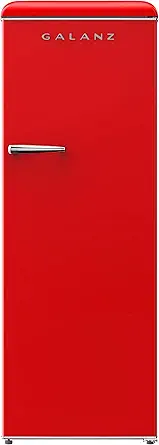
Galanz vs LG: Overview & Brand Philosophy
When shopping for a dedicated freezer, consumers typically navigate between two distinct market segments: budget-conscious functionality and premium, tech-forward sophistication. Galanz and LG perfectly embody these opposing design philosophies. Galanz, a powerhouse original equipment manufacturer (OEM) based in China, has historically built appliances for major global labels before successfully expanding its own brand presence. In the freezer category, Galanz focuses on straightforward, utility-driven standalone freezers, retro-styled compacts, and convertible units that maximize cubic footage per dollar spent without unnecessary digital complexity.
LG Electronics, headquartered in South Korea, approaches refrigeration from an engineering standpoint rooted in premium innovation, energy efficiency, and digital integration. Renowned for its home appliance ecosystem, LG's presence in the freezer space—spanning upright standalones, deep chest freezers, and specialty multi-door units—is characterized by patented mechanical technologies like the Inverter Linear Compressor and smart-home connectivity via ThinQ. LG’s brand philosophy centers on extending food preservation through hyper-precise temperature control while maintaining ultra-quiet, energy-optimized performance.
Understanding these distinct approaches is vital for buyers. Galanz targets homeowners, renters, and garage storage planners who need reliable, secondary sub-zero storage without paying for premium design or digital connectivity. Conversely, LG caters to tech-savvy consumers, large households, and those demanding long-term architectural integration, high aesthetic appeal, and enterprise-grade freshness preservation technologies.
Key Differences & Technological Comparison
The primary mechanical divergence between Galanz and LG centers on compressor design and cooling regulation. LG equips many of its premium freezers with its proprietary Inverter Linear Compressor. Unlike traditional reciprocating compressors that operate on an abrupt on/off cycle, LG’s linear mechanism uses a direct-drive piston that modulates speed according to thermal loads. This drastically minimizes internal temperature fluctuations (often keeping variance within 1°F), reduces mechanical friction points, lowers acoustic output to as low as 38 dBA, and earns widespread Energy Star certifications. Additionally, LG incorporates multi-air-flow cooling towers, ensuring freezing temperatures circulate evenly across every shelf.
Galanz largely employs standard, fixed-speed reciprocating compressors. While effective and capable of maintaining standard sub-zero environments (-0°F to -10°F), these compressors experience wider temperature swings as they cycle on and off. However, Galanz excels in modular versatility. Several Galanz upright models feature true convertible cooling zones, enabling users to switch the appliance from a freezer to a standard refrigerator with the turn of a dial or a digital press. This dual-use flexibility appeals greatly to consumers who need seasonal adaptation, such as hunters or bulk-meal preparers.
From a construction and feature perspective, LG freezers utilize heavier gauge interior plastics, tempered glass shelving with metallic accents, and magnetic door seals engineered for tight thermal retention. LG units frequently integrate Wi-Fi connectivity via the LG ThinQ platform, enabling door-ajar push notifications, remote diagnostic monitoring, and sabbath modes. Galanz embraces a utilitarian aesthetic: wire-basket organization, manual or mechanical exterior controls, and durable painted metal shells. Galanz also corners the niche retro design market, offering vintage exterior finishes and chrome handles that look distinct in basements, studios, or recreation rooms.
Pros & Cons Comparison
Galanz Freezers
- Pros:
- Exceptional cost-to-capacity ratio, offering large capacities at accessible price points.
- Highly popular convertible technology on select upright models (switch between fridge and freezer).
- Unique retro design aesthetics available for stylish recreation spaces or auxiliary rooms.
- Mechanically simple components allow for easy, low-cost maintenance and repairs.
- Cons:
- Standard compressors create higher operational noise and minor internal temperature fluctuations.
- Interior materials, such as thin wire shelving, feel utilitarian compared to premium alternatives.
- Lacks modern smart-home features, remote monitoring, and advanced multi-vent airflow channels.
LG Freezers
- Pros:
- Inverter Linear Compressor delivers top-tier energy efficiency, whisper-quiet operation, and reliable temperature stability.
- High-grade interior appointments, including tempered glass shelves, premium drawer glides, and bright LED illumination.
- Robust smart ecosystem integration (LG ThinQ) for door alerts, smart diagnostics, and temperature monitoring.
- Superior frost-prevention technologies minimize dehydration and freezer burn on long-term storage items.
- Cons:
- Significantly higher initial purchase price compared to standard market competitors.
- Complex electronics and proprietary circuit boards can lead to higher repair costs post-warranty.
- Convertible fridge-to-freezer flexibility is far less prevalent across their standalone line.
Performance, Durability & Value Analysis
In terms of thermal performance, LG holds an unmistakable technical advantage. The combination of multi-sensor digital controls and modulating inverter drives preserves food with significantly less moisture loss, substantially reducing the risk of freezer burn on premium cuts of meat and frozen produce. In terms of mechanical durability, LG backs its linear compressors with a 10-year parts warranty, reflecting confidence in its core motor. However, potential buyers must note that advanced sensors and electronic control boards introduce more points of potential electronic failure over a 10- to 15-year service life, often necessitating specialized technician intervention for repairs.
Galanz wins decisively on raw value metrics. For consumers who need basic overflow freezing capacity in a basement, garage, or utility room, paying double or triple the price for an LG model is economically inefficient. Galanz freezers rely on time-tested, analog refrigeration mechanisms that, while less thermally precise, are rugged and inexpensive to repair using universal components. From a dollar-per-cubic-foot standpoint, Galanz routinely outperforms LG, making it the practical choice for utilitarian preservation needs where slight noise and basic wire shelving are acceptable compromises.
Final Verdict: Which Brand Should You Choose?
Select a Galanz freezer if your primary considerations are upfront affordability, raw storage space, and versatile utility. Galanz is the ideal option for households looking for a secondary deep freezer to handle bulk warehouse shopping, game storage, or garage staging. If you appreciate the versatility of switching an appliance between refrigerator and freezer modes on demand, or if you want a stylish retro standalone to match a finished recreation space, Galanz delivers compelling functionality without draining your budget.
Choose an LG freezer if your priority is long-term food preservation, whisper-quiet operation, and top-tier energy management. LG is the superior choice for primary storage, luxury kitchens, or indoor living environments where appliance noise must be kept to an absolute minimum. If you value remote monitoring via smartphone notifications, need frost-free technology that protects expensive culinary items, and are willing to invest a premium upfront for sophisticated engineering and high-end aesthetics, LG is well worth the investment.
Features
Feature sets across both brands highlight the vast philosophical divide in their product development. Galanz leans heavily into simplicity, outfitting its freezers with analog mechanical thermostats, basic manual defrost drains on chest models, and standard wire-basket shelving. While newer upright models feature basic digital interfaces and frost-free operation, the feature ecosystem remains strictly utilitarian. The primary "feature" of Galanz is often its exterior aesthetic rather than internal electronics, offering consumers straightforward appliances with minimal failure points in the user-interface matrix, making them remarkably easy to operate for any demographic.
LG, by contrast, integrates state-of-the-art technological amenities designed to optimize user experience and interior management. LG upright freezers often boast Total No Frost systems, Door Cooling+ vents that ensure steady temperature along the door bins, and Express Freeze capabilities that rapidly chill newly added items to lock in freshness. Furthermore, LG leverages its ThinQ Wi-Fi platform, enabling users to monitor temperatures remotely, receive open-door alerts, and perform proactive smart diagnostics via a smartphone. Coupled with intuitive multi-air-flow distribution channels, bright LED interior lighting, and convertible cooling compartments, LG outclasses Galanz on functional versatility and digital convenience.
Performance
In terms of thermal stability and energy efficiency, LG holds a significant engineering advantage over Galanz. LG’s reliance on Smart Inverter technology enables the compressor to modulate its output continuously rather than cycling abruptly on and off. This results in minimal temperature fluctuations, reduced thermal shock to delicate frozen goods, and superior prevention of freezer burn. Moreover, LG compressors are inherently quiet, frequently operating well below 40 decibels, while delivering industry-leading energy efficiency ratings that keep long-term electrical utility costs low.
Galanz performance is respectable for its price point but relies on traditional single-speed reciprocating compressors. These compressors inherently generate more ambient vibration, intermittent clicking noises, and wider thermal swings between cooling cycles. Temperature pull-down times are slower, especially when loading large batches of room-temperature food at once. While Galanz chest freezers demonstrate decent cold retention during power outages thanks to dense foam insulation, their upright models struggle to match the uniform air distribution and micro-climate control of LG's multi-flow systems, leading to minor hot spots in the corners and upper shelves.
Design
Design is an area where Galanz shows surprising creativity, particularly in its retro-style upright lines. Galanz offers vibrant colorways, vintage chrome handles, and curved silhouettes that make an eye-catching aesthetic statement in dorms, home bars, or retro kitchens. However, examining the material quality reveals budget constraints: thinner sheet metal, lighter plastic internal drawers, and basic wire shelving that can bow under heavy frozen loads. Its standard chest freezers are strictly utilitarian, focusing on compact footprints and basic white-box styling designed to blend into utility rooms.
LG approaches design through a lens of modern architectural minimalism and premium ergonomics. Utilizing sleek stainless steel, print-proof finishes, and hidden pocket handles, LG freezers are crafted to integrate seamlessly into high-end kitchens or sophisticated modern living spaces. The interior appointments reflect this refined approach, featuring durable tempered-glass shelving, smooth-gliding drawers with robust plastic tracks, and strategically placed LED arrays that eliminate shadows. Every hinge, gasket, and seam on an LG appliance feels structurally sound and tightly sealed, reinforcing a sense of industrial durability that surpasses Galanz's lightweight construction.
Compare current retail pricing, active promotions, and verified stock availability directly from authorized stores: