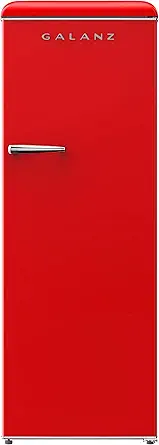
Galanz vs Atosa: Overview
Comparing Galanz and Atosa helps you determine which brand is best suited for your needs in Freezers. Both brands offer strong choices depending on your budget and key feature requirements.
Key Features & Comparison
Evaluate factors such as build quality, warranty, customer satisfaction, and total value before making your final purchase choice between Galanz and Atosa.
Features
The feature sets of Galanz and Atosa highlight their starkly different target environments and user requirements. Galanz equips its chest and upright freezers with consumer-friendly utilities such as convertible cooling modes—allowing units to switch between standard refrigeration and deep freezing—alongside user-accessible mechanical or basic electronic thermostat dials. Interior provisions often include vinyl-coated wire hanging baskets, straightforward manual defrost drains, and leveling legs configured for residential convenience. Higher-end consumer models in the Galanz line may integrate interior LED illumination and retro-inspired handles, keeping the operational interface intuitive, low-maintenance, and directly oriented toward domestic organization.
Atosa approaches features from an operational compliance and performance standpoint, integrating advanced digital temperature controllers from industry standards like Dixell or Carel. These controllers offer precise micro-adjustments, automatic defrost scheduling, and integrated sensor fault diagnostics. Furthermore, Atosa commercial freezers routinely boast heavy-duty features entirely absent in domestic lines, including self-closing doors with 90-degree stay-open capabilities, recessed industrial handles, magnetic perimeter gaskets rated for intense duty cycles, and pre-installed industrial casters with locking brakes for rapid sanitation maneuvers. Shelving systems in Atosa units utilize heavy-duty epoxy-coated steel capable of bearing substantial commercial weight loads, delivering superior structural utility compared to Galanz's residential provisions.
Performance
In terms of thermal dynamics and pull-down performance, Atosa exhibits a marked technical advantage driven by its commercial engineering specifications. Designed to recover rapidly from frequent door openings in hot kitchen environments, Atosa freezers utilize oversized, forced-air refrigeration circuits powered by eco-friendly R290 hydrocarbon refrigerants and high-horsepower compressors. The forced-air circulation ensures uniform temperature distribution across every shelf, virtually eliminating warm micro-zones and enabling swift recovery times even when large volumes of ambient-temperature food are introduced. This thermal rigidity is essential for food safety standards, preventing ambient heat migration during routine day-to-day operations.
Galanz freezers, while thoroughly reliable within residential parameters, utilize passive, static cooling coils embedded directly into the cabinet walls or configured into fixed shelf systems. This cold-wall method is exceptionally quiet, energy-efficient, and structurally simplified, which translates to fewer mechanical failure points over time. However, it delivers significantly slower temperature pull-down and recovery rates compared to Atosa's active convection systems. When subjected to high ambient summer heat in uninsulated garages or continuous access, Galanz units experience thermal variance and frost accumulation that necessitate routine manual defrosting. Nevertheless, for continuous, closed-door frozen storage where low electrical draw and silent operation are paramount, Galanz delivers steady and dependable thermal stability.
Design
Design architecture between these two manufacturers demonstrates contrasting priorities: residential integration versus industrial ergonomics. Galanz distinguishes itself in the consumer space by introducing varied exterior finishes, ranging from crisp white and modern black to specialized vintage and retro colorways fitted with stylized chrome appointments. The footprint of Galanz units is intentionally compact, engineered to navigate standard residential doorways, fit neatly under kitchen countertops, or tuck away seamlessly in compact basements. The exterior surfaces generally feature painted sheet metal combined with foam-in-place high-density polyurethane insulation, balancing structural rigidity with lightweight manageability.
Atosa, on the other hand, embraces an unapologetically utilitarian, industrial design language focused squarely on durability and sanitation. The exteriors and interiors of Atosa freezers are constructed predominantly from high-grade stainless steel, presenting exceptional resistance to corrosion, dents, and harsh chemical cleaners. Rounded interior corners facilitate complete sanitization, while the physical ergonomics emphasize functional workflow—wide door clearances, accessible bottom-mounted or top-mounted compressor compartments for routine preventative maintenance, and reinforced hinges capable of handling commercial stress. While an Atosa unit would look imposing and out of place in a modern domestic kitchen, its functional architecture is masterfully tuned for commercial workspaces where aesthetic minimalism is subordinated to absolute structural resilience.
Compare current retail pricing, active promotions, and verified stock availability directly from authorized stores: