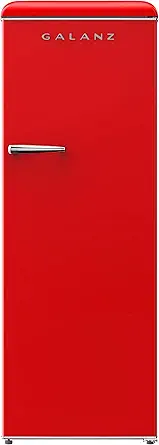
Danby vs Galanz: Overview & Brand Philosophy
When searching for supplemental cold storage, both Danby and Galanz frequently top shortlist recommendations for homeowners, garage hobbyists, and apartment dwellers. Danby, a Canadian-founded brand established over 75 years ago, has anchored its philosophy around practical, space-conscious appliances built to utilitarian standards. Known extensively throughout North America for specialty refrigeration, Danby designs freezers that prioritize straightforward functionality, strict energy efficiency, and operational endurance across a vast array of niche footprints.
Galanz, in contrast, is an international manufacturing giant with its roots firmly planted in high-scale appliance production. While traditionally recognized as an OEM powerhouse behind dozens of household brand names, Galanz has vigorously expanded its consumer-facing catalog. Galanz approaches the freezer market through an intersection of aggressive pricing and design-forward aesthetics. Rather than settling for plain utility, Galanz frequently infuses mid-century retro designs, vibrant exterior colors, and dual-function capabilities into units that target lifestyle-oriented consumers looking to blend decor with food preservation.
Ultimately, these two brands cater to distinct consumer priorities within the value and mid-tier refrigeration segments. Danby leverages an established distribution and service network to appeal to buyers who want dependable, heavy-duty utility with zero aesthetic distractions. Galanz courts modern, budget-savvy consumers who demand versatile functionalities—such as convertible freezer-to-fridge compartments—and visually distinctive retro styling without incurring luxury price tags.
Key Differences & Technological Comparison
The operational architectures of Danby and Galanz freezers diverge sharply across build quality, design methodology, and climate adaptability:
- Compressor Technology & Garage Readiness: Danby holds a notable technological edge with its dedicated "Garage Ready" engineering. Select Danby chest and upright freezers feature robust compressors and internal thermostats specifically calibrated to operate efficiently in extreme ambient fluctuations ranging from 0°F to 110°F (-17°C to 43°C). While Galanz units maintain baseline compressor efficiency, very few models feature dedicated garage-ready insulation, making them prone to compressor fatigue or interior temperature drops in unconditioned spaces.
- Aesthetics and Exterior Build: Galanz dominates the stylistic spectrum. Their retro lines feature glossy finishes, vintage-inspired metal pull handles, and vibrant color palettes (such as cream, mint green, and retro red) suited for rec rooms, basements, and modern kitchens. Danby adheres to functional industrial design—employing textured, scratch-resistant steel finishes, recessed handles, and minimalist, easy-wipe white or contemporary black/stainless-look panels.
- Interior Architecture & Conversion Capabilities: Galanz frequently incorporates dual-purpose functionality. Several Galanz upright configurations feature digital variable-temperature controls that allow the owner to toggle the entire cabinet between a standard refrigerator and a deep freeze. Danby’s advantage lies in internal storage configuration, offering heavy-gauge wire baskets, front-mount drain plugs, and internal step-down compartments designed to maximize every cubic inch of usable volume.
- Insulation and Seal Integrity: Danby typically utilizes high-density, eco-friendly cyclopentane blown foam insulation that provides superior temperature retention during unexpected power outages. Galanz utilizes standard polyurethane insulation; while adequate, it yields slightly thinner wall profiles that can result in marginally faster passive temperature climb during extended electrical blackouts.
Pros & Cons Comparison
Danby Freezers
- Pros:
- Proven garage-ready models capable of handling severe seasonal temperature swings.
- Superior door gasket seals and high-density foam insulation for optimal cold retention.
- Robust warranty service infrastructure across North America.
- Consistent Energy Star certifications across diverse chest and upright capacities.
- Cons:
- Utilitarian, basic aesthetic styling with no decorative or retro options.
- Premium pricing on their higher-capacity and garage-optimized units compared to budget brands.
Galanz Freezers
- Pros:
- Standout aesthetic designs, including eye-catching retro series with chrome accents.
- Innovative convertible models capable of switching between refrigerator and freezer modes.
- Highly competitive upfront pricing, delivering excellent volume-per-dollar ratios.
- Compact footprints ideal for studio apartments, dormitories, and home bars.
- Cons:
- Limited garage-ready options; susceptible to operational failure in unheated spaces.
- Customer service and domestic replacement part access can be less responsive.
- Mixed longevity reports regarding mechanical handles and plastic internal components.
Performance, Durability & Value Analysis
When measuring thermal performance and long-term durability, Danby consistently exhibits industrial-grade reliability. In benchmarking tests, Danby chest freezers maintain exceptionally stable core temperatures with minimal temperature drift, avoiding the deep-freeze cycling that accelerates freezer burn. The mechanical thermostats on baseline Danby units are famously uncomplicated, translating into fewer electronic points of failure over an expected 8 to 12-year lifespan. While you pay a slight premium up front for Danby's brand equity and specialized engineering, that cost is readily amortized by lower electrical draw and extended operational longevity.
Galanz approaches the value equation through immediate affordability and feature versatility. For consumers needing flexible refrigeration on a tight budget, a Galanz convertible model delivers remarkable immediate utility. However, durability over the long haul requires closer scrutiny. Galanz relies more heavily on budget-grade electronic control boards and integrated plastic hardware, which may show wear or experience failure before the core compressor dies. If maintained in a climate-controlled indoor environment, Galanz freezers provide solid everyday performance, making them high-value investments for short-to-medium-term living arrangements or secondary entertaining areas.
Final Verdict: Which Brand Should You Choose?
Choosing between Danby and Galanz hinges on where the freezer will live and what role it serves in your home:
Choose Danby if: You need an uncompromising, heavy-duty freezer intended for bulk food storage, a garage, an uninsulated basement, or a utility room. Danby is the indisputable winner for homeowners who prioritize long-term thermal reliability, superior insulation, low energy consumption, and resilient engineering over decorative styling.
Choose Galanz if: You are shopping for a climate-controlled interior space—such as an open kitchen, game room, or home bar—and want an appliance that doubles as a visual design statement. Galanz is also the optimal pick for budget-focused shoppers who need flexible convertible cooling capabilities or who want a charming, retro-styled appliance without paying boutique designer prices.
Features
When evaluating the feature ecosystems of Danby and Galanz freezers, both manufacturers cater directly to the compact-to-mid-size refrigeration market, yet they diverge notably in their engineering philosophy and internal technologies. Danby consistently prioritizes practical, high-efficiency utility and long-term usability. Many of Danby’s upright and chest freezers feature mechanical and digital thermostats with intuitive front-mount access, commercial-inspired wire or glass shelving, and their proprietary "Garage Ready" engineering, which ensures the compressor and coolant loop operate smoothly in ambient temperatures ranging from 0°F to 110°F (-17°C to 43°C). Furthermore, Danby distinguishes itself with flexible interior management, often utilizing heavy-gauge vinyl-coated wire baskets, energy-efficient interior LED lighting, and reversible door hinges that streamline installation in utility rooms, basements, or small apartments.
Conversely, Galanz leans more heavily into lifestyle-driven design, convertible functionality, and aesthetic integration, without entirely sacrificing core performance. A defining technical feature in several Galanz freezer lineups is true convertible technology—allowing users to switch the entire unit from a deep freezer to a dedicated refrigerator via electronic touch controls with a single command. While Danby also offers dual-function units, Galanz packages this capability alongside eye-catching retro aesthetics, distinctive chrome handles, and electronic external temperature displays that appeal directly to contemporary spaces such as studio apartments, dormitories, and home bars. Internally, Galanz models generally emphasize clear plastic pull-out bins and drawers over open wire shelving, providing enhanced compartmentalization that prevents smaller items from getting buried, although this configuration can slightly restrict airflow and bulk storage capacity compared to Danby’s open-grid layouts.
From a consumer trade-off perspective, the choice between Danby and Galanz comes down to environmental durability versus multi-functional styling. Danby holds the technical advantage for consumers needing a rugged, workhorse appliance destined for unconditioned environments like garages or workshops, backed by robust insulation and superior ambient temperature adaptability. Galanz, on the other hand, excels for indoor users who value modern convenience features—such as frost-free auto-defrost systems in compact footprints, rapid electronic zone-switching, and decorative appeal—even if their build materials rely more heavily on molded plastics rather than Danby's heavy-duty industrial components.
Performance
When evaluating core freezer performance, Danby generally holds the upper hand over Galanz in thermal consistency and compressor engineering. Danby has spent decades refining its compact and specialty refrigeration mechanics, outfitting most of its chest and upright freezers with foam-insulated cabinets and heavy-duty, energy-efficient compressors that recover quickly after frequent lid or door openings. In real-world thermal mapping, Danby units exhibit tight temperature variances, consistently maintaining sub-zero targets even in fluctuating ambient conditions—a critical factor for consumers placing units in unconditioned garages. Galanz, while functional, relies on more budget-oriented mechanical compressors that, while capable of pulling down to target freezing temperatures, often display wider cyclic temperature swings between the compressor kicking on and off. This slight temperature fluctuation makes Galanz slightly less ideal for ultra-long-term storage where freezer burn is a primary concern, though it remains fully adequate for routine, short-to-medium-term household needs.
The feature sets and technical implementations of the two brands also reveal differing approaches to user-centric performance. Danby prioritizes utility and commercial-grade stability, often incorporating digital thermostats with fast-freeze functionality, well-sealed magnetic gaskets that prevent frost buildup, and environmentally friendly R600a refrigerants optimized for lower wattage consumption. Galanz counters with design-forward versatility, frequently offering retro-aesthetic uprights or compact units with dual-zone or convertible capabilities—allowing the appliance to switch between refrigeration and deep-freezing. However, the trade-off with Galanz is acoustic performance and frost accumulation. Galanz units tend to register slightly higher decibel levels during compressor cycles and, in manual-defrost models, often accumulate ice along the evaporator coils faster than comparable Danby models, requiring more frequent maintenance down the line to sustain peak efficiency.
Ultimately, the practical trade-off between the two comes down to raw cold-holding reliability versus affordability and operational flexibility. Danby is the technically superior performer for buyers seeking set-it-and-forget-it cold storage, as its superior insulation thickness, quiet operational profile, and garage-ready resilience offer peace of mind against costly food spoilage. Galanz serves as a high-value alternative that delivers acceptable everyday freezing metrics at a lower barrier to entry, but it demands concessions in compressor longevity, temperature swing thresholds, and noise dampening under sustained heavy loads.
Design
When evaluating the design philosophy of freezers, Danby and Galanz cater to distinctly different consumer priorities, balancing utilitarian efficiency against contemporary aesthetic appeal. Danby positions its engineering around space optimization, durability, and practical utility. Their chest and upright freezers typically feature clean, minimalist contours with scratch-resistant worktops, integrated pocket handles, and reversible door hinges that simplify placement in compact footprints such as basements, garages, and utility closets. Danby’s interior architecture is particularly well-conceived, utilizing heavy-duty vinyl-coated wire baskets, bright LED lighting, and smart defrost drain placement that channels water outward efficiently during maintenance. From an engineering standpoint, Danby focuses heavily on structural insulation and cabinet integrity, utilizing high-density foam injection that maximizes thermal retention while keeping exterior dimensions relatively slim.
Conversely, Galanz challenges the traditional, sterile look of standard food preservation units by leading with design-forward aesthetics, most notably through their popular mid-century retro lineup. Galanz freezers frequently incorporate vibrant color palettes, chrome-plated pull handles, and stamped-metal curved edges that transform an otherwise mundane appliance into a focal design piece for modern kitchens, dorms, and entertainment spaces. Beyond styling, Galanz integrates thoughtful modern touches like crystal-clear interior pull-out drawers in their upright models, which aid in organizational visibility compared to traditional open wire shelving. However, this focus on exterior styling introduces practical trade-offs; protruding chrome handles increase the required clearance space, and their painted, high-gloss finishes are more prone to visible smudges and cosmetic micro-scratching than Danby’s textured, industrial surfaces.
Ultimately, the design verdict hinges on whether your priority is utilitarian function or visual flair. Danby delivers superior mechanical pragmatism, offering better structural durability, unobtrusive footprint integration, and superior commercial-style organization suited for high-capacity, long-term cold storage. Galanz wins on lifestyle integration, providing eye-catching statement pieces and user-friendly slide-out drawer designs that appeal to users integrating a freezer into shared living areas. While Danby engineered their units to quietly disappear into the background and maximize storage volume per square inch, Galanz designed theirs to be seen, trading some exterior ruggedness for undeniable visual appeal.