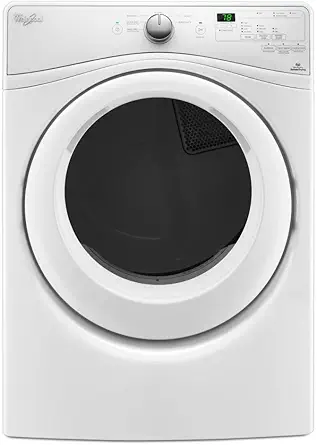
LG vs Whirlpool: Overview
Comparing LG and Whirlpool helps you determine which brand is best suited for your needs in Dryers. Both brands offer strong choices depending on your budget and key feature requirements.
Key Features & Comparison
Evaluate factors such as build quality, warranty, customer satisfaction, and total value before making your final purchase choice between LG and Whirlpool.
Features
In terms of feature sets, LG leads the market by integrating smart home technology and automated fabric care deeply into its machines. Most mid-to-high-end LG dryers come equipped with AI Fabric Sensors (AI DD) that detect load size, fabric softness, and moisture levels to automatically optimize cycle times and temperatures, minimizing heat-induced wear. LG’s TurboSteam technology is another standout, effectively eliminating wrinkles, odors, and static in short 10-minute bursts. Furthermore, LG’s ThinQ ecosystem offers robust Wi-Fi capabilities, allowing users to remotely start cycles, download specialized drying programs, and enable Proactive Customer Care, which alerts homeowners to vent blockages before they become safety hazards.
Whirlpool adopts a more pragmatic approach to features, emphasizing user-friendly mechanics over hyper-connected electronics. While Whirlpool does offer smart models with their own mobile app integrations, their standout innovations are mechanical and practical, such as the intuitive “What to Wash / How to Wash” cycle navigation and the specialized Wrinkle Shield Plus option with Steam, which periodically tumbles loads for up to 150 minutes post-cycle. Whirlpool also focuses on ergonomic physical features, such as quad-baffle tumbling systems that balance large loads more effectively. However, when comparing sheer programmatic versatility, smart diagnostics, and steam efficiency, LG easily outpaces Whirlpool’s more conservative feature architecture.
Performance
Performance metrics reveal a distinct divergence in drying dynamics, fabric preservation, and cycle pacing between the two manufacturers. LG dryers excel particularly in temperature regulation; by utilizing sophisticated dual-sensor arrays and advanced thermistors, LG models prevent the high-heat spikes that degrade synthetic fibers and shrink cottons over time. This gentle approach results in slightly longer cycle durations in standard Eco modes, but ensures superior fabric preservation and industry-leading energy efficiency ratings from ENERGY STAR. Additionally, LG’s LoDecibel quiet operation ensures that even heavy, unbalanced loads run with remarkably low vibrational resonance.
Whirlpool prioritizes rapid moisture extraction and robust drying throughput, making them exceptional performers for busy, high-volume households. Utilizing their Advanced Moisture Sensing system with three built-in sensors, Whirlpool dryers track both moisture and ambient temperature to stop the cycle when clothes are dry, effectively preventing over-drying. Whirlpool units tend to run hotter on standard settings than LG equivalents, which cuts down cycle times significantly on heavy towels and denim, but can lead to slightly more fabric stress over a garment’s lifespan. For users demanding fast, thoroughly dry loads on heavy textiles, Whirlpool is formidable, but LG takes the prize for overall fabric care, noise reduction, and thermal control.
Design
From an aesthetic and structural design standpoint, LG leans heavily into contemporary, minimalist styling that integrates seamlessly into modern living spaces. LG dryers feature sleek, scratch-resistant tempered glass doors, seamless electronic control panels integrated directly into the door face in premium models, and sophisticated finishes such as Black Steel and Graphite. Beyond visual appeal, LG’s internal engineering is premium, featuring NeveRust stainless steel drums that prevent snagging and chipping, along with horizontal suspension systems that minimize cabinet vibration in stacked or closet installations.
Whirlpool’s design language is decidedly more traditional and functional, characterized by classic rear-console controls on entry-to-mid models and streamlined front-consoles on their high-end front-load pairs. Whirlpool predominantly utilizes powder-coated or porcelain-enameled steel drums on its value models, stepping up to stainless steel only on higher trims, which offers slightly less protection against chipped coatings over decades of heavy use. However, Whirlpool retains superior versatility in installation hardware, notably with hampering-style drop-down doors available on select units that serve as a shelf during folding, alongside traditional side-swing doors. While Whirlpool provides solid, ergonomic utility, LG sets the benchmark for modern industrial design and premium fit-and-finish.