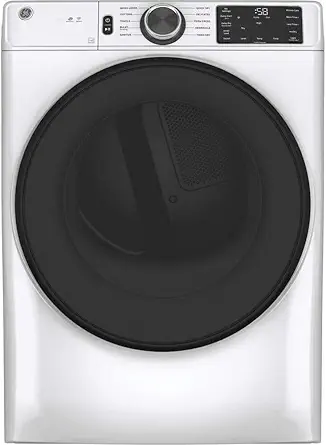
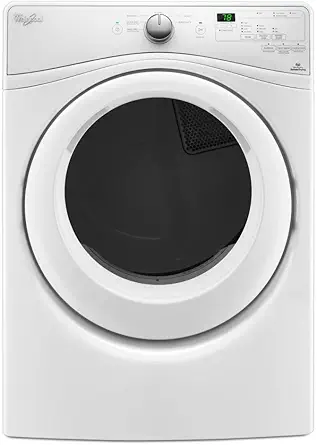
GE vs Whirlpool: Overview & Brand Philosophy
When selecting a clothes dryer, General Electric (GE) and Whirlpool represent two of the most deeply entrenched and ubiquitous names in the American appliance market. Both manufacturers have spent over a century engineering laundry solutions, but their design philosophies and market trajectories have diverged significantly in recent years. Whirlpool, headquartered in Benton Charter Township, Michigan, maintains a legacy focused on time-tested mechanical reliability, wide-scale serviceability, and intuitive, straightforward operation. Whirlpool views the dryer primarily as a utilitarian workhorse, prioritizing incremental refinements to core mechanical components over flashy tech novelties.
Conversely, GE Appliances—headquartered in Louisville, Kentucky, and operating as a subsidiary of the global consumer electronics giant Haier since 2016—has aggressively pivoted toward modern, tech-forward laundry design. Infused with substantial capital for research and development, GE has modernized its product portfolio across its core, Profile, and Cafe tiers. GE approaches dryer manufacturing with a clear focus on connectivity, modern interior volume maximization, and fabric care technologies tailored to tech-conscious consumers who want integrated smart homes and comprehensive automated cycles.
While both brands span budget entry-level units to high-capacity premium models, their underlying engineering values target different types of homeowners. Whirlpool appeals to consumers seeking low-maintenance, easily repairable platforms with familiar operational footprints. GE captures the market looking for smart-home integration, advanced moisture-sensing algorithms, and modern features like steam de-wrinkling and antimicrobial component protection.
Key Differences & Technological Comparison
Understanding the fundamental engineering differences between GE and Whirlpool dryers involves comparing their moisture-sensing technologies, connectivity ecosystems, drum designs, and airflow configurations.
Sensor Drying Technology: The primary failure point of older dryers was over-drying, which damages fabrics and wastes electricity. Whirlpool tackles this with its Advanced Moisture Sensing system, which utilizes three separate built-in sensors to monitor both moisture levels and internal temperatures throughout the drying cycle. This prevents over-drying by adapting the cycle length dynamically. GE utilizes its HE Sensor Dry (and dual-thermistor technology on higher tiers), which employs dual thermistors alongside a dedicated sensor bar to deliver highly consistent drying accuracy, particularly with mixed-fabric loads that typically trip up standard moisture bars.
Smart Connectivity and Ecosystems: GE holds a decisive advantage in the realm of the Internet of Things (IoT). Powered by the SmartHQ platform, GE dryers offer robust Wi-Fi capabilities, including remote cycle starts, real-time cycle status updates, specialized cycle downloads for specific garment types, and diagnostic telemetry for service technicians. Whirlpool’s mobile connectivity through the Whirlpool App is functional, allowing for remote monitoring and simple smart home links to Amazon Alexa and Google Assistant, but it lacks the frequency of firmware updates, application stability, and comprehensive cycle management found in GE's ecosystem.
Fabric Care & Sanitization: Both manufacturers offer steam-enhanced cycles to relax wrinkles and refresh garments without a full wash, but implementation differs. Premium GE models feature integrated steam cycles that connect directly to a cold water line, alongside an EPA-registered sanitizing cycle that reduces 99.9% of common household bacteria. Whirlpool relies on its Wrinkle Shield Plus with Steam option, which periodically tumbles clothes with light bursts of steam for up to 150 minutes post-cycle, an exceptional feature for households that cannot unload immediately.
Airflow Dynamics and Drum Mechanics: GE dryers frequently emphasize long vent runs, offering up to 120 feet of venting capability on select models to accommodate challenging architectural layouts in modern condominiums and multi-story homes. Whirlpool designs focus on balanced quad-baffle airflow systems, utilizing durable powder-coated or stainless steel drums mounted on heavy-duty rollers designed for smooth, low-vibration operation across long operational lifespans.
Pros & Cons Comparison
GE Dryers
- Pro: Superior smart platform (SmartHQ) with advanced cycle management, remote diagnostics, and regular feature updates.
- Pro: Flexible venting configurations, with select models offering up to 120-foot equivalent duct runs for versatile installation.
- Pro: Innovative features such as Microban antimicrobial protection integrated into select internal components to combat mold and odor.
- Pro: Exceptional drying speed on heavy and bulky items when utilizing high-end dual-thermistor sensor configurations.
- Con: Can be prone to minor electronic glitches or main control board errors over extended lifespans.
- Con: Entry-level units often feature higher ambient operational noise compared to competing baseline models.
Whirlpool Dryers
- Pro: Proven mechanical reliability; replacement parts are ubiquitous, affordable, and easy for any local technician to service.
- Pro: Wrinkle Shield Plus with Steam provides industry-leading performance in preventing set-in wrinkles when loads sit idle.
- Pro: Intuitive, streamlined "What to Dry / How to Dry" control panels simplify cycle selection for all user skill levels.
- Pro: Robust build quality across standard drum rollers, drive belts, and heating elements.
- Con: Smart features and mobile app integration are sluggish and offer limited utility compared to competitors.
- Con: Styling across mid-tier options can feel dated, often retaining utilitarian plastic trims and traditional aesthetic cues.
Performance, Durability & Value Analysis
From a purely mechanical standpoint, Whirlpool holds a slight edge in pure durability and total cost of ownership. Because Whirlpool’s base internal architecture has remained consistent across several generations, independent repair technicians can diagnose and fix these machines swiftly. Parts such as thermal fuses, drive belts, heating coils, and drum rollers are widely available and cost-effective. Whirlpool dryers regularly achieve an operational lifespan of 10 to 13 years with minimal maintenance. In terms of sheer drying throughput, their heating systems perform predictably, though users may find that mixed-load sensors occasionally leave thick waistbands or heavy towels slightly damp on standard eco settings.
GE excels in performance customization and modern efficiency. Its HE Sensor Dry system minimizes energy waste more effectively than standard cycle timers, extending the lifespan of fine fabrics by mitigating thermal degradation. While GE dryers match Whirlpool's structural durability in drum construction and motor reliability, their increased reliance on complex digital interfaces and main logic control boards introduces a higher likelihood of electrical service calls after 6 to 8 years of heavy use. However, from a value proposition standpoint, GE frequently packs more internal drum capacity (often exceeding 7.4 to 7.8 cubic feet) and higher-tier features—like sanitizing steam options—into price brackets where Whirlpool offers comparatively bare-bones specifications.
Final Verdict: Which Brand Should You Choose?
Choosing between GE and Whirlpool hinges on whether you value advanced smart capability and feature depth, or mechanical simplicity and ease of maintenance.
Choose GE if: You prioritize connected living, need long venting solutions for your laundry room's physical layout, and want modern fabric care tech such as high-temperature sanitization, integrated steam refreshing, and responsive cycle tracking via smartphone. GE is also the stronger option for larger families who require maximum interior drum capacity to handle oversized king bedding and heavy towel loads without crowding.
Choose Whirlpool if: You favor mechanical longevity, straightforward tactile interfaces, and an appliance that any technician in the country can fix for a modest repair bill. If you want an appliance that performs its core task without needing Wi-Fi pairing, software updates, or complex digital menus, Whirlpool remains the premier standard for dependable, low-stress laundry duty.
Features
When evaluating drying features, GE emphasizes advanced sensor automation, robust sanitation cycles, and cutting-edge connectivity. The brand differentiates itself through its SmartHQ platform, which offers comprehensive Wi-Fi connectivity and practical smart features like "Washer-Link," wirelessly syncing the dryer’s settings to the matching washer's completed cycle. In terms of fabric care engineering, GE utilizes Sensor Dry dual-thermistor technology that actively detects both temperature and moisture levels, effectively preventing over-drying and fabric degradation. Many mid-to-high-tier GE models also include specialized cycles such as Sanitize, which uses elevated temperatures to eliminate common household bacteria, and an active steam de-wrinkle feature that injects steam directly into the drum to refresh garments. This tech-forward approach makes GE particularly appealing to consumers who prioritize precise fabric care and interconnected smart-home integration.
Whirlpool takes a more streamlined, mechanically pragmatic approach to its feature architecture, prioritizing high-efficiency throughput and intuitive usability. Instead of relying heavily on smartphone integration, Whirlpool focuses on proprietary physical innovations, such as the Advanced Moisture Sensing system, which uses three built-in sensors to track both moisture and temperature to adapt drying times dynamically. Whirlpool’s most defining functional feature is its "What to Wash / How to Wash" intuitive touch control interface, which eliminates guesswork by guiding the user to the exact cycle modification needed based on fabric type. Furthermore, their Wrinkle Shield Plus option with Steam periodically tumbles the load for up to 150 minutes post-cycle while introducing intermittent bursts of steam, offering a significant practical advantage for busy households that cannot unload immediately.
The technical trade-off between the two brands centers on digital versatility versus mechanical simplicity. GE offers a richer overall feature set, outperforming Whirlpool in app capabilities, remote monitoring, and specialized, granular cycle adjustments for delicate or heavy-duty items. However, Whirlpool counters with superior core utilitarian functions; its quad-baffle design and multi-sensor tracking often deliver a more even tumble and dry on standard loads with less overall cycle fiddling. For tech-savvy users wanting deep customization and smart alerts, GE’s feature suite provides a clear edge, whereas Whirlpool represents a time-tested, dependable feature set engineered for straightforward operation and efficient, set-it-and-forget-it performance.
Performance
When evaluating drying performance, both GE and Whirlpool leverage decades of appliance engineering, yet they take distinctly different approaches to heat regulation and cycle optimization. GE excels in high-efficiency heat delivery and rapid cycle execution, largely powered by their advanced dual-thermistor sensor technology. This system continually monitors both temperature and moisture levels, effectively preventing over-drying and fabric degradation. GE models, particularly in their Profile and UltraFresh lines, stand out for their specialized cycle algorithms—such as Quick Dry and high-heat Sanitize cycles—which demonstrate superior performance in reducing allergens and neutralizing bacteria. Additionally, GE's integration of reverse-tumble and de-wrinkle features minimizes tangled sheets and clothing, translating to more uniform heat penetration and reduced post-cycle ironing time.
Whirlpool, in contrast, prioritizes fabric care and consistent, long-term drying equity via their proprietary Advanced Moisture Sensing system. By employing three distinct sensors that track moisture and temperature at different touchpoints, Whirlpool dryers continuously calibrate heat levels to protect natural fibers from heat fatigue. While Whirlpool units may run slightly longer cycles on standard normal settings compared to GE, their low-temperature performance—anchored by the EcoBoost option—is exceptional for delicate garments, using less energy without leaving damp pockets in heavy items like denim and towels. Whirlpool's dual-action interior baffles also create a more consistent tumbling pattern, reducing cold spots and bunching in large-capacity loads.
The practical trade-offs between the two brands ultimately center on speed versus fabric preservation. GE delivers the edge for busy households demanding rapid cycle turnover and powerful heat extraction, making it the stronger performer for thick, heavy-duty loads like comforters and workwear. Whirlpool holds the advantage for consumers focused on garment longevity and energy conservation, providing gentler, more measured drying cycles. However, Whirlpool can occasionally struggle with bulky bedding, requiring an extra cycle to clear residual core moisture, whereas GE’s higher operational temperatures slightly increase the risk of fabric shrinkage if sensor cycles are not diligently utilized.
Design
When evaluating the design philosophy of clothes dryers, GE and Whirlpool take distinctly different engineering approaches that cater to different consumer priorities. GE generally embraces a modern, tech-forward aesthetic characterized by sleek, stylized control panels, integrated digital displays, and bold colorways like Diamond Gray and Sapphire Blue. Beyond surface-level styling, GE’s engineering places a heavy emphasis on dynamic space utilization and ergonomic utility. Many of their modern dryers, particularly within the Profile line, feature shallower cabinet depths that allow for flush installation in tight closets, alongside reversible doors that offer wider 120-degree opening angles to facilitate easier basket loading. Furthermore, GE leads in smart-home integration, embedding Wi-Fi-enabled touch interfaces that update cycle parameters seamlessly via their SmartHQ platform, creating an intuitive user experience for technologically inclined consumers.
Conversely, Whirlpool adheres to a more conservative, utilitarian design ethos that prioritizes modular simplicity, rugged durability, and serviceability. Whirlpool dryers typically sport clean, functional lines with straightforward, dual-quadrant interfaces that balance intuitive touch controls with familiar rotary dials. While aesthetically less cutting-edge than GE, Whirlpool’s chassis engineering is a masterclass in long-term reliability. The brand minimizes unnecessary electronic failure points on its primary structural components and relies on robust, galvanized steel drums and heavy-duty, commercial-grade door latches. A standout practical engineering triumph from Whirlpool is their patented Hamper Door design (a bottom-hinged door that drops down rather than swings out), which acts as a practical laundry chute to prevent clean clothes from tumbling onto the floor. While their aesthetic choices might feel dated to buyers seeking a showroom centerpiece, Whirlpool’s internal hardware layout simplifies technician access, reducing future maintenance complexity.
Ultimately, the design trade-offs between GE and Whirlpool highlight a clear divide between progressive innovation and time-tested practicality. GE excels in delivering visually striking, feature-dense appliances equipped with larger transparent viewing windows, ergonomic lint traps that filter out smaller particulates, and sleek capacitive interfaces. However, this high-tech digital approach introduces more sensitive electrical components that can be costly to replace. Whirlpool sacrifices flash for functional longevity, offering straightforward ergonomics, easier DIY repairs, and highly resilient finishes that withstand mechanical wear. For consumers prioritizing cutting-edge aesthetics, flexible installation footprints, and modern digital ecosystems, GE stands out in design; however, for those who value pragmatic engineering, structural durability, and functional door mechanics, Whirlpool remains a formidable benchmark.