Ultimate Ears vs Tribit: Overview
Comparing Ultimate Ears and Tribit helps you determine which brand is best suited for your needs in Boomboxes. Both brands offer strong choices depending on your budget and key feature requirements.
Key Features & Comparison
Evaluate factors such as build quality, warranty, customer satisfaction, and total value before making your final purchase choice between Ultimate Ears and Tribit.
Features
The feature sets of Ultimate Ears and Tribit boomboxes reflect divergent product philosophies regarding connectivity, utility, and user control. Ultimate Ears focuses heavily on seamless source switching and synchronized multi-speaker ecosystems. Models like the HYPERBOOM feature multiple inputs—including dual Bluetooth channels, 3.5mm auxiliary, and optical audio—allowing multiple users to trade off DJ duties seamlessly. Furthermore, UE's dedicated application provides sophisticated utility, including customizable five-band equalizers, scheduled alarms, remote power controls, and the proprietary PartyUp feature, which enables wireless linking across dozens of compatible UE speakers across generations.
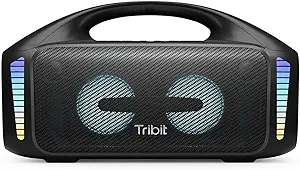
Tribit takes a more utilitarian, multimedia-centric approach to features, emphasizing immediate party functionality and portable power. The Tribit StormBox series frequently integrates dynamic, beat-driven RGB LED lighting arrays that can be synchronized or disabled, a visual flair that Ultimate Ears deliberately avoids. Additionally, Tribit incorporates reverse charging capabilities, utilizing its massive internal battery banks to function as power banks for smartphones and external devices via USB-A or USB-C. While Tribit's companion app has improved significantly with custom EQ controls, it lacks the multi-source optical inputs and effortless cross-generation speaker chaining found within the Ultimate Ears ecosystem, making Tribit more focused on standalone autonomy.
Performance
Acoustic performance reveals fundamental differences in sound signature, amplification tuning, and driver implementation between the two manufacturers. Ultimate Ears prioritizes spatial dispersion, expansive dynamic range, and adaptive acoustics. The HYPERBOOM, for example, integrates an adaptive EQ sensor that analyzes ambient environment reflections and actively calibrates sound profile curves in real time. UE’s sonic balance is tailored toward clean, transparent midrange reproduction and controlled, punchy bass that resists distortion even near maximum output levels, ensuring that vocals and acoustic instrumentation remain articulate during outdoor use.
Tribit, conversely, leans aggressively into heavy, authoritative low-end output supported by its proprietary XBass algorithmic DSP. Utilizing dual passive radiators paired with dedicated high-output woofers and independent silk-dome tweeters, Tribit boomboxes deliver a physical, chest-thumping sub-bass presence that often exceeds the low-frequency extension of similarly sized UE models. While high volumes on Tribit hardware can occasionally introduce slight DSP-driven dynamic compression or minor treble harshness depending on the EQ preset, its sheer volume capabilities and foundational bass depth offer an energetic, visceral performance that dominates open-air environments and high-energy gatherings.
Design
Design architecture underscores the physical identity and intended environment of each brand's product lineup. Ultimate Ears champions a minimalist, contemporary architectural design language characterized by monolithic geometric forms, wrapped in proprietary two-tone acoustic fabric that is stain-resistant, water-repellent, and resilient against abrasions. UE speakers prominently feature iconic oversized tactile volume controls and integrated, pull-out rubberized carry handles. Ergonomically, they are designed to blend effortlessly into modern living room decor while retaining substantial IPX4 to IP67 environmental protection ratings, ensuring moisture resistance against rain, spills, and pool splashes.
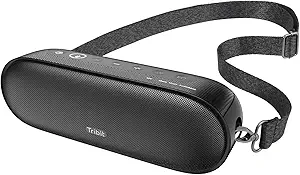
Tribit adheres to a classic, utilitarian boombox silhouette that prioritizes rugged handling and visual prominence over minimalist interior integration. Featuring molded heavy-duty polymer chassis, integrated rigid grab handles, and exposed silicone-damped passive radiator assemblies, Tribit hardware looks intentionally industrial and built for transport. Most notably, Tribit frequently achieves full IPX7 or IP68 waterproof ratings across its boombox models, offering complete submersion protection that exceeds the splash resistance of some UE flagships. While bulkier and less discreet than Ultimate Ears' fabric-wrapped monoliths, Tribit's structural design is engineered for uncompromised resilience in demanding outdoor conditions.