Tribit vs Singing Wood: Overview
Comparing Tribit and Singing Wood helps you determine which brand is best suited for your needs in Boomboxes. Both brands offer strong choices depending on your budget and key feature requirements.
Key Features & Comparison
Evaluate factors such as build quality, warranty, customer satisfaction, and total value before making your final purchase choice between Tribit and Singing Wood.
Features
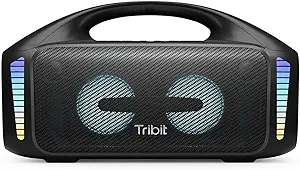
From a feature-set perspective, these two brands diverge sharply in how they define the core identity of a boombox. Tribit embraces contemporary digital ecosystems, equipping its flagship StormBox series with advanced Bluetooth codecs, integrated multi-speaker pairing capabilities (Broadcast Mode or TWS), integrated power banks for charging mobile devices via USB-C, and dedicated smartphone application support for custom graphic equalization. Singing Wood, however, emphasizes multimedia versatility centered around legacy formats, typically outfitting its systems with front- or top-loading programmable CD/CD-R players, cassette recorders with auto-stop mechanisms, standard auxiliary inputs, and analog or digital AM/FM radio receivers with telescopic antennas.
This difference introduces clear operational trade-offs for prospective buyers. With Singing Wood, users gain all-in-one tactile versatility that allows them to play audiobooks, tape cassettes, and classic compact discs without tethering to a smartphone or streaming service, though they sacrifice advanced DSP customization and high-speed multi-unit synchronization. Conversely, Tribit discards legacy media entirely in favor of an optimized digital workflow, providing users with firmware updates, adjustable dynamic sound profiles, and robust water-resistant charging ports. For pure physical format flexibility, Singing Wood is inherently broader, but for smart connectivity and modern power delivery, Tribit is technologically superior.
Performance
Acoustic performance presents the starkest technical contrast between Tribit and Singing Wood. Tribit designs its acoustic enclosures with long-throw neodymium drivers, dedicated silk-dome tweeters, and dual high-excursion passive radiators, powered by proprietary XBass tuning algorithms. This architecture yields exceptional dynamic headroom, clean high-frequency extension, and articulate sub-bass impact that easily cuts through ambient outdoor noise with minimal total harmonic distortion (THD) even at maximum volume thresholds. The result is a punchy, room-filling soundstage engineered to satisfy modern production standards across bass-heavy and dynamic genres.
Singing Wood provides an acoustic signature calibrated more for moderate indoor listening, vocal clarity, and spoken-word media rather than room-shaking low-end extension. Because its units generally rely on modest dual stereo drivers within resonant, lightweight plastic cavities without heavy passive radiators, the bass response is relatively modest, and distortion can become apparent when pushed toward higher gain stages. However, Singing Wood excels at midrange intelligibility, rendering podcast dialogue, AM talk radio, and vocal tracks with crisp articulation. While audiophiles and party hosts will find Tribit significantly more capable in sound pressure level (SPL) and bass depth, Singing Wood remains entirely competent for casual desktop or kitchen listening.
Design
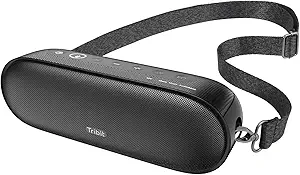
In structural execution and industrial design, Tribit prioritizes rugged durability, ergonomic transportability, and environmental protection. Most Tribit boombox models boast high-grade IPX7 or IP67 ingress protection ratings, featuring rubberized bumpers, high-density fabric grilles, and hermetically sealed port gaskets that safeguard the internal circuitry against dust, drops, and complete water submersion. Integrated heavy-duty handles, balanced center-of-gravity engineering, and tactile membrane buttons ensure that Tribit units can withstand punishing outdoor use at construction sites, poolside gatherings, and campsites.
Singing Wood adopts a distinctly retro, home-oriented aesthetic reminiscent of 1980s and 1990s boomboxes, featuring lightweight ABS plastic enclosures, visible CD lids, mechanical tactile switchgear, and traditional analog tuning dials or simple LED displays. While these designs boast classic nostalgic charm, desktop-friendly footprints, and intuitive physical controls that require no software learning curve, they lack any meaningful environmental sealing against moisture or dirt. Mechanically, Singing Wood units are engineered for stationary use on shelves or bedside tables, whereas Tribit is constructed from the ground up to endure the rigors of an active, mobile lifestyle.