TOSHIBA vs Tribit: Overview
Comparing TOSHIBA and Tribit helps you determine which brand is best suited for your needs in Boomboxes. Both brands offer strong choices depending on your budget and key feature requirements.
Key Features & Comparison
Evaluate factors such as build quality, warranty, customer satisfaction, and total value before making your final purchase choice between TOSHIBA and Tribit.
Features
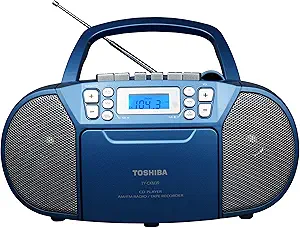
Toshiba’s feature portfolio is anchored in extensive physical media support, frequently integrating top-loading CD players, cassette decks with recording capabilities, and analog or digital AM/FM tuners. Models like the TY-CWU500 also introduce USB playback, SD card slots, and basic Bluetooth receivers, creating a comprehensive media junction that accepts virtually any standard format. However, its software implementation remains utilitarian; playback features lack advanced customization, Bluetooth codecs are typically limited to baseline SBC, and mobile device pairing is basic without companion app support or multi-speaker synchronization networks.
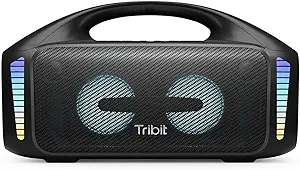
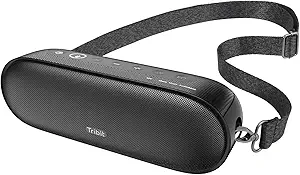
Tribit takes a radically modern approach by omitting optical and magnetic drives entirely in favor of cutting-edge wireless technology and ruggedized utility. Flagship models like the StormBox Blast incorporate Bluetooth 5.3, high-efficiency power banks for charging mobile devices, dynamic RGB LED light arrays that sync to audio transients, and proprietary multi-speaker linking modes. Furthermore, Tribit offers dedicated mobile application control featuring fully customizable parametric equalizers and firmware updates, providing technical adaptability and feature depth that vastly outclasses Toshiba's static, legacy-oriented feature set.
Performance
From an acoustic engineering perspective, Tribit operates in an entirely different performance tier than Toshiba. Tribit utilizes high-output neodymium drivers, dedicated high-frequency tweeters, and symmetrical passive radiators tuned with advanced digital signal processing (DSP) and proprietary XBass technology. This architecture delivers deep, distortion-free sub-bass reaching below 50 Hz, balanced midrange articulation, and expansive sound pressure levels (SPL) capable of easily projecting across open outdoor spaces without thermal compression or acoustic distortion at high volumes.
Toshiba boomboxes provide adequate vocal clarity and mid-forward frequency responses that are well-suited for radio broadcasts, podcasts, and casual CD listening, but they struggle with demanding dynamic ranges. Their enclosures typically house smaller, full-range paper-cone drivers powered by modest internal amplifiers that exhibit noticeable harmonic distortion when pushed past moderate listening volumes. Bass response is often shallow and boxy due to lightweight, resonance-prone plastic cavities, leaving Toshiba lagging far behind Tribit in dynamic impact, stereo separation, and acoustic transparency.
Design
Toshiba’s industrial design adheres to the classic boombox archetype of the 1980s and 1990s, characterized by angular molded plastic shells, integrated carry handles, prominent front-firing speaker grilles, and tactile mechanical buttons. While this retro-functional aesthetic provides immediate physical feedback and intuitive operation for users of all ages, the construction relies heavily on hollow ABS plastics that offer limited impact resistance and zero protection against dust or moisture ingress. Most models are tethered to AC power cords or rely on bulky, disposable C or D-cell batteries for untethered use.
In stark contrast, Tribit engineers its boomboxes with a sleek, utilitarian aesthetic built to withstand extreme environmental conditions. Utilizing dense polycarbonate exoskeletons, thick silicone impact bumpers, and robust IPX7-rated waterproof seals, Tribit devices are fully submersible and impervious to mud, rain, and drops. Ergonomically sculpted integrated handles, responsive rubberized interface surfaces, and built-in rechargeable lithium-ion battery arrays delivering over 20 hours of playtime complete a design that is vastly more durable, portable, and structurally refined than Toshiba's domestic-focused enclosures.