TOSHIBA vs JBL: Overview
Comparing TOSHIBA and JBL helps you determine which brand is best suited for your needs in Boomboxes. Both brands offer strong choices depending on your budget and key feature requirements.
Key Features & Comparison
Evaluate factors such as build quality, warranty, customer satisfaction, and total value before making your final purchase choice between TOSHIBA and JBL.
Features
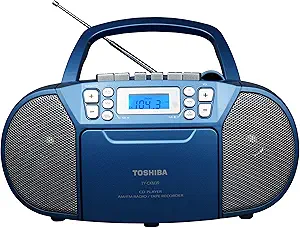
Toshiba’s feature portfolio is defined by broad media format inclusivity. A typical Toshiba boombox integrates a top-loading CD player, an AM/FM analog or digital tuner, an auxiliary input, a USB playback port, and frequently a cassette deck capable of recording. While these units do feature Bluetooth connectivity, it is often limited to basic SBC codecs designed strictly for convenience. The trade-off is a feature set engineered for horizontal breadth rather than vertical depth; Toshiba gives users the ability to play almost any legacy medium, but without advanced software integration, companion apps, or firmware upgradability.
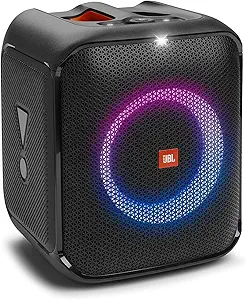
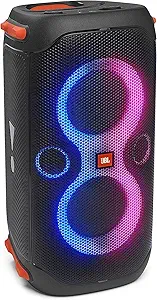
In stark contrast, JBL strips away physical media mechanisms to concentrate on high-performance digital connectivity and utility. Modern JBL boomboxes feature the latest Bluetooth standards with high-bitrate streaming, multi-point pairing to transition seamlessly between source devices, and PartyBoost or Auracast capabilities that allow users to daisy-chain hundreds of compatible speakers. Additionally, JBL units double as high-capacity power banks via heavy-duty USB-A/C out ports to charge mobile devices. JBL also provides a robust companion smartphone app that includes customizable multi-band EQ presets, making its feature set far more technologically advanced, albeit entirely dependent on digital streaming.
Performance
From an acoustic standpoint, Toshiba delivers modest, balanced output tailored for mid-range clarity and close-range listening. Utilizing traditional low-wattage drivers housed in lightweight plastic enclosures, Toshiba boomboxes emphasize vocal intelligibility, which benefits spoken-word radio broadcasts, podcasts, and acoustic CD playback. However, their frequency response drops off steeply in the lower registers, typically failing to produce sub-bass below 80 Hz. At higher volumes, these units are prone to harmonic distortion and chassis rattle due to limited internal bracing and lower amplifier headroom.
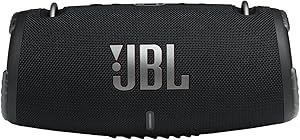
JBL thoroughly dominates in acoustic dynamics, headroom, and bass extension. Engineered with high-efficiency Class-D amplification, dedicated dual tweeters, high-excursion woofers, and twin passive radiators, a JBL Boombox produces authoritative, tactile sub-bass extending well below 40 Hz without muddying the midrange. JBL’s sophisticated digital signal processing dynamically adjusts driver output at varying volumes to prevent distortion, allowing the speaker to maintain clean, balanced, and remarkably loud output across vast open outdoor spaces. In any performance metric regarding loudness, transient response, and frequency width, JBL operates in a superior tier.
Design
Toshiba adheres closely to the iconic 1980s and 1990s boombox silhouette, utilizing boxy geometries, top-mounted carrying handles, tactile mechanical push-buttons, and analog tuning dials or basic LCD panels. While visually nostalgic and ergonomically straightforward, Toshiba’s material choices lean heavily on thin ABS plastics that lack environmental sealing. These units are intended primarily for indoor environments, covered patios, or light garage use, as they lack certified ingress protection against water, fine dust, or impact shocks from accidental drops.
JBL reimagines the boombox through a modern, industrial, and utilitarian lens. Its signature cylindrical silhouette features a heavy-duty metal or hard-composite handle, wrapped in an ultra-durable acoustic fabric mesh and framed by thick silicone end-caps that absorb kinetic impacts. Crucially, JBL units boast IP67 or IPX7 waterproof and dustproof ratings, meaning they can survive full submersion in water, exposure to heavy rain, and sand at the beach. While JBL's aesthetic lacks the vintage charm and mechanical tactile switches of Toshiba, its structural integrity, materials science, and all-weather readiness are vastly superior.