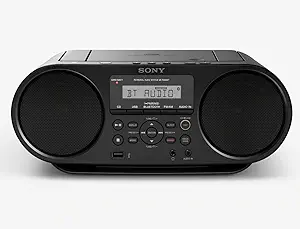
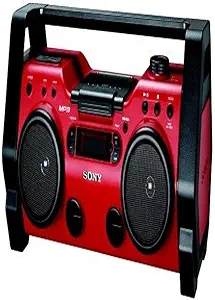
Sony vs Ultimate Ears: Overview & Brand Philosophy
The modern portable boombox has evolved from a tape-deck shoulder-weight into a powerhouse of high-output acoustics, robust digital signal processing, and extreme durability. In this space, Sony and Ultimate Ears (UE) stand as two of the most influential contenders, each approaching the concept of large-format portable audio from divergent philosophical roots. Sony, a legacy audio institution, leverages decades of psychoacoustic research, driver engineering, and broad codec support to deliver high-fidelity, feature-rich boomboxes that bridge the gap between party hardware and home audio excellence.
Conversely, Ultimate Ears—originally founded to create custom in-ear monitors for touring rock musicians and later acquired by Logitech—has built its reputation on ruggedness, outdoor lifestyle integration, and proprietary 360-degree acoustic staging. While Sony treats the boombox as a multimedia centerpiece complete with party lights, customizable EQ software, and diverse connectivity inputs, Ultimate Ears views it as an indestructible sonic companion built to thrive in conditions that would destroy traditional consumer electronics.
Key Differences & Technological Comparison
When dissecting the hardware and digital architectures of these two audio heavyweights, fundamental divergences emerge across acoustics, design, and software integration:
- Acoustic Radiance & Tuning: Sony typically relies on directional driver placement (such as front-firing X-Balanced speaker units paired with dual passive radiators) combined with DSP modes like MEGA BASS and LIVE SOUND. This creates immense forward throw and visceral sub-bass impact. Ultimate Ears designs its boomboxes (most notably the HYPERBOOM and EPICBOOM) around omnidirectional or wide-dispersion audio, ensuring uniform volume and tonal balance across a 360-degree axis.
- Durability and Ruggedization: UE is the gold standard for outdoor survivability. Most UE boomboxes feature IP67 ratings, meaning they are entirely dustproof, water-resistant, and capable of floating in water without sustaining damage. Sony’s larger boombox offerings often settle around IPX4 or IP66 ratings; while highly splash-resistant and fine for poolside use, they generally cannot endure full submersion.
- Codec Support and Audio Processing: Audiophiles will note Sony’s clear advantage in wireless transmission. Sony utilizes its proprietary LDAC codec, enabling streaming up to 990 kbps over Bluetooth for high-resolution audio. Ultimate Ears sticks primarily to SBC and AAC codecs, choosing transmission stability and battery conservation over uncompressed audio fidelity.
- Connectivity & Ecosystems: Sony caters to diverse media setups by integrating 3.5mm auxiliary jacks, optical inputs, USB playback/charging, and even microphone/guitar inputs for karaoke and busking. UE prioritizes seamless multi-device Bluetooth switching via its companion app, minimizing physical ports in favor of wireless simplicity and robust water seals.
Pros & Cons Comparison
Sony Boomboxes
- Pros:
- Superior high-fidelity codecs, including Sony LDAC for near-lossless wireless streaming.
- Versatile I/O connectivity, including optical, aux-in, USB-A charging, and instrument/mic inputs.
- Class-leading bass extension powered by X-Balanced drivers and MEGA BASS DSP.
- Comprehensive customizable party lighting and granular app-based EQ controls.
- Cons:
- Larger footprints and significantly heavier chassis make them less truly portable.
- Lower ingress protection ratings compared to Ultimate Ears (rarely fully submersible).
- Complex companion software (Sony Music Center) can feel dated and fragmented.
Ultimate Ears Boomboxes
- Pros:
- Exceptional build quality with IP67 water/dust resistance and drop-tested durability.
- Balanced, 360-degree acoustic dispersion that eliminates dead zones outdoors.
- Clean, minimalist aesthetic with heavy-duty acoustic fabric and integrated carry straps.
- Streamlined, exceptionally stable companion app with dual-device Bluetooth multipoint.
- Cons:
- Limited to standard SBC/AAC Bluetooth codecs; no high-resolution audio streaming.
- Minimal physical ports (aux/optical are limited or omitted depending on the model).
- No integrated lighting systems or microphone inputs for karaoke enthusiasts.
Performance, Durability & Value Analysis
From an acoustic output perspective, both brands deliver staggering volume levels that can easily fill open spaces, but they handle dynamics differently at maximum thresholds. Sony boomboxes preserve deep sub-bass frequencies at high SPL (sound pressure levels) with minimal compression, making them the preferred choice for bass-heavy electronic, hip-hop, and pop genres. Ultimate Ears counters with adaptive EQ algorithms that monitor ambient acoustics to optimize output dynamically, delivering exceptional vocal clarity and instrument separation that cuts cleanly through wind and outdoor ambient noise.
In terms of lifecycle value and durability, Ultimate Ears holds an edge for consumers who frequently travel, camp, or host events in unpredictable environments. Their specialized fabric covers, rubberized push-buttons, and drop-resistant shells ensure longevity against hard impacts and moisture. Sony delivers superior functionality value per dollar if your boombox is destined for patios, garages, and indoor living spaces, offering extensive connectivity and lighting features that eliminate the need for secondary audio interfaces or ambient lighting hardware.
Final Verdict: Which Brand Should You Choose?
Your choice between Sony and Ultimate Ears hinges on your intended environment, lifestyle, and sonic priorities:
Choose Sony if: You prioritize deep, chest-thumping bass, high-resolution audio streaming via LDAC, and physical input versatility. If you plan to host backyard events with karaoke, plug in an acoustic guitar, or integrate the boombox into an indoor entertainment system, Sony provides unmatched functional capability and dynamic low-end weight.
Choose Ultimate Ears if: True mobility, outdoor survivability, and 360-degree sound balance are your top priorities. If you need a rugged, design-forward speaker that can sit poolside, endure dirt, drops, and downpours, and output clear, crowd-pleasing sound in every direction, Ultimate Ears is the undisputed leader in rugged audio design.
Features
When evaluating the feature ecosystem in the modern boombox category, Sony and Ultimate Ears (UE) take divergent engineering approaches: Sony leans heavily into multimedia versatility and traditional party functionality, whereas Ultimate Ears prioritizes rugged, streamlined, and software-optimized acoustic deployment. Sony's modern boombox lineup, represented predominantly by their X-Series (such as the SRS-XG500 and XV series), integrates a sprawling hardware toolkit. These units typically feature physical quarter-inch inputs for microphones and guitars with dedicated gain controls, multi-zone customizable RGB lighting synced to acoustic rhythms via the Fiestable app, and integrated USB-A ports capable of audio playback and power-bank passthrough. This hardware-first engineering makes Sony units standalone entertainment hubs suited for outdoor live hosting, karaoke, and varied analog-to-digital source management.
Conversely, Ultimate Ears approaches the boombox space—epitomized by the HYPERBOOM—with an emphasis on intelligent, minimalist fidelity and frictionless multi-user utility. Instead of party lights and microphone jacks, UE engineers their feature set around sonic intelligence and connectivity. The standout technical capability is adaptive room equalization, which utilizes an internal microphone to continually read boundary reflections and automatically adjust the acoustic profile to the environment in real time. Connectivity is another major UE strength; the HYPERBOOM features dual simultaneous Bluetooth source pairing with an intuitive one-touch physical source switcher, allowing seamless transitions between two separate host devices without connection dropouts. This is complemented by optical audio inputs for low-latency television integration, alongside the robust "PartyUp" software protocol that facilitates the synchronized daisy-chaining of dozens of UE speakers across generations.
The practical trade-offs between the two brands ultimately hinge on whether a user requires active interactivity or streamlined, environmental adaptability. Sony delivers superior hands-on performance features—offering granular EQ adjustments, dynamic DJ effects, and physical instrument support—making it the objectively more feature-dense option for users who want their speaker to serve as the kinetic center of an event. Ultimate Ears sacrifices these tactile party gimmicks in favor of operational elegance, superior cross-user platform ergonomics, and autonomous audio tuning. Consumers prioritizing all-in-one event production will find Sony’s comprehensive I/O and lighting superior, while audiophiles and social hosts seeking set-and-forget acoustic optimization and uninterrupted device swapping will benefit more from Ultimate Ears’ targeted feature architecture.
Performance
When evaluating raw acoustic engineering and audio performance in the modern boombox category, Sony and Ultimate Ears (UE) pursue fundamentally distinct sonic philosophies. Sony leans heavily into physical acoustics and maximum volume headroom, deploying proprietary X-Balanced Speaker Units that feature non-circular diaphragms designed to maximize surface area and minimize distortion at high outputs. Coupled with dual passive radiators and dedicated digital signal processing modes like Mega Bass, flagship Sony models such as the SRS-XG500 deliver deep, physical sub-bass extension and warm, room-filling soundscapes. In contrast, Ultimate Ears prioritizes spatial dispersion and uniform sonic integrity through its signature 360-degree cylindrical acoustics. Flagships like the HYPERBOOM bypass the full 360-degree design for a high-output, directional cabinet, yet maintain UE's hallmark neutrality—offering exceptionally flat frequency responses, crisp vocal definition, and adaptive EQ microphones that actively read the room's boundary reflections to adjust bass output dynamically in real time.
From an operational performance standpoint, both brands excel but tailor their technical strengths to different listening contexts. Ultimate Ears holds an edge in outdoor translation and high-stress durability; its units are tuned to project crisp, punchy midrange and treble frequencies that easily overcome wind noise and open-air dispersion without devolving into harshness. Furthermore, UE's PartyUp software feature enables ultra-low-latency linking across dozens of speakers over vast Bluetooth ranges, making it an agile, high-performance ecosystem for large-scale outdoor gatherings. Sony, meanwhile, caters to audiophiles and event hosts seeking granular control. Its models frequently feature superior Bluetooth codec support, including Sony's proprietary LDAC, which transmits three times more data than standard SBC, preserving high-resolution audio fidelity that UE’s SBC-locked streaming cannot match. Additionally, Sony boomboxes often include physical instrument and microphone inputs with hardware gain dials, translating technical throughput into tangible live-performance utility.
The primary performance trade-offs ultimately balance tonal balance against brute-force versatility. Sony's acoustic signature can sometimes yield an overly dominant low-end that bleeds into the lower midrange, requiring aggressive manual equalization via the Sony Music Center app if one prefers vocal clarity over party-level sub-bass. However, its expansive physical enclosures and robust battery packs provide massive dynamic range and dual-purpose utility, such as powering external devices without significantly bottlenecking playtime. Ultimate Ears sacrifices some of that visceral, low-frequency rumble and high-res codec support in exchange for surgical soundstaging, lightning-fast transient response, and distortion-free playback at maximum SPL (sound pressure level). For pure, bass-heavy acoustic power and flexible input performance, Sony commands the stage; for acoustic accuracy, pristine volume scaling, and effortless spatial adaptation, Ultimate Ears proves engineered for superior consistency.
Design
When evaluating the design paradigms of modern boomboxes, Sony and Ultimate Ears (UE) cater to distinctly different consumer lifestyles through their structural engineering and aesthetic philosophies. Sony’s approach, epitomized by models like the SRS-XG500 and the ULT FIELD 7, reflects an evolution of the traditional boombox silhouette. Their engineering leans into an elongated, horizontal architecture equipped with integrated ergonomic carry handles, textured passive radiators, and dynamic, customizable ambient LED rings. Sony constructs its chassis with a blend of dense plastics and water-repellent fabrics, balancing substantial desktop footprint with modern party aesthetics. In contrast, Ultimate Ears completely disrupts the conventional boombox form factor with flagships like the HYPERBOOM and EPICBOOM. UE favors an upright, architectural monolith or sleek trapezoidal profile wrapped in high-grade, acoustic-transparent fabric. This minimalist, geometric design language effortlessly integrates into contemporary home decor rather than screaming "party speaker," relying on pristine finishes, clean silicone panels, and UE’s iconic oversized volume buttons rather than flashing lights.
From an engineering and technical durability standpoint, both brands exhibit remarkable build quality but prioritize different environmental stresses and acoustic challenges. Ultimate Ears holds an edge in extreme ruggedness and spatial efficiency. The HYPERBOOM boasts an IPX4 splash-proof rating, while newer iterations like the EPICBOOM achieve an exceptional IP67 rating, indicating it is completely dust-tight and submersible in water—all while being engineered to float. UE's internal architecture is masterfully tuned to push 360-degree or ultra-wide dispersion from a compact footprint, featuring a discreet, pull-out rubberized handle that preserves the speaker’s clean lines. Sony responds with equal resilience on models like the ULT FIELD 7, which match the IP67 threshold and include rustproof coatings, making them explicitly seaside-ready. However, Sony’s directional acoustic layout requires a wider cabinet to house dedicated stereo tweeters, front-firing X-Balanced speaker units, and dual flanking passive radiators. This design choice demands substantially more lateral space and creates a heavier, less uniformly balanced object to transport.
The practical trade-offs regarding design ultimately pivot between Sony’s functional expressiveness and Ultimate Ears' ergonomic subtlety. Sony’s design excels for users who value intuitive physical feedback, dedicated control arrays (including microphone and guitar input compartments with gain knobs), and visual synchronization via audio-reactive lighting. However, the sheer bulk and unabashedly technical look of a Sony boombox can feel intrusive in casual indoor settings. Ultimate Ears excels in ergonomic mobility and lifestyle versatility; its speakers are easier to slip into narrow spaces, safer to leave poolside thanks to floatable engineering, and simpler to wipe clean. The trade-off for UE’s sleek, unified design is the omission of external analog tweakability—such as manual EQ dials or lighting toggles—requiring total reliance on smartphone apps for deep customization. Buyers prioritizing portable, indestructible minimalism will naturally gravitate toward Ultimate Ears, while those demanding classic boombox presence and tactile party utility will favor Sony's assertive engineering.