Sony vs Pyle: Overview
Comparing Sony and Pyle helps you determine which brand is best suited for your needs in Boomboxes. Both brands offer strong choices depending on your budget and key feature requirements.
Key Features & Comparison
Evaluate factors such as build quality, warranty, customer satisfaction, and total value before making your final purchase choice between Sony and Pyle.
Features
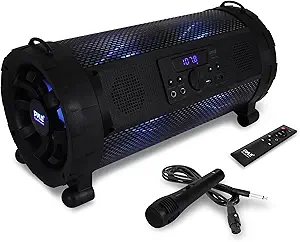
In terms of feature sets, Pyle embraces a maximalist approach that often outpaces Sony in sheer functional variety. Many Pyle boomboxes function essentially as portable PA systems, equipped with 1/4-inch microphone and guitar inputs, dedicated echo and microphone volume controls, recording capabilities directly onto USB flash drives or SD cards, and integrated dynamic multi-color LED party lights. Furthermore, Pyle frequently incorporates rechargeable lithium-ion battery packs that eliminate the ongoing expense of disposable D-cell batteries, making their units well-suited for buskers, fitness instructors, and backyard gatherings straight out of the box.
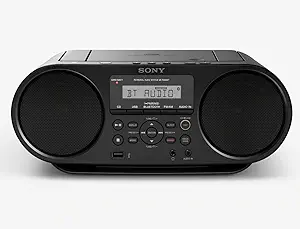
Sony, on the other hand, adopts a more curated and traditional feature landscape, focusing heavily on perfecting core media playback. Sony boomboxes frequently highlight high-precision CD-R/RW drives, digital AM/FM tuners with robust station presets, and in select models, full-function cassette decks with recording capabilities. While Sony integrates Bluetooth and audio-in jacks, it generally avoids extraneous add-ons like party lights or multi-instrument inputs. Instead, Sony channels its feature development into acoustic enhancements like Mega Bass circuitry, programmable sleep timers, and intuitive button layouts, catering to users who want a distraction-free, reliable listening appliance rather than an all-in-one entertainment console.
Performance
Acoustic performance represents the sharpest divergence between these two manufacturers. Sony relies on decades of psychoacoustic research, outfitting its boomboxes with matched driver units, bass-reflex port enclosures, and digital signal processing (DSP) to achieve a balanced, warm sound signature. Across low, mid, and high frequencies, Sony models maintain distinct separation, clear vocal articulation, and punchy, controlled bass that avoids muddying the midrange. Crucially, Sony designs its internal amplifiers to prevent clipping at higher volumes, ensuring that audio remains clean and listenable even near the ceiling of the unit's output capability.
Pyle prioritizes sheer loudness and dynamic range, outfitting many models with massive dual subwoofers and high peak-wattage ratings. In outdoor or high-ambient-noise environments, a Pyle unit will easily overpower a comparable Sony in sound pressure level (SPL). However, this high output often comes at the cost of tonal refinement. Pyle boomboxes frequently exhibit a mid-heavy, somewhat harsh treble profile, and significant total harmonic distortion (THD) can creep in at the upper register of their volume limits. While audiophiles will find Pyle's equalization lacking in precision, consumers prioritizing crowd-filling volume, booming low-end presence, and PA projection will find Pyle's raw power hard to match for the price.
Design
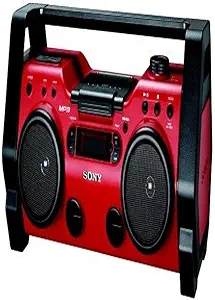
Sony's design language reflects classic Japanese industrial minimalism, characterized by ergonomic carry handles, low-profile buttons, and sleek, durable ABS plastic enclosures. Every switch, dial, and media tray feels engineered for tactile precision and long-term mechanical reliability. The displays on Sony units are typically clean, backlit LCDs that display necessary metadata without visual clutter. Sony's compact footprints and balanced weight distribution make them easy to carry from room to room, fitting seamlessly into home kitchens, workshops, and bedside tables without dominating the space visually.
Pyle leans into aggressive, retro-futuristic, and utilitarian aesthetics reminiscent of 1980s street culture fused with modern PA equipment. Their boomboxes often feature rugged corner bumpers, exposed metallic grilles, external shoulder straps, and prominent control panels lined with rotary knobs for fine-tuning gain and equalization. Additionally, the inclusion of beat-synced RGB lighting creates a visually loud statement that appeals to a younger, party-going demographic. While the plastics and tactile switches on Pyle products may lack the premium density and smooth damping of Sony's hardware, their ruggedized enclosures and bold, eye-catching chassis designs are unmistakably built for active, outdoor lifestyles.