Sony vs Jensen: Overview
Comparing Sony and Jensen helps you determine which brand is best suited for your needs in Boomboxes. Both brands offer strong choices depending on your budget and key feature requirements.
Key Features & Comparison
Evaluate factors such as build quality, warranty, customer satisfaction, and total value before making your final purchase choice between Sony and Jensen.
Features
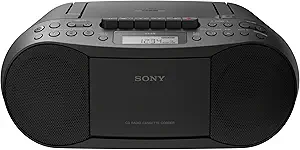
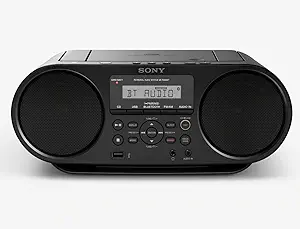
Sony showcases an expansive and forward-looking feature suite that bridges the gap between retro playback and modern audio integration. High-end Sony boomboxes routinely incorporate CD players with MP3 playback, digital AM/FM tuners with dozens of presets, USB recording and playback capabilities, and Bluetooth connectivity featuring NFC quick-pairing. Sony also includes proprietary sound-shaping features like Mega Bass and customized digital equalizer curves, allowing users to tailor acoustic responses to their environments. The inclusion of sleep timers, robust auxiliary inputs, and headphone outputs highlights Sony's focus on granular user control and versatile everyday usability.
Jensen adopts a more nostalgic, essentials-only approach to feature sets, often focusing heavily on direct legacy media support such as cassette decks, top-loading CD mechanisms, and analog or simple digital AM/FM tuners. While select Jensen models include Bluetooth streaming and auxiliary inputs, their technical implementations tend to be basic, relying on standard compression codecs without proprietary signal enhancement. USB playback or direct digital recording features are rarely present in this lineup. For users seeking specialized legacy playback like cassette conversion or basic tape recording, Jensen delivers targeted convenience, but it lacks the cutting-edge digital versatility and audio-shaping enhancements engineered into Sony's hardware.
Performance
Performance is the domain where Sony’s technical pedigree establishes clear daylight between the two manufacturers. Sony boomboxes employ high-efficiency Class-D digital amplification paired with meticulously ported speaker enclosures and dedicated passive radiators. This design ethos results in a balanced frequency response characterized by tight, controlled low-end output, transparent midrange reproduction, and crisp, non-fatiguing high frequencies. Even at higher volume levels, Sony’s proprietary DSP prevents harmonic distortion from collapsing the soundstage, making these units capable of filling medium-to-large rooms with clean, dynamic audio.
In contrast, Jensen's acoustic performance is constrained by standard full-range cone drivers housed in non-isolated, lightweight plastic enclosures. The amplification stages in Jensen units provide modest power output, making them best suited for personal, close-range listening rather than filling open spaces. At moderate volumes, Jensen delivers clear vocal intelligibility, which is excellent for talk radio, audiobooks, or acoustic tracks. However, pushing these units toward maximum volume introduces noticeable total harmonic distortion, with thin bass response and compressed highs. Jensen achieves acceptable day-to-day auditory utility, but it cannot match the dynamic headroom or acoustic clarity of Sony.
Design
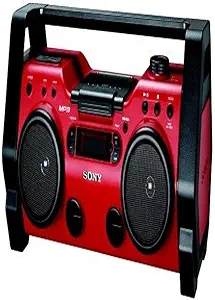
Sony’s industrial design favors modern minimalism, durability, and ergonomic refinement. Utilizing dense, impact-resistant ABS plastics, integrated rubberized carry handles, and recessed controls, Sony builds enclosures that resist resonance and physical wear. The control layouts are strategically engineered with tactile buttons and backlit LCD screens that provide clear readouts of track metadata, station frequencies, and playback modes. Furthermore, the internal component layout is shock-isolated, protecting the laser pickups and mechanical drives from skips when moving the unit during playback, whether powered by an AC line or heavy-duty alkaline cells.
Jensen leans heavily into classic, often deliberately retro aesthetic motifs characterized by vibrant colorways, oversized analog tuning dials, and visible transport mechanisms. While visually appealing to those who appreciate mid-century or 1980s styling, the construction materials are noticeably lighter and more susceptible to surface scratching and structural flex. The control interfaces rely on tactile, mechanical switches and push levers for cassette mechanisms that, while satisfyingly retro, lack the precision feel of Sony's digital switches. Jensen designs succeed admirably as accessible, decorative nostalgia pieces, whereas Sony emphasizes contemporary, road-ready resilience and functional precision.