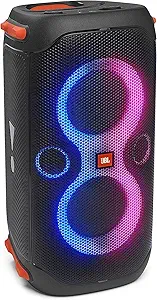
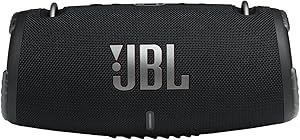
Sony vs JBL: Overview
Comparing Sony and JBL helps you determine which brand is best suited for your needs in Boomboxes. Both brands offer strong choices depending on your budget and key feature requirements.
Key Features & Comparison
Evaluate factors such as build quality, warranty, customer satisfaction, and total value before making your final purchase choice between Sony and JBL.
Features
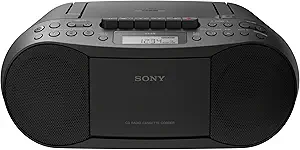
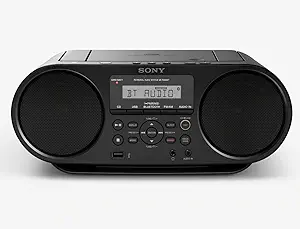
In terms of feature sets, Sony typically delivers a more expansive toolkit for social and interactive use. Many of Sony's portable and boombox-style speakers feature microphone and guitar inputs with integrated gain controls and echo effects, transforming the hardware into an impromptu PA or karaoke system. Connectivity is a major technical advantage for audiophiles, as Sony incorporates its proprietary LDAC Bluetooth codec alongside standard AAC and SBC, enabling the transmission of high-resolution audio files up to 990 kbps. Additionally, Sony's Music Center and Fiestable apps offer deep granular control over multi-colored synchronized lighting, DJ sound effects, and customizable graphic equalizers.
JBL deliberately pares down extraneous entertainment gimmicks to focus on functional, high-utility features tailored for active mobility. The brand excels in scalable multi-speaker ecosystems, utilizing technologies like PartyBoost and Auracast to daisy-chain dozens or even hundreds of compatible JBL units with ultra-low latency and minimal setup friction. While JBL generally omits analog instrument inputs and relies on standard SBC/AAC codecs, it counters with immense onboard battery banks capable of high-output USB charging for external devices. JBL's companion app is intentionally straightforward, focusing on firmware stability, essential EQ adjustments, and reliable pairing modes rather than complex lighting choreography.
Performance
Acoustic performance reveals fundamental differences in frequency response and driver tuning between the two manufacturers. Sony designs its sound profile around warm, consumer-friendly musicality with an emphasis on low-end depth through specialized hardware like passive radiators and proprietary X-Balanced speaker units. The non-circular diaphragms maximize surface area, pushing substantial air volume while minimizing excursion distortion. When Mega Bass or Live Sound DSP modes are engaged, Sony creates a spacious, cinematic soundstage with rich, enveloping low frequencies, though the upper-midrange can occasionally recede beneath the resonant bass during high-volume playback.
JBL, by comparison, adopts a punchier, more forward acoustic signature tuned for aggressive projection and outdoor intelligibility. Utilizing high-efficiency racetrack woofers and dedicated silk dome tweeters driven by robust Class-D amplification, JBL boomboxes deliver visceral, articulate sub-bass and mid-bass impact that remains tight and controlled even at maximum SPL. Vocals and high frequencies retain exceptional clarity across wide dispersion angles, avoiding the muddiness that can afflict bass-heavy systems in open spaces. For raw volume threshold, transient response, and outdoor projection, JBL frequently outperforms, whereas Sony offers a warmer, fatigue-free indoor listening curve.
Design
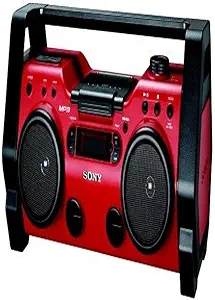
From an industrial design perspective, Sony adopts a modern, urban aesthetic characterized by smooth matte polymers, integrated flush handles, and artistic accent grilles. Sony's enclosures often incorporate ambient LED light strips engineered to refract through transparent diffusers, producing club-like visual effects. However, this focus on aesthetic refinement often results in lower ingress protection ratings, with many Sony units offering splash-resistant IPX4 ratings rather than full submersion or dust protection. Their larger footprints and relatively delicate external finishes position them primarily as patio, indoor, or semi-sheltered event speakers.
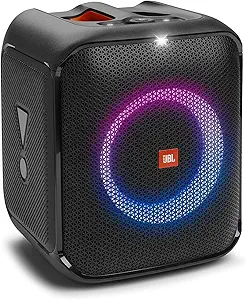
JBL establishes the industry benchmark for utilitarian, outdoor-ready industrial design. The classic JBL Boombox silhouette features a rigid, ergonomic metal-reinforced carry handle wrapped in high-traction grip materials, paired with a heavy-duty fabric and ruggedized rubberized chassis. JBL routinely secures complete IP67 dustproof and waterproof certifications across its boombox lineup, meaning the enclosures can survive full submersion in water, exposure to fine sand, and direct physical impacts without catastrophic failure. For consumers demanding true go-anywhere resilience, JBL's structural integrity and weatherproofing significantly outpace Sony's more domestic design choices.