Sony vs GPX: Overview
Comparing Sony and GPX helps you determine which brand is best suited for your needs in Boomboxes. Both brands offer strong choices depending on your budget and key feature requirements.
Key Features & Comparison
Evaluate factors such as build quality, warranty, customer satisfaction, and total value before making your final purchase choice between Sony and GPX.
Features
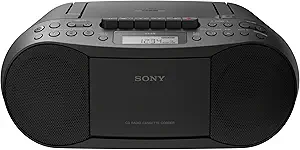
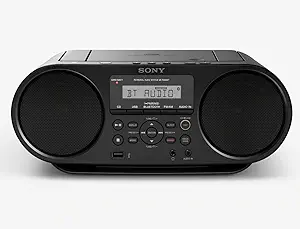
Feature sets between the two brands illustrate Sony's focus on modern digital convergence versus GPX's commitment to legacy format compatibility. Sony boomboxes often feature advanced digital AM/FM tuners with robust station preset memory, Bluetooth streaming with quick NFC pairing, and USB recording or playback capabilities alongside standard CD players. Higher-end Sony models also incorporate proprietary audio processing modes, such as Mega Bass, and support for MP3/WMA CDs. The implementation of these features is characterized by seamless software integration, low latency on digital inputs, and intuitive user interfaces that operate with minimal setup friction.
GPX, on the other hand, frequently emphasizes broad, nostalgic format coverage at minimal manufacturing cost. It is far more common to find built-in cassette decks, analog AM/FM tuning dials, and auxiliary input jacks on low-cost GPX units. While this allows consumers to play legacy media without purchasing expensive dedicated decks, the underlying technology is decidedly basic. GPX's cassette mechanisms often lack auto-reverse or high-grade tape heads, leading to higher wow and flutter, while their digital models provide standard, unadorned Bluetooth connections. GPX offers a versatile checklist of legacy features for penny-pinchers, but Sony provides more polished, stable, and modern technical functionality.
Performance
Acoustic performance is the most pronounced differentiator separating Sony from GPX. Sony utilizes engineered speaker enclosures, matched drivers, and well-calibrated digital signal processing (DSP) to achieve clear mid-tones, crisp highs, and respectable low-frequency response despite compact chassis sizes. Features like the Mega Bass circuit do not merely boost low-end frequencies blindly; they dynamically adjust equalization to prevent driver distortion at higher volumes. Furthermore, Sony’s radio reception benefits from superior tuner selectivity and sensitivity, minimizing drift and background hiss even in fringe reception zones.
In contrast, GPX boomboxes deliver utilitarian sound that struggles under critical listening conditions. Equipped with smaller, unshielded full-range drivers mounted in lightweight, resonance-prone plastic shells, GPX units typically produce a mid-forward, somewhat tinny sound signature with virtually no true sub-bass extension. Pushing a GPX boombox to maximum output usually results in noticeable harmonic distortion and cabinet rattling. Radio reception is acceptable in metropolitan areas but prone to interference and multipath distortion in weaker signal environments. Sony unequivocally outperforms GPX in acoustic power, frequency response range, and overall clarity.
Design
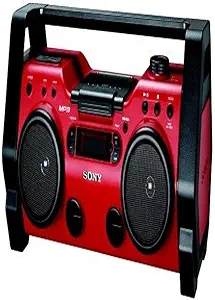
From an industrial design standpoint, Sony boomboxes showcase a cohesive, modern aesthetic defined by ergonomic utility and structurally sound enclosures. Sony builds its units with high-grade, impact-resistant ABS plastics, textured finishes, and tactile control interfaces designed to withstand frequent transport and environmental wear. The integration of carry handles is counterbalanced for effortless portability, and battery compartments are engineered with solid contact points to prevent power interruption when moved. The layout of buttons and LCD screens on a Sony unit reflects rigorous human factors engineering, offering clear labeling, tactile feedback, and intuitive navigation.
GPX designs skew toward lightweight, utilitarian construction that reveals its cost-cutting measures upon close physical inspection. The plastics used in GPX boomboxes are typically thinner and more susceptible to scratching or cracking under physical stress, and control buttons often feel spongey or loosely mounted. While GPX chassis are undeniably lightweight and easy to carry, this lightness is partly a symptom of smaller power transformers and minimal internal acoustic baffling. The aesthetics range from retro-functional to basic modern styling, but they lack the premium fit, finish, and structural rigidity that characterize Sony's hardware.