







Philips vs JBL: Overview
Comparing Philips and JBL helps you determine which brand is best suited for your needs in Boomboxes. Both brands offer strong choices depending on your budget and key feature requirements.
Key Features & Comparison
Evaluate factors such as build quality, warranty, customer satisfaction, and total value before making your final purchase choice between Philips and JBL.
Features
In terms of feature sets, Philips stands out by catering to multi-generational listening habits. Many Philips boomboxes are equipped with top-loading CD players (often supporting MP3-CDs), cassette decks, analog or digital AM/FM tuners, and auxiliary inputs alongside standard Bluetooth capabilities. This expansive format support makes Philips an exceptional choice for users holding physical audio collections who desire a single, self-contained playback station. Additionally, features like USB direct recording and playback round out their utilitarian appeal. However, the accompanying technology—such as Bluetooth codecs and internal digital-to-analog converters—tends to be basic, focusing on functional operation rather than high-resolution streaming fidelity or smart ecosystem integration.
JBL strips away mechanical media drives entirely, focusing its engineering prowess on high-tech connectivity, power management, and party-centric capabilities. Modern JBL boomboxes feature advanced Bluetooth standards with support for multi-point device pairing and proprietary broadcast technologies like PartyBoost or Auracast, which allow users to link dozens of compatible speakers simultaneously. JBL units also double as massive power banks, offering high-capacity USB-out charging for smartphones and tablets during extended outings. Through the dedicated JBL Portable companion app, users gain access to customizable graphic equalizers and over-the-air firmware updates, delivering a level of software polish and digital refinement that Philips’ hardware-driven models simply do not match.
Performance
Acoustic performance presents the starkest contrast between these two manufacturers. Philips designs its boomboxes with modest amplification stages, typically ranging from 2 to 20 watts RMS, tailored primarily for nearfield domestic listening, talk radio, and casual background music. While vocal clarity and midrange articulation are generally well-balanced on Philips units—bolstered occasionally by Dynamic Bass Boost (DBB) circuitry—the physical constraints of their smaller drivers and ported plastic enclosures lead to acoustic compression and audible distortion when pushed to high output levels. Sub-bass response is practically nonexistent, leaving modern bass-heavy genres feeling somewhat thin and hollow compared to modern expectations.
JBL, on the other hand, engineers its boomboxes for high-impact, high-fidelity sound reproduction across vast listening spaces. Featuring robust multi-driver arrays comprising dedicated dual tweeters, long-throw woofers, and oversized dual passive radiators, JBL units produce monstrous volume levels backed by clean, bi-amplified architectures delivering 80 to over 100 watts of power. The low-frequency response is particularly formidable, reaching well below 50 Hz with tight, authoritative punch and minimal distortion even at maximum thresholds. JBL’s advanced DSP dynamically balances frequencies across the volume curve, ensuring that audio remains punchy, clear, and immersive whether playing at a quiet desktop level or anchoring an outdoor gathering.
Design
The industrial design of Philips boomboxes adheres to a classic, practical aesthetic reminiscent of traditional consumer electronics. Built primarily with lightweight molded ABS plastics, these units emphasize straightforward ergonomics, featuring prominent top-mounted carry handles, dedicated physical push-buttons, rotary volume knobs, and backlit LCD or segment displays. While this layout ensures an intuitive, zero-learning-curve user experience, the structural build is rarely rated for moisture or dust resistance. Consequently, Philips models are best suited for indoor environments like kitchens, garages, and bedrooms, as exposure to splashes, sand, or heavy drops can easily compromise the delicate physical drive mechanisms and chassis.
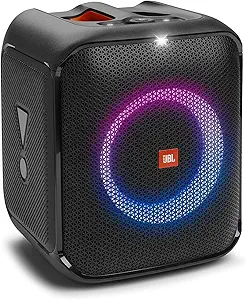
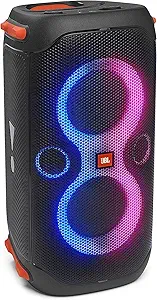
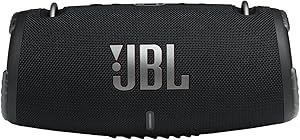
Conversely, JBL’s design language is aggressively modern, rugged, and built for outdoor punishment. Characterized by high-strength fabric grilles, thick rubber end-caps, and an integrated, heavy-duty metal or polymer grip handle, JBL boomboxes are designed to withstand drops, scrapes, and harsh elements. Most contemporary JBL models feature certified IP67 or IPX7 waterproof and dustproof ratings, allowing them to survive total submersion in water or exposure to beach environments without missing a beat. While this ruggedized build makes JBL units significantly heavier and less compact than their Philips counterparts, it provides unmatched physical durability and peace of mind for an active, travel-heavy lifestyle.
Compare current retail pricing, active promotions, and verified stock availability directly from authorized stores:
Compare current retail pricing, active promotions, and verified stock availability directly from authorized stores: