JBL vs Sylvania: Overview
Comparing JBL and Sylvania helps you determine which brand is best suited for your needs in Boomboxes. Both brands offer strong choices depending on your budget and key feature requirements.
Key Features & Comparison
Evaluate factors such as build quality, warranty, customer satisfaction, and total value before making your final purchase choice between JBL and Sylvania.
Features
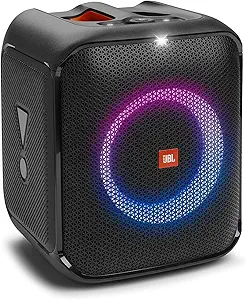
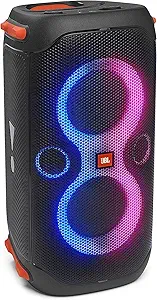
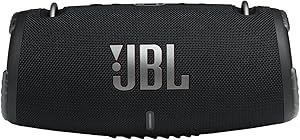
JBL tailors its feature set toward modern wireless audio ecosystems and durability-focused utility. A hallmark of modern JBL boomboxes is their integration with the JBL Portable app, enabling custom EQ adjustments, firmware updates, and multi-speaker synchronization protocols like PartyBoost or Auracast. Additionally, JBL units typically feature massive rechargeable lithium-ion battery banks capable of providing upwards of 24 hours of playback while serving as external power banks via USB-A and USB-C output ports. However, JBL entirely eschews traditional legacy audio formats, omitting physical media mechanisms like CD drives, cassette decks, and standard AM/FM analog tuners in favor of pure digital streaming.
In contrast, Sylvania distinguishes itself by prioritizing legacy media versatility at a fraction of the cost. Many Sylvania boomboxes are equipped with top-loading CD/CD-R/RW players, cassette recorders with auto-stop functions, and built-in AM/FM analog or digital tuners, alongside auxiliary inputs and basic Bluetooth connectivity. This makes Sylvania exceptionally adaptable for users with physical music collections. The trade-off lies in technical execution: Sylvania’s wireless integration uses older Bluetooth profiles, lacks accompanying software support or multi-speaker pairing, and often relies on disposable C or D-cell batteries for portability rather than high-capacity integrated rechargeable cells.
Performance
Acoustically, JBL operates in an entirely different echelon of audio engineering. Equipped with multi-driver arrays comprising dedicated dual tweeters, high-excursion woofers, and dual passive radiators, JBL boomboxes produce an expansive, dynamic soundstage with profound sub-bass response reaching well below 50Hz. The brand utilizes sophisticated internal digital signal processing (DSP) to maintain low total harmonic distortion (THD) even at maximum volume thresholds, preventing clipping and preserving vocal clarity amidst deep, resonant low frequencies that easily carry in open-air environments.
Sylvania’s performance profile is tailored for modest, near-field listening environments rather than high-SPL (Sound Pressure Level) projection. With low-wattage amplification driving small, full-range dynamic drivers without dedicated passive radiators, Sylvania boomboxes deliver a mid-centric, bright sound profile that handles spoken word, radio broadcasts, and acoustic tracks serviceably. However, the hardware struggles significantly with lower-frequency reproduction, exhibiting notable bass roll-off and audible distortion or cabinet rattle when pushed past moderate volume levels, clearly delineating it as a background utility player rather than an acoustic powerhouse.
Design
From an industrial design and engineering standpoint, JBL builds its boomboxes to withstand severe environmental stress. Utilizing high-impact polycarbonate skeletons wrapped in durable, tightly woven acoustic fabric with rugged rubber overmolding, JBL boomboxes boast IP67 or IPX7 waterproof and dustproof ratings. Integrated ergonomic aluminum or heavy-duty composite handles feature textured grips for transportability, balancing hefty internal battery and driver weight with structural balance that can endure drops, splashes, and exposure to beach or poolside elements without functional compromise.
Sylvania embraces a traditional, lightweight consumer electronics aesthetic, generally relying on lightweight ABS plastic shells and retro-styled physical controls. While their designs are pleasantly nostalgic—incorporating telescoping metal antennas, analog dial knobs, and flip-up plastic handles—they lack environmental ingress protection against water or dust. The physical buttons and mechanical doors (for cassettes or CDs) are more susceptible to wear and tear over extended use, making Sylvania best suited for stable indoor environments like bedrooms, kitchens, or covered porches rather than rugged outdoor adventures.