JBL vs Singing Wood: Overview
Comparing JBL and Singing Wood helps you determine which brand is best suited for your needs in Boomboxes. Both brands offer strong choices depending on your budget and key feature requirements.
Key Features & Comparison
Evaluate factors such as build quality, warranty, customer satisfaction, and total value before making your final purchase choice between JBL and Singing Wood.
Features
In terms of feature sets, JBL prioritizes the connected, wireless ecosystem. Modern JBL Boombox models feature advanced Bluetooth specifications with multipoint connection, massive high-capacity lithium-ion power banks capable of charging external mobile devices, and proprietary synchronization protocols like PartyBoost or Auracast that network dozens of compatible speakers simultaneously. Moreover, the companion JBL Portable app unlocks granular control via customizable multi-band graphic equalizers and firmware updates. However, JBL deliberately omits legacy inputs; physical media such as CDs and cassettes are absent, and even basic 3.5mm auxiliary jacks and AM/FM tuners have been phased out in newer iterations in favor of streamlined, wireless-only workflows.
Singing Wood takes the polar opposite approach by packing maximum playback versatility into an economical package. A typical Singing Wood boombox serves as a comprehensive media hub, boasting CD-R/RW compatibility, built-in tape decks with recording capabilities, auxiliary inputs, headphone jacks, and integrated radio tuners with telescoping antennas. Although their Bluetooth integration is rudimentary compared to JBL's multi-device protocols and lacks companion app support or advanced codecs, Singing Wood offers physical versatility that JBL simply does not provide. For users with extensive physical music collections or those requiring dedicated radio tuning without relying on smartphone data, Singing Wood presents a vastly more functional toolset.
Performance
Acoustic performance is where the technological gulf between the two brands becomes most pronounced. JBL equips its boomboxes with sophisticated multi-driver arrays, combining dedicated long-throw subwoofers, high-frequency tweeters, and dual opposing passive radiators powered by Class-D amplification that routinely exceeds 100 watts RMS. Backed by proprietary DSP that prevents distortion at maximum volume, JBL delivers class-leading sub-bass extension, crystal-clear transients, and immense sound pressure levels that effortlessly fill large open-air venues. The sound signature is punchy, dynamic, and authoritatively full across the entire frequency spectrum, retaining clarity even under demanding low-end loads.
Singing Wood units operate under significantly lower power constraints, typically relying on low-wattage stereo drivers designed for near-field, indoor listening environments. The acoustic output lacks sub-bass extension, relying instead on a mid-centric tuning that prioritizes vocal clarity for radio broadcasts, podcasts, and acoustic CD tracks. At higher volumes, Singing Wood enclosures are prone to mechanical resonance and harmonic distortion due to lightweight cabinet construction and limited amplifier headroom. While entirely adequate for bedside listening, home offices, or light background music in a workshop, Singing Wood cannot compete with the dynamic impact, spatial dispersion, or bass authority engineered into JBL's acoustic systems.
Design
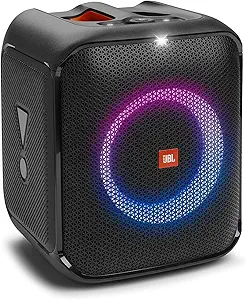
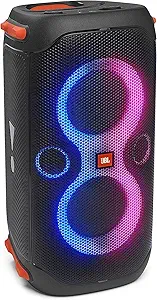
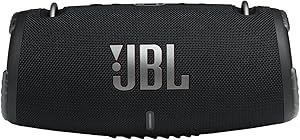
JBL’s industrial design is immediately recognizable for its aggressive, utilitarian aesthetic centered around extreme environmental resilience. Encased in ruggedized acoustic fabric and dense, shock-absorbing thermoplastic end-caps, JBL boomboxes boast IP67 dustproof and waterproof ratings, meaning they can survive full submersion in water as well as sand exposure. The prominent integrated aluminum or hard-composite handle features silicone grip texturing, engineered deliberately for transport through rugged terrain. Every structural component, from the sealed port covers to the rubberized interface buttons, is calibrated for tactile longevity and defense against demanding elements.
Singing Wood embraces a traditional, boxy tabletop form factor reminiscent of late-1990s and 2000s consumer electronics. Constructed primarily from molded ABS plastic with stamped metal speaker grilles, Singing Wood boomboxes feature prominent mechanical switches, analog tuning dials, and top-mounted drop-in mechanisms for CDs and cassettes. They include folding plastic carry handles suited for room-to-room transit rather than outdoor adventures. Because they lack ingress protection against water or dust, Singing Wood stereos must be strictly sheltered from the elements. While JBL designs for durability under punishment, Singing Wood designs for ergonomic familiarity and lightweight indoor convenience.
Compare current retail pricing, active promotions, and verified stock availability directly from authorized stores: