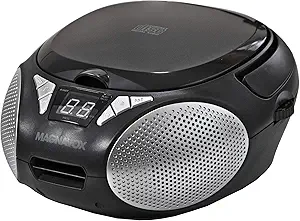
Aiwa vs Magnavox: Overview
Comparing Aiwa and Magnavox helps you determine which brand is best suited for your needs in Boomboxes. Both brands offer strong choices depending on your budget and key feature requirements.
Key Features & Comparison
Evaluate factors such as build quality, warranty, customer satisfaction, and total value before making your final purchase choice between Aiwa and Magnavox.
Features
In terms of feature architecture, Magnavox stands out for its sheer versatility in legacy media formats, whereas Aiwa focuses on modern connectivity and sound-shaping toolsets. Magnavox boomboxes frequently feature built-in top-loading CD players with CD-R/CD-RW compatibility, cassette decks that support direct recording from the radio, and analog AM/FM stereo tuners. While these mechanical systems rely on mass-market, cost-effective components—such as single-motor cassette mechanisms that exhibit modest wow and flutter—they provide immense utility for users possessing extensive physical music collections. Magnavox also integrates baseline Bluetooth connectivity, 3.5mm auxiliary inputs, and occasional decorative LED accent lights, creating an all-in-one entertainment hub for general home use.
Aiwa takes a markedly different approach by emphasizing contemporary digital audio features and high-grade playback infrastructure. While select vintage-style Aiwa units maintain CD or cassette functionality, the brand’s modern flagship boomboxes emphasize advanced wireless codecs, Bluetooth with True Wireless Stereo (TWS) multi-speaker pairing, and rugged IPX-rated water resistance for outdoor deployment. Aiwa typically equips its devices with sophisticated digital signal processing (DSP), multiple preset and custom EQ modes, and integrated USB ports capable of both media playback and power-bank mobile device charging. Thus, while Magnavox wins on sheer physical format diversity at a lower price point, Aiwa delivers a more technically refined and future-proof digital feature set.
Performance
Acoustic performance is where the disparity between Aiwa and Magnavox is most pronounced. Aiwa constructs its portable audio systems with dedicated bi-amplified architectures, robust neodymium magnets, active subwoofers, and passive bass radiators designed to manage high sound pressure levels (SPL). The result is deep, articulate low-end reproduction that avoids muddying the midrange, alongside crisp high-frequency fidelity managed by discrete tweeters. Even at elevated volumes, Aiwa’s dynamic range compression and low total harmonic distortion (THD) ensure that audio remains punchy, clear, and well-separated across diverse musical genres, making them capable of filling open outdoor areas with rich sound.
Magnavox units are engineered with much lower root-mean-square (RMS) power ratings, typically ranging between 2 to 5 watts per channel, utilizing compact, full-range dynamic drivers housed within lightweight plastic acoustic chambers. Consequently, Magnavox boomboxes produce adequate clarity for vocal-heavy content, audiobooks, talk radio, and soft background music, but they struggle with demanding low-frequency basslines and high output demands. At upper volume thresholds, Magnavox speakers can experience chassis resonance and audible clipping. For intimate indoor listening, Magnavox delivers pleasant, functional sound, but it lacks the dynamic punch, stereo imaging, and headroom that define Aiwa's acoustic engineering.
Design
From an industrial design standpoint, Aiwa boomboxes emphasize aggressive, modern, and rugged aesthetics that communicate power and durability. Many of Aiwa's contemporary flagship models feature heavy-duty polycarbonate enclosures, reinforced corner bumpers, structural metal speaker grilles, and tactile, rubberized control knobs with high-grade potentiometers. These units often carry official IPX ratings, ensuring resistance against splashes, dust, and outdoor conditions, making them ideal companions for tailgates, construction sites, and beach environments. The physical presence of an Aiwa unit is substantial, reflecting the substantial magnet structures, heat sinks, and internal battery packs housed within.
Magnavox designs, conversely, embrace a lighter, classic boombox form factor with high-impact molded ABS plastic and integrated top-carry handles for effortless room-to-room portability. The control layouts on Magnavox units are refreshingly straightforward, featuring large, clearly labeled mechanical push buttons, analog tuning dials, and illuminated LCD displays that require zero technical learning curve. While the plastic casing feels lighter and more hollow than Aiwa’s dense construction, Magnavox units excel in lightweight convenience and compact dimensions. The trade-off is clear: Aiwa provides a robust, road-ready, premium chassis built to endure harsh conditions, while Magnavox offers an uncomplicated, ultra-portable, and nostalgic design tailored for domestic ease.