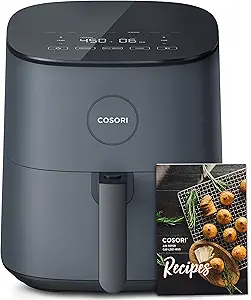







TOSHIBA vs COSORI: Overview & Brand Philosophy
In the rapidly evolving landscape of countertop culinary technology, the air fryer market has matured from a niche novelty into an indispensable kitchen staple. Within this competitive arena, TOSHIBA and COSORI represent two fundamentally distinct engineering philosophies. TOSHIBA, a historic legacy conglomerate with deep industrial roots, approaches small kitchen appliances through the lens of institutional reliability, multi-functional convergence, and heavy-duty manufacturing standards. Rather than focusing solely on standalone fryers, TOSHIBA often integrates air frying capabilities into broader thermal ecosystems, such as commercial-grade countertop convection ovens and multi-cookers, prioritizing thermal consistency and structural longevity over trend-driven design.
Conversely, COSORI—a dedicated lifestyle brand under the parent company Vesync—has carved out a dominant market presence by mastering the modern smart kitchen ecosystem. COSORI’s brand philosophy centers entirely on user-centric innovation, sleek aesthetics, and agile feature iteration. By directly engaging with community feedback and social-first culinary culture, COSORI optimizes its standalone basket-style and dual-basket air fryers with intuitive touch interfaces, Wi-Fi-enabled app control, and aggressive rapid-heating dynamics. Where TOSHIBA relies on the conservative engineering benchmarks of a century-old hardware giant, COSORI leverages digital integration and specialized design to capture contemporary home cooks seeking speed, convenience, and modern styling.
Key Differences & Technological Comparison
When evaluating the mechanical and thermal execution of both brands, several distinct technological divergences emerge across heating systems, interface design, build quality, and footprint efficiency:
- Air Circulation & Heating Architecture: COSORI extensively utilizes proprietary heating profiles like its Thermo IQ 360-degree rapid circulation technology, paired with precision temperature sensors and optimized air channels that yield exceptionally fast preheat cycles and uniform crisping without constant manual shaking. TOSHIBA generally favors robust, dual-element heating arrays (top and bottom quartz/calrod elements) integrated with high-velocity industrial convection fans, resulting in deeper radiant heat penetration that excels at roasting whole proteins, though it may take marginally longer to reach maximum operational temperatures.
- Smart Connectivity & Ecosystem: COSORI holds a distinct advantage in digital integration. Most mid-to-high-tier COSORI appliances sync seamlessly with the VeSync app, enabling remote monitoring, push notifications when food needs shaking, voice control via Amazon Alexa and Google Assistant, and access to an expansive, regularly updated library of cloud-based recipes. TOSHIBA focuses primarily on localized, tactile microchip programming; while functional and reliable, its models typically omit wireless connectivity in favor of foolproof onboard presets.
- Form Factor & Usability: COSORI designs predominantly around lightweight, ergonomic square-basket designs that maximize surface area for flat placement (such as strips of bacon or single-layer chicken cutlets). TOSHIBA prioritizes multi-cooker versatility, offering front-pull baskets alongside expansive, toaster-oven-style front-drop doors equipped with heavy-duty multi-rack configurations, double-pane glass doors, and enamel or stainless interiors that mimic traditional full-sized ranges.
- Coating Technologies: COSORI utilizes BPA/PFOA-free non-stick ceramic and Teflon coatings across its dishwasher-safe baskets. TOSHIBA frequently employs commercial-grade ceramic interiors and aluminized steel finishes that demonstrate superior resistance to high-heat degradation and scratching over extensive use cycles.
Pros & Cons Comparison
COSORI Air Fryers
- Pros:
- Industry-leading smart integration via the VeSync ecosystem with expansive digital recipe libraries.
- Fast preheat and cooking times due to high-efficiency Thermo IQ air circulation.
- Ergonomic square basket profiles maximize usable cooking floor space compared to round competitors.
- Modern, award-winning industrial design that complements contemporary kitchen aesthetics.
- Cons:
- Non-stick basket coatings require delicate hand-washing to prevent premature wear.
- Higher reliance on digital touchscreens, which can occasionally show finger smudges or register delayed inputs when wet.
TOSHIBA Air Fryers
- Pros:
- Heavy-duty engineering with extensive use of stainless steel and industrial-grade internal components.
- Exceptional thermal retention and radiant heat distribution suitable for roasting, baking, and dehydrating.
- Durable mechanical controls and tactile buttons that withstand years of rigorous daily operation.
- Multi-functional designs often eliminate the need for separate toasters, rotisseries, or convection ovens.
- Cons:
- Larger physical footprint and heavier chassis demand permanent, dedicated counter space.
- Lack of modern companion smartphone apps and remote ecosystem features.
- Slightly steeper learning curve to dial in custom cooking configurations compared to one-touch presets.
Performance, Durability & Value Analysis
From an objective performance standpoint, COSORI consistently achieves higher initial crisping velocity for common convenience foods like frozen fries, chicken wings, and battered snacks. Its focused air vortex effectively wicks away surface moisture rapidly, delivering that signature golden texture in compressed timeframes. However, TOSHIBA demonstrates measurable superiority when tackling structurally dense foods, such as thick-cut roasts, artisanal breads, and whole poultry. The thermal mass of TOSHIBA's interiors ensures minimal heat loss when opening doors or baskets, resulting in remarkably stable interior temperatures and predictable, edge-to-edge browning that closely mirrors a commercial combi-oven.
In terms of lifecycle durability and long-term economic value, TOSHIBA emerges as the more rugged investment. Its internal thermal fuses, heating elements, and exterior chassis are engineered for longevity, minimizing mechanical degradation over three- to five-year horizons. While COSORI appliances are competitively priced and offer tremendous upfront value through intuitive features and included accessories, their lightweight basket systems and non-stick surfaces require disciplined maintenance to prevent the performance drop-offs common to high-heat non-stick coatings. Ultimately, COSORI delivers superior immediate value per dollar for tech-oriented households, while TOSHIBA provides superior long-term hardware retention for cooks demanding high-capacity durability.
Final Verdict: Which Brand Should You Choose?
Selecting between TOSHIBA and COSORI hinges entirely on your culinary habits, kitchen footprint, and expectations for smart-home integration.
Choose COSORI if: You prioritize rapid, single-basket weeknight meal preparation, crave seamless mobile app notifications, and want a stylish, compact appliance optimized specifically for fast-paced air frying and quick cleanup. It remains the gold standard for tech-savvy home cooks who want maximum speed and streamlined usability at an attractive price point.
Choose TOSHIBA if: You require a heavy-duty, multi-purpose workhorse capable of acting as your primary countertop oven, prefer traditional tactile controls over smartphone connectivity, and value robust stainless-steel build quality over lightweight portability. It is the definitive choice for serious culinary enthusiasts and larger families looking to consolidate multiple appliances into one enduring cooking station.
Features
When evaluating the functional landscape of modern air fryers, COSORI holds a distinct edge over TOSHIBA through its forward-thinking integration of smart technology and user-centric customization. COSORI’s lineup, headlined by flagships like the Dual Blaze and TurboBlaze series, showcases significant engineering prowess tailored specifically to culinary precision. The hallmark of COSORI's feature suite is its dual-heating element architecture, which utilizes independent top and bottom thermostatic controls that dynamically adjust to eliminate the necessity of manual food flipping. Coupled with their proprietary VeSync application, COSORI offers seamless Wi-Fi connectivity, allowing users to remotely monitor cook cycles, scan food barcodes for automated temperature profiles, and access vast online recipe libraries. Conversely, TOSHIBA approaches the category through a lens of conventional, multi-appliance utility. While COSORI innovates around airflow and digital interactivity, TOSHIBA often integrates air frying as an auxiliary feature within broader microwave or countertop toaster oven platforms, employing heavy-duty, traditional heating configurations that prioritize multi-stage cooking over smart connectivity.
From an interface and programmability standpoint, the two brands present distinctly different technical trade-offs. COSORI units feature high-contrast, capacitive LED touchscreens equipped with up to twelve granular presets that dictate not only time and temperature, but also fan speed—a rare variable-frequency motor feature that enables delicate dehydrating, proofing, and baking alongside aggressive high-heat crisping. In contrast, TOSHIBA emphasizes tactile durability, typically utilizing rugged physical dials paired with membrane buttons and basic digital displays. While TOSHIBA's systems lack app integration and customizable multi-phase cooking presets, they excel in raw simplicity and fail-safe operation, featuring comprehensive sensor-reheat programs and intelligent humidity sensors (particularly in their hybrid microwave models) that detect moisture loss to prevent overcooking.
Ultimately, the practical trade-off between the two brands centers on whether a consumer prioritizes dedicated air-frying excellence or broad appliance consolidation. COSORI provides an exhaustive ecosystem for the culinary enthusiast, featuring shake-reminder algorithms, precise temperature regulation in 5-degree increments, and dishwasher-safe, PFOA-free modular basket systems designed to maximize convection airflow. TOSHIBA sacrifices this aerodynamic and digital specialization in exchange for utilitarian, cross-functional versatility and heavy-gauge chassis engineering that resists commercial-level wear and tear. For users seeking cutting-edge automation, variable-speed convection, and smart-kitchen synergy, COSORI is the superior performer; however, TOSHIBA remains compelling for traditionalists who value unified countertop footprint, hybrid heating modes, and tactile, analog-style controls.
Performance
When evaluating performance, TOSHIBA approaches air frying through the lens of multifunctional culinary engineering, often integrating robust microwave-convection hybrid systems rather than relying solely on traditional standalone air fryer architecture. TOSHIBA units typically excel in thermal consistency and sheer power versatility, offering precise wattage regulation that facilitates gentle dehydration alongside high-heat roasting. Thanks to their advanced circulation technology, larger internal cavity heating elements, and intelligent sensor menus, TOSHIBA models shine at evenly cooking dense, multi-layered dishes and whole proteins without scorching the exterior. However, this hybrid-style engineering introduces a performance trade-off: heating chambers often take slightly longer to reach target temperatures compared to dedicated air fryers, resulting in longer overall preheat cycles and marginally less blistering air-velocity for traditional "crisping" tasks.
Conversely, COSORI has mastered the dedicated air fryer vertical by focusing aggressively on rapid, high-velocity aerodynamic heat transfer. Driven by proprietary thermal engineering, such as their 360 ThermoIQ technology and dual-heating element configurations found in flagship models, COSORI air fryers circulate superheated air with exceptional speed and directional precision. This yields visibly superior crisping, rapid moisture evaporation on surfaces for that sought-after fried texture, and significantly reduced cook times that consistently outperform TOSHIBA when handling quick-fry staples like frozen snacks, wings, and vegetables. Furthermore, COSORI's smart algorithmic presets dynamically adjust fan speeds and heat spikes, effectively eliminating the need for manual basket shaking on high-end models.
Ultimately, the performance divide comes down to culinary specialization versus hybrid versatility. COSORI is the undisputed victor for pure air frying performance, delivering faster preheats, crunchier exterior textures, and intuitive, single-function cooking efficiency that home cooks rely on for daily, rapid meals. TOSHIBA, on the other hand, provides superior performance for users seeking holistic kitchen power, trading off ultra-rapid, targeted air convection for deep, even core-penetration, exceptional temperature stability across longer cook times, and the technical muscle to seamlessly transition between baking, broiling, and microwave-assisted air frying.
Design
In the air fryer category, the design philosophies of TOSHIBA and COSORI represent a stark contrast between conservative, appliance-first engineering and modern, user-centric innovation. TOSHIBA approaches air fryer design through the lens of a legacy consumer electronics manufacturer, prioritizing industrial durability, streamlined utilitarian footprints, and quiet mechanical operation. Their chassis engineering favors thick, heat-dissipating plastics, heavy-gauge sheet metal, and robust hinge mechanisms on toaster-oven-style hybrids, resulting in appliances that feel built to last, albeit aesthetically conventional. In contrast, COSORI has mastered the contemporary countertop aesthetic, employing sleek matte finishes, brushed metallic accents, and distinctive geometric silhouettes that seamlessly integrate into high-end, modern kitchens. COSORI’s product line demonstrates a more agile, consumer-responsive design language, often boasting thinner profiles that maximize interior volume without occupying disproportionate counter space.
When analyzing ergonomics, interface layout, and technical execution, COSORI holds a distinct advantage in usability and culinary intuition. A hallmark of COSORI's basket-style fryers is their top-mounted, angled touchscreens, an ergonomic stroke of genius that eliminates the need to bend down to read displays, paired with clear iconographies and tactile haptic feedback. Moreover, COSORI incorporates square-basket architectures, which offer superior usable surface area for flat foods like steaks and fish compared to traditional round inserts, alongside lighter, dual-layer non-stick coatings and integrated viewing windows on newer series like the Dual Blaze. TOSHIBA, conversely, relies on more traditional interface arrays—often side-mounted or flat-front LED panels and rotary knobs—which, while tactile and resilient against internal electronic degradation from thermal exposure, can feel visually cluttered and less intuitive to navigate through multi-stage cooking menus.
The practical trade-offs between the two brands ultimately hinge on durability versus specialized convenience. TOSHIBA’s engineering strengths lie in thermal containment and noise suppression; their double-wall insulation minimizes exterior shell heating, making them inherently safer for households with tight clearance margins, while their fan assemblies yield exceptionally low decibel ratings. However, their basket mechanisms and rack rails can feel rigid and heavier to maneuver during mid-cook agitation. COSORI compromises slightly on heat retention at the outer shell, which can warm up under extended high-temperature loads, but dramatically outperforms TOSHIBA in daily cleaning and handling dynamics. COSORI baskets feature single-touch unlatching mechanisms, dishwasher-safe components with optimized airflow perforations, and innovative dual-element heating arrays that eliminate the physical need to flip food entirely. For consumers prioritizing cutting-edge ergonomics and modern styling, COSORI leads the design curve, whereas TOSHIBA appeals to those favoring traditional durability and conservative thermal engineering.
Compare current retail pricing, active promotions, and verified stock availability directly from authorized stores:
Compare current retail pricing, active promotions, and verified stock availability directly from authorized stores: