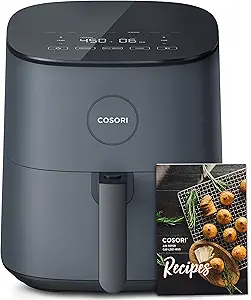
COSORI vs PowerXL: Overview & Brand Philosophy
The modern countertop appliance market has undergone a dramatic transformation over the past decade, driven largely by the meteoric rise of the air fryer. In this crowded arena, COSORI and PowerXL have emerged as two of the most recognizable and dominant forces, yet they approach small appliance engineering from fundamentally different starting points. COSORI, a flagship brand of the smart home innovator Vesync Co., was conceived with a digital-first, user-centric philosophy. The brand quickly established a reputation for modern design aesthetics, quiet operation, and deep integration with mobile platforms and smart home ecosystems. Rather than merely re-skinning conventional convection mechanisms, COSORI has consistently prioritized user interface design, aesthetic minimalism, and precise temperature regulation tailored to modern, connected kitchens.
Conversely, PowerXL—originating under Tristar Products and now operating within the Empower Brands portfolio—traces its lineage to traditional direct-response television marketing and mass-market retail ubiquity. PowerXL built its empire on the promise of commercial-style power translated into consumer-friendly formats. The brand’s product philosophy revolves around utility, aggressive marketing, multi-functionality, and sheer air-velocity convection. PowerXL appeals to consumers looking for straightforward, heavy-duty utility that emulates traditional deep-frying, often emphasizing high-capacity baskets, rotisserie combinations, and accessible, high-turnover retail availability in major brick-and-mortar stores.
As these two market leaders compete for prime kitchen real estate, the choice between them represents a fundamental decision between modern culinary technology and traditional high-volume utility. While COSORI continually pushes into dual-heating elements, high-efficiency insulation, and smartphone connectivity, PowerXL leans heavily into multi-cooker hybrid designs and powerful raw heating outputs. Understanding how these differing product strategies affect day-to-day cooking performance, basket longevity, and ease of maintenance is critical for any consumer looking to invest in a reliable countertop convection appliance.
Key Differences & Technological Comparison
When dissecting the engineering behind both brands, the differences become immediately apparent in their heating dynamics, interface architecture, and structural build quality. COSORI has made substantial strides with its proprietary 360 ThermoIQ and dual-element technologies, prominent in lines like the Dual Blaze series. By placing independent heating elements above and below the cooking basket paired with dynamic temperature sensors, COSORI effectively eliminates the historical requirement to shake or flip food mid-cycle. Furthermore, COSORI units are noticeably engineered for lower decibel output, operating with a smooth acoustic profile that rarely exceeds 55 to 60 decibels.
PowerXL, on the other hand, relies predominantly on top-mounted, high-wattage heating coils combined with aggressive, high-speed cyclonic fans—a system they market as Rapid Air Technology. This approach delivers intense, immediate heat that excels at rapid surface dehydration, providing exceptional crispness on frozen convenience foods like french fries and breaded poultry. However, this brute-force convection approach has trade-offs: PowerXL machines tend to run louder, generate more ambient exterior heat, and frequently require vigilant manual intervention (shaking and turning) to prevent uneven browning or scorching near the top heating element.
From a hardware and design perspective, COSORI embraces a contemporary, understated silhouette utilizing fingerprint-resistant matte finishes, angled touchscreens that reduce glare, and squared basket profiles. The square basket design is functionally superior to traditional circular designs, as it maximizes flat surface area to accommodate wider cuts of protein or multiple strips of bacon without overlapping. PowerXL models often feature rounded, bullet-style chassis with high-gloss plastic exteriors that are prone to scuffs and grease smudges. However, PowerXL counters with impressive multi-function formats, offering front-door countertop oven configurations with integrated rotisserie spit assemblies and multi-tier wire racks that COSORI’s standard pull-out drawer models do not match.
In the smart appliance domain, COSORI stands unchallenged in this matchup. Through the VeSync app, COSORI users can monitor cooks, adjust temperatures remotely, execute multi-stage cooking sequences, and sync with Amazon Alexa or Google Assistant. PowerXL remains largely a mechanical-and-digital standalone appliance, prioritizing direct front-panel preset buttons over Wi-Fi connectivity or app ecosystems. While this makes PowerXL appliances simpler for tech-averse users to operate out of the box, it misses the software updates, remote tracking, and rich digital recipe integration that define the COSORI experience.
Pros & Cons Comparison
COSORI Air Fryers
- Pro: Advanced Heating Architecture: Models equipped with dual-heating elements provide uniform heat distribution without requiring manual shaking or flipping.
- Pro: Intelligent Connectivity: Seamless integration with the VeSync application enables remote monitoring, precise push notifications, and smart home voice control.
- Pro: Ergonomic & Spatial Efficiency: Square basket geometries maximize usable cooking surface area relative to the overall countertop footprint.
- Pro: Acoustic Refinement: Engineered air dampers and balanced fan motors result in significantly quieter operation than typical competitors.
- Con: Thermal Limits: Most standard COSORI models max out at 400°F (205°C), which can slightly slow down intense searing compared to higher-temperature units.
- Con: Premium Pricing: Advanced features, app integration, and dual-element models command a higher initial investment than base-tier air fryers.
PowerXL Air Fryers
- Pro: Aggressive Convection Power: Rapid cyclonic airflow excels at producing hyper-crisp textures on battered and frozen foods quickly.
- Pro: Versatile Form Factors: Extensive portfolio includes hybrid air fryer-toasters with rotisserie spits, multi-level baking racks, and griddle combos.
- Pro: Straightforward Controls: Direct, one-touch tactile or digital presets make operation intuitive without navigating digital submenus or apps.
- Pro: Mass Market Accessibility: Highly competitive pricing and widespread retail availability make them easy to purchase and replace on a budget.
- Con: Non-Stick Coating Durability: The chemical non-stick interior lining on lower-tier PowerXL baskets has a documented tendency to peel prematurely under heavy dishwasher use.
- Con: Noise & Heat Radiation: Louder operational fan noise and significant thermal transference to the outer plastic casing during extended cooks.
Performance, Durability & Value Analysis
In empirical cooking tests, both brands consistently achieve the primary objective of air frying: delivering golden-brown textures with minimal supplemental oil. However, they achieve this through different thermodynamic profiles. COSORI excels in delicate, precision cooking tasks. Proteins such as salmon fillets, pork chops, and thick-cut chicken breasts retain significantly higher internal moisture in COSORI's dual-element units, as the balanced radiant and convective heat cooks the interior steadily before the exterior overcooks. PowerXL operates more like an aggressive countertop blast furnace. For standard frozen fare—such as mozzarella sticks, frozen wings, and waffle fries—PowerXL delivers a fast, shatteringly crisp crust, though it requires frequent attention to prevent over-drying delicate items.
When evaluating long-term durability and materials engineering, COSORI establishes a measurable lead. The non-stick coatings utilized in COSORI's recent lines (featuring BPA- and PFOA-free ceramic and heavy-gauge PTFE finishes) demonstrate superior adhesion and scratch resistance over multi-year lifecycles, provided basic non-abrasive care is observed. In contrast, long-term consumer feedback on PowerXL frequently notes accelerated degradation of the basket's non-stick layer, especially when subjected to repeated high-heat dishwasher cycles. Structurally, COSORI uses higher-grade plastics that resist warping under long-term thermal cycling, whereas some PowerXL units can develop loose basket latches or misaligned door microswitches after extensive use. From a value proposition standpoint, while PowerXL offers a lower upfront cost per quart of capacity, COSORI offers superior longevity, better engineering tolerances, and a modern feature set that justifies its moderate price premium.
Final Verdict: Which Brand Should You Choose?
The optimal selection between COSORI and PowerXL ultimately hinges on your culinary habits, technological preferences, and expectations regarding appliance longevity:
Choose COSORI if: You value culinary precision, modern design aesthetics, and quiet operation. COSORI is the definitive winner for home cooks who prepare raw meats, vegetables, and complex scratch recipes that benefit from precise temperature control and uniform dual-element heating. It is also the undeniable choice for modern smart homes, tech-enthusiastic users who appreciate smartphone notifications when a meal is ready, and those who prioritize durable, easy-to-clean basket coatings designed to last multiple years.
Choose PowerXL if: Your primary priority is upfront affordability, raw crisping power, or specialized multi-cooking utility like rotisserie chicken. PowerXL is well-suited for families whose air fryer usage primarily revolves around convenience foods, frozen snacks, and quick meals where maximum convection speed is king. If you prefer simple, app-free interfaces and want the convenience of buying an inexpensive, high-capacity appliance off the shelf at a local department store, PowerXL delivers solid, straightforward performance for the price.
Features
When evaluating the feature ecosystems of COSORI and PowerXL air fryers, the two brands diverge significantly in engineering philosophy and technological integration. COSORI champions a high-tech, user-centric approach characterized by sophisticated digital ergonomics and smart capabilities. Most flagship COSORI models, such as the Dual Blaze and Pro III series, incorporate patented technologies like 360 ThermoIQ, which utilizes dual heating elements and dynamic temperature sensors to eliminate the need for manual preheating or basket shaking. Furthermore, COSORI excels in smart connectivity through its intuitive VeSync app integration. This interface allows users to monitor cook times remotely, schedule meals, access a vast library of guided online recipes, and control the unit using voice assistants like Alexa or Google Assistant. The capacitive touch control panels on COSORI units are angled for ergonomic visibility and offer granular temperature control (often in precise 5-degree increments) alongside customized presets like Keep Warm, Shake Reminder, and Dehydrate.
Conversely, PowerXL positions its feature set around rugged, high-volume versatility and multi-functional culinary capabilities rather than digital polish. Renowned for pioneering the air fryer-toaster oven hybrid and multi-tier basket designs, PowerXL focuses heavily on mechanical accessories and diverse cooking modes. Many PowerXL units, such as the Air Fryer Pro and Vortex lines, come fully equipped with extensive hardware kits that include rotating rotisserie spits, multi-rack dehydrator shelves, tumbling fry baskets, and specialized baking plates. While PowerXL units feature one-touch digital LED displays with up to 10 to 12 automated presets, their programming is historically more utilitarian, often restricting precision micro-adjustments in temperature and relying on standardized, broad heat curves. PowerXL largely eschews Wi-Fi connectivity and companion apps, prioritizing immediate, hands-on mechanical utility that can handle rotisserie whole chickens, large roasts, and multi-layer batch cooking straight out of the box.
The practical trade-offs between the two feature sets ultimately center on connectivity versus physical functionality. Consumers who prioritize smart home ecosystem integration, high culinary precision, and a streamlined, automated cooking experience will find COSORI’s feature set superior, particularly for everyday, set-it-and-forget-it meals that benefit from automated dual heating. In contrast, home chefs who desire maximum culinary scope—such as rotisserie roasting or simultaneous multi-rack cooking without the complexity of software updates and app management—will appreciate PowerXL’s tactile, accessory-driven engineering. COSORI wins on modern software refinement and sensor accuracy, while PowerXL commands the niche of multi-purpose appliance consolidation.
Performance
When evaluating performance, COSORI consistently outpaces PowerXL through superior thermal engineering, precision airflow, and advanced heating technology. Premium models in COSORI’s lineup, such as the Dual Blaze series, utilize independent upper and lower heating elements paired with dynamic, variable-speed fan systems. This 360-degree heat circulation eliminates the perennial air frying chore of manually shaking the basket midway through the cooking cycle. Thermally, COSORI units demonstrate rapid preheat times and highly consistent heat distribution, which translates to reliably crisp, evenly browned results without localized hot spots or dry edges. In contrast, PowerXL leans heavily on a traditional single, top-mounted heating coil and high-velocity fan design. While this setup achieves significant top-down convection heat that produces exceptional crunch on surface proteins like chicken wings, it frequently results in uneven cooking gradients, requiring frequent user intervention to prevent the tops of foods from over-browning while the undersides remain soft.
The feature sets and interface responsiveness further highlight the operational divide between the two brands. COSORI pairs robust wattage—typically ranging between 1700W and 1800W—with highly accurate NTC (Negative Temperature Coefficient) sensors that regulate temperatures within a tight 5-degree variance. This thermal accuracy gives COSORI the technical edge for delicate culinary tasks, such as baking pastries or dehydrating fruits, alongside high-heat searing up to 400°F (or 450°F on select models). PowerXL devices, while equally powerful in raw wattage, often suffer from wider temperature fluctuations that can compromise delicate recipes. However, PowerXL models often excel in specialized utility features; their multi-cooker and rotisserie-style air fryer ovens offer mechanical flexibility that basket-style COSORIs lack, allowing users to roast whole chickens on an automated spit or dehydrate multiple racks of jerky simultaneously.
Ultimately, the practical trade-offs regarding performance come down to precision versus raw utility. COSORI is the superior choice for users demanding culinary consistency, rapid recovery times when the basket is opened, and whisper-quiet operation—its noise dampening engineering is noticeably more refined than PowerXL's louder, utilitarian fan housings. PowerXL provides adequate, workhorse cooking power designed for fast, high-heat air frying and excels at delivering deep-fried mimicry on frozen convenience foods, but it demands active monitoring, frequent shaking, and patience with less uniform heat distribution compared to COSORI’s expertly balanced convection environment.
Design
When evaluating the design philosophy of COSORI versus PowerXL, the divergence in aesthetic execution and consumer-facing ergonomics is immediately apparent. COSORI champions a contemporary, minimalist design language characterized by clean geometric lines, low-profile square footprints, and sophisticated matte finishes that seamlessly integrate into modern kitchen decors. Their capacitive touchscreens are thoughtfully oriented—often angled upwards on the crown or upper-front fascia of the appliance—allowing users to read parameters without hunching over the counter. In contrast, PowerXL leans into an industrial, high-gloss aesthetic that heavily features rounded, bulbous silhouettes and pronounced chrome accents. While PowerXL units display robust construction, their glossy plastics are notoriously prone to fingerprint smudges and superficial scratches over time. Moreover, PowerXL typically implements vertically aligned, high-contrast LED panels that, while legible from a distance, lack the sleek subtlety and intuitive tactile responsiveness engineered into COSORI’s tempered glass-style interfaces.
From an engineering and internal architecture standpoint, the basket design serves as the primary technical battleground between the two brands. COSORI largely utilizes square, pull-out basket configurations, a deliberate geometric choice that maximizes usable cooking surface area compared to traditional round alternatives. This allows for flat-layer food arrangement, promoting uniform convection airflow driven by their proprietary heat circulation ducts. Additionally, higher-end COSORI models integrate dual-heating elements (above and below the basket), eliminating the mechanical necessity of food shaking. PowerXL, conversely, often relies on deep, rounded baskets or expansive, multi-tiered toaster-oven-style cavity designs with rotating rotisserie components. While PowerXL’s multi-rack engineering excels in structural volume and versatility for larger proteins, it introduces practical trade-offs: multi-tier air distribution can result in thermal gradients that require manual tray-swapping, and the sheer number of internal rails and wire racks complicates the post-cooking cleanup process compared to COSORI’s simplified non-stick modular baskets.
Practical usability and mechanical durability further distinguish these two market leaders. COSORI emphasizes consumer safety and seamless interaction through its basket-release mechanisms; robust safety-guards prevent accidental detachment of the inner basket when transferring hot, heavy foods. Their modern platforms also embed Wi-Fi-enabled smart modules into the chassis without adding physical bulk, allowing for smartphone integration and cooking progress monitoring. PowerXL focuses its engineering utility on high-capacity mechanical utility, featuring heavy-duty, spring-assisted doors on their oven-style models and oversized, high-leverage handles on their standard basket units. While PowerXL's mechanical components feel utilitarian and resilient under frequent stress, COSORI achieves a superior balance of refined industrial design, compact spatial efficiency, and user-centric ergonomics, making it the more cohesion-driven choice for modern, space-conscious residential kitchens.