Top HVAC Brands
Here's what we recommend for:

5



4.6/5
Features
4.7/5
Lennox excels in technological innovation, offering industry-leading features like the proprietary S40 Smart Thermostat, precise variable-capacity zoning, and advanced Communicating System integration.
Performance
4.8/5
Delivering some of the highest SEER2 and AFUE efficiency ratings on the market, Lennox units provide virtually silent operation and exceptional temperature consistency.
Design
4.4/5
The exterior cabinets are durable and engineered with sound-dampening architecture, though proprietary component designs can sometimes complicate aftermarket servicing.

Price Snapshot: Premium to ultra-premium; among the priciest in residential HVAC.
Product Focus: Standout AC/Heat Pump efficiency and high-AFUE furnaces; very quiet flagships.
Best For: Efficiency-first and noise-sensitive buyers who want top-tier comfort.
What Stands Out: Polished inverter systems and refined smart controls (very even temps, low noise).
Before You Buy: Match the right series to climate; proprietary controls work best with trained dealers.
Warranty/Dealer: Competitive parts coverage; strong dealer network; confirm labor options and registration.
3


4.5/5
Features
4.5/5
Carrier performs well in Features for HVAC.
Performance
4.7/5
Carrier performs well in Performance for HVAC.
Design
4.4/5
Carrier excels in engineering compact, aerodynamically sound units with sound-dampening WeatherArmor technology and clean aesthetics. While exterior styling remains traditionally utilitarian, internal component layout and smart integration reflect top-tier functional design.
Price Snapshot: Mid-to-premium; usually pricier than value brands, below ultra-luxury tiers.
Product Focus: Full lineup across Furnace, Central AC, and Air-Source Heat Pump (strong inverter options).
Best For: Buyers who want very even temperatures and low noise with brand-name dealer support.
What Stands Out: Polished smart thermostat ecosystem that works tightly with variable-speed systems.
Before You Buy: Match the series to climate (consider cold-climate heat pump models where winters are harsh).
Warranty/Dealer: Broad U.S. dealer network; parts coverage is solid; confirm labor options with your installer.
4

4.5/5
Features
4.6/5
Offers an industry-leading proprietary ecosystem, including the ComfortLink II communicating system, multi-stage filtration options, and comprehensive Nexia smart home integration.
Performance
4.8/5
Renowned for extreme durability, rigorous testing, and high reliability under severe weather conditions, driven by proprietary Climatuff compressors and Spine Fin coils.
Design
4.0/5
Traditional and utilitarian heavy-gauge steel construction designed for rugged protection rather than aesthetics, resulting in bulky, industrial outdoor units that occupy substantial space.
Price Snapshot: Premium; you often pay more for build and acoustics.
Product Focus: Strong across categories, with emphasis on quiet, durable inverter AC/Heat Pumps; efficient gas furnaces.
Best For: Noise-sensitive spaces and “buy-it-once” homeowners who value longevity.
What Stands Out: Robust cabinets, refined compressor control, and a mature communicating platform.
Before You Buy: Pair with the recommended thermostat and use an authorized installer to unlock full performance.
Warranty/Dealer: Well-established dealer network; confirm labor coverage and any registration deadlines.
8

4.5/5
Features
4.5/5
Daikin offers advanced inverter technology, smart home connectivity, and intelligent thermal sensors that optimize airflow and multi-zone climate control. While highly capable, mastering the extensive array of specialized settings can present a learning curve for some homeowners.
Performance
4.8/5
The systems deliver exceptional seasonal energy efficiency with near-silent operation and reliable temperature regulation even in extreme climates. Their proprietary variable-speed compressors provide industry-leading longevity and precise, consistent indoor comfort.
Design
4.2/5
Indoor units, particularly within the mini-split lineup, feature sleek, low-profile aesthetics that blend well into modern spaces, though standard outdoor condensers remain somewhat bulky. Overall build quality is robust, utilizing high-grade corrosion-resistant materials for lasting durability.
Price Snapshot: Mid to premium, depending on series and features.
Product Focus: Strong in Air-Source Heat Pumps and inverter tech; also offers furnaces and central AC.
Best For: All-electric or efficiency-focused homes that want variable-speed comfort and low noise.
What Stands Out: Mature inverter platforms, quiet outdoor units, and broad heat-pump expertise (including cold-climate lines).
Before You Buy: Use an installer experienced with inverter commissioning; check refrigerant platform and local code requirements.
Warranty/Dealer: Global brand with a growing U.S. network; verify local parts/service access and labor coverage.
2

4.4/5
Features
4.1/5
Heil performs well in Features for HVAC.
Performance
4.5/5
Heil performs well in Performance for HVAC.
Design
4.6/5
Heil performs well in Design for HVAC.
Price Snapshot: Value-to-mid positioning; often a cost-efficient path to modern features.
Product Focus: Balanced Furnace / AC / Heat Pump portfolio with communicating options on upper lines.
Best For: Buyers seeking a feature-rich yet affordable setup, especially for whole-home replacements.
What Stands Out: Ion communicating controls on select series for smoother temps and better diagnostics.
Before You Buy: Communicating features shine with trained installers; match series to climate (consider cold-climate HP where needed).
Warranty/Dealer: Solid parts warranties within a large corporate family; ask about transferability and any labor plan.
6

4.4/5
Features
4.3/5
American Standard offers advanced technology such as the AccuLink communicating system, multi-stage variable-speed compressors, and integrated smart thermostats. While robust, some entry-level models lack the cutting-edge smart-home versatility found in direct competitor lines.
Performance
4.6/5
The brand excels in long-term reliability and efficiency, offering units with high SEER2 ratings that provide consistent, whisper-quiet climate control. Its durable Spine Fin coils and robust compressors ensure top-tier heating and cooling even in extreme weather conditions.
Design
4.2/5
Units are engineered with heavy-gauge galvanized steel and rust-resistant components designed to withstand severe outdoor elements. The aesthetic is utilitarian and bulky compared to sleeker modern designs, but internal component layout allows for relatively straightforward technician serviceability.
Price Snapshot: Upper mid-range; often a touch more affordable than top-tier premium lines.
Product Focus: Balanced Furnace/AC/Heat Pump portfolio with quiet, efficient inverter choices.
Best For: Families wanting steady comfort and low noise without going all-in on flagship pricing.
What Stands Out: Comfort-first tuning and straightforward smart control options.
Before You Buy: Ensure proper Manual J/S/D sizing and commissioning; performance depends on set-up.
Warranty/Dealer: Competitive warranties; lean on local authorized dealers for parts and service speed.
9

4.4/5
Features
4.3/5
Features advanced inverter-driven technology that auto-modulates for efficiency, alongside robust smart thermostat integration, though proprietary accessory options are somewhat limited compared to legacy competitors.
Performance
4.5/5
Delivers exceptionally quiet operation and consistent indoor temperature regulation with high SEER ratings, providing premium-tier heat pump efficiency even in colder climates.
Design
4.6/5
Compact, sleek, and minimalist European-inspired aesthetics with a significantly smaller physical footprint, ideal for zero-lot-line installations and modern architectural integration.
Price Snapshot: Upper mid-range to premium.
Product Focus: Inverter Heat Pumps (IDS) and air handlers; complementary hydronic/comfort solutions.
Best For: Noise-sensitive and efficiency-minded buyers prioritizing smooth, steady comfort.
What Stands Out: Very quiet inverter performance on higher tiers, clean control/app experience, and tidy installation aesthetics.
Before You Buy: Confirm thermostat compatibility, electrical/line-set fit for retrofits, and low-ambient performance for your climate.
Warranty/Dealer: Solid coverage; U.S. dealer base is expanding; check local support and registration steps.
7


4.2/5
Features
4.2/5
Bryant offers a solid array of features, including smart thermostat compatibility and variable-speed fan technology through its Evolution system. While it shares many advanced Carrier technologies, it occasionally lacks the highest-tier proprietary bells and whistles of the absolute premium market.
Performance
4.3/5
Delivering high SEER2 and AFUE efficiency ratings, Bryant units provide reliable, quiet, and consistent climate control across diverse weather conditions. Its multi-stage compressors ensure precise temperature management and dependable long-term operation.
Design
4.0/5
The exterior cabinetry is durable and weather-resistant, engineered with practical technician access and sound-dampening louvers in mind. However, the visual aesthetics remain conventional and utilitarian compared to sleeker modern architectural units.
Price Snapshot: Mid-range and value-leaning versus peer premium brands.
Product Focus: Well-rounded in Furnace/AC/Heat Pump; Evolution-class options hit a sweet spot of features vs. cost.
Best For: Homeowners wanting premium-style comfort without a top-shelf price.
What Stands Out: Feature-to-price balance (quiet operation, smart controls, solid efficiency).
Before You Buy: Prioritize a quality installation; communicating controls work best with trained dealers.
Warranty/Dealer: Good coverage and availability; register on time and ask about transferable terms.
1


4.0/5
Features
3.8/5
Rheem performs well in Features for HVAC.
Performance
3.8/5
Rheem performs well in Performance for HVAC.
Design
4.5/5
Rheem performs well in Design for HVAC.
Price Snapshot: Mid-range with strong value for features.
Product Focus: Balanced Furnace/AC/Heat Pump lineup; solid inverter choices for homes of all sizes.
Best For: Homeowners wanting a feature-rich, practical system without premium pricing.
What Stands Out: User-friendly app/controls and broad availability through Pro Partner dealers.
Before You Buy: Ensure proper commissioning (charge/airflow) to hit the published comfort and noise targets.
Warranty/Dealer: Good warranties and wide U.S. footprint; ask dealer about optional labor coverage.
10

4.0/5
Features
3.9/5
Ruud offers practical, modern features like EcoNet smart thermostat compatibility and variable-speed blowers, though it lacks some of the cutting-edge proprietary automation found in premium competitors.
Performance
4.1/5
Systems deliver reliable, steady temperature control with respectable SEER2 ratings and durable scroll compressors that operate consistently under harsh weather conditions.
Design
4.0/5
Units feature an installer-friendly, compact cabinet design with composite base pans that minimize corrosion and reduce operational sound levels.
Price Snapshot: Value-leaning mid-range; often a bit cheaper than comparable rivals.
Product Focus: Straightforward Furnace/AC/Heat Pump options for replacements and budget projects.
Best For: Cost-conscious buyers who still want reliable, modern equipment.
What Stands Out: Clear, no-frills lineup that mirrors Rheem engineering with simpler trims.
Before You Buy: Compare series names/features carefully; pick the inverter tier if noise/evenness matter.
Warranty/Dealer: Solid parts coverage via broad dealer network; confirm labor plan availability.
Compare Brands


Other HVAC Brands



2.6 /5

2.6 /5
2.6 /5


4.9 /5
2.6 /5

2.7 /5
2.6 /5

2.8 /5
2.6 /5
4.2 /5
2.6 /5

4.9 /5
How to Buy an HVAC System: The Complete Guide
Buying a home HVAC system is a big decision. It’s not just about replacing an old unit - it’s a long-term investment in how comfortable, quiet, and healthy your house will feel every day for the next decade or more. A good system keeps you warm in winter, cool in summer, and helps control humidity and indoor air quality. A poor choice, or a poor installation, can saddle you with high energy bills, excess noise, and frequent breakdowns.
This guide will walk you through the fundamentals - from understanding system types, to reading performance ratings, to judging reliability and warranties. By the end, you’ll know how to interpret the 11 key aspects we use in our brand reviews (Cooling Performance, Heating Performance, Energy Efficiency, Reliability & Durability, Noise Levels, Smart Features, Indoor Air Quality, Installation & Serviceability, Customer Support & Warranty, Product Selection, and Cost & Affordability).
Step 1: Decide What You’re Really Buying
Before comparing brand names, start with the system type. HVAC isn’t one product; it’s three main categories, and your climate plus energy costs usually decide which makes sense.
-
Gas Furnace + Central Air Conditioner:
The traditional combo for colder states with cheap natural gas. The furnace handles heating (measured in AFUE efficiency), while a separate central AC unit covers summer cooling (rated in SEER2 and EER2). This path is reliable, powerful, and time-tested. -
Air-Source Heat Pump:
One outdoor unit delivers both heating and cooling. In summer it works like an AC; in winter it reverses to extract heat from the outside air. In moderate and mild climates, heat pumps can be the most efficient choice. In cold regions, look for cold-climate heat pumps designed to maintain heating capacity at sub-freezing temperatures. -
Dual-Fuel System:
A hybrid option that pairs a heat pump with a gas furnace. The system automatically switches - the heat pump runs in mild weather, the furnace takes over in extreme cold. It’s a smart strategy in areas where winters are harsh but you still want to capture the efficiency of a heat pump when outdoor temps allow.
Pro tip: Ask your contractor for a Manual J load calculation. This is a room-by-room analysis of your home’s heating and cooling needs. Oversizing is one of the most common installation mistakes, and it leads to short cycles, humidity problems, and wasted money.
Step 2: Cooling Performance
When you see Cooling Performance mentioned in our reviews, we’re talking about two main metrics:
-
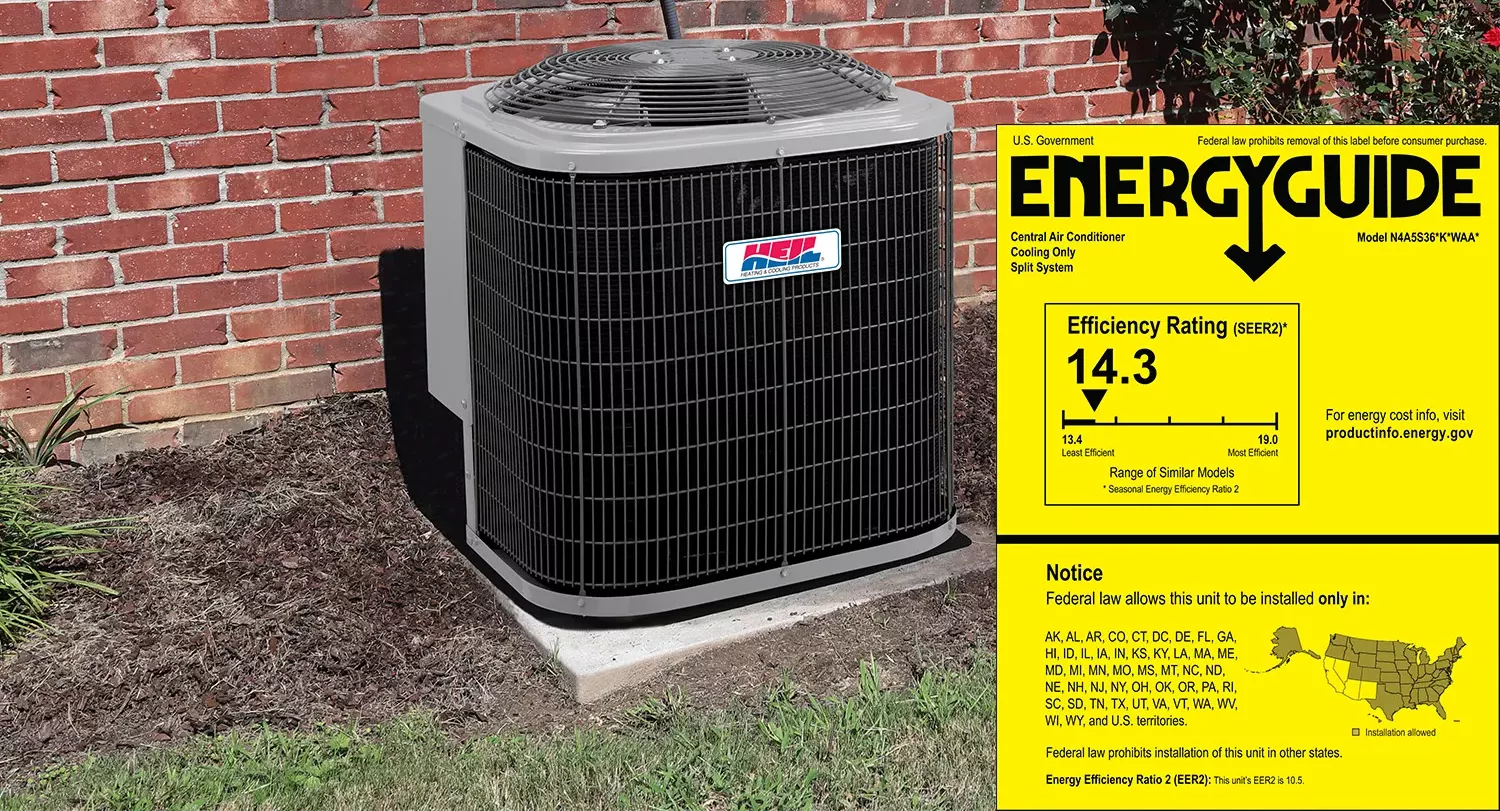
SEER2 (Seasonal Energy Efficiency Ratio 2): The updated 2023 standard that measures average cooling efficiency across an entire season. Higher SEER2 = more cooling per unit of electricity.
-
EER2 (Energy Efficiency Ratio 2): A snapshot efficiency under peak hot conditions. Important in very hot climates where your AC will often run at full blast.
Modern inverter systems (variable-speed compressors) often score well here, because instead of switching fully on/off, they modulate capacity - which means smoother comfort and fewer wasted kilowatts.
Don’t be confused by older SEER ratings. SEER2 is a stricter test. A unit rated 15.2 SEER2 may have been labeled “16 SEER” under the old rules. Always compare SEER2 to SEER2.
Step 3: Heating Performance
For heating, the performance lens changes depending on the technology:
-
Gas Furnaces: Rated in AFUE (Annual Fuel Utilization Efficiency). A 95% AFUE furnace delivers 95 cents of heat for every dollar of gas burned. Anything 90%+ is considered high-efficiency; some models exceed 98%.
-
Heat Pumps: Rated in HSPF2 (Heating Seasonal Performance Factor 2). Like SEER2, it’s a stricter standard adopted in 2023. Also crucial: check the manufacturer’s low-temperature capacity charts. Some premium models hold most of their heating power even at 5°F (-15°C).
-
Dual-Fuel Systems: Heating is seamless. The thermostat decides when to switch from heat pump to furnace based on outdoor temperature.
In short:
-
Cold climate + cheap gas → Furnace (with or without dual fuel).
-
Mild climate + expensive gas/electric → Heat pump.
-
Mixed climates → Dual fuel.
Step 4: Energy Efficiency
Efficiency is about more than saving money on your utility bill - it’s also about comfort and future-proofing your system.
-
Inverter Compressors: These modulate output instead of running at 100% or 0%. The result? Steadier indoor temps, fewer spikes in humidity, and less wasted energy.
-
ECM Blower Motors: Electronically Commutated Motors use less electricity than traditional PSC motors and adjust speed smoothly, improving airflow and lowering noise.
-
Refrigerants Matter: Old systems use R-410A, which is being phased down under U.S. law due to environmental impact. New models with low-GWP refrigerants like R-454B or R-32 are rolling out. Choosing them today avoids compatibility headaches later.
-
SEER2 + HSPF2 + AFUE: When comparing models, focus on these updated numbers. ENERGY STAR certification is a quick way to know you’re looking at top-tier efficiency, but always read the spec sheet - two models with the same sticker can perform differently in your climate.
Bottom line: An efficient system is quieter, more comfortable, and cheaper to run. Paying more up front often pays for itself in a few seasons.
Step 5: Reliability & Durability
No one wants frequent breakdowns, especially in the middle of a heatwave or snowstorm. Reliability depends on both engineering quality and installation quality.
-
Build Quality: Look for all-aluminum coils (resist corrosion better than mixed copper/aluminum), powder-coated cabinets, and proven compressor platforms.
-
Diagnostics: Premium systems have onboard diagnostics that make troubleshooting easier and quicker - a plus for service techs and for your wallet.
-
Service Access: Tool-less panels, standardized parts, and easy access points all reduce downtime.
-
Quality Installation: Even the most robust unit will fail early if it’s poorly sized, charged, or ducted. Require a contractor who follows Manual J (sizing), Manual S (equipment selection), and Manual D (duct design), plus commissioning with measured refrigerant charge and airflow.
Bottom line: Reliability isn’t just about the logo on the unit - it’s about the combination of durable design and a correct, standards-based install.
Step 6: Noise Levels
Comfort is not just about temperature; it’s also about sound.
-
Indoor Noise: Older single-stage blowers can sound like a jet engine. Modern ECM motors ramp up and down quietly, keeping sound levels closer to a whisper.
-
Outdoor Noise: Top inverter ACs and heat pumps now advertise outdoor sound as low as 51-55 dB - similar to a normal conversation. That’s a big difference compared to older 70+ dB units.
-
Design Factors: Compressor insulation, fan blade geometry, and variable-speed operation all cut noise. Brands usually highlight this on their spec sheets.
Bottom line: If your outdoor unit is near a bedroom or patio, noise levels can make or break your comfort. Always check the dB rating on the manufacturer’s own documentation.

Step 7: Smart Features & Connectivity
Today’s HVAC systems are not just mechanical boxes; they’re increasingly digital and connected. Smart features help squeeze more comfort out of less energy.
-
Smart Thermostats: From Carrier Infinity Touch to Trane ComfortLink II or Ecobee/Nest integrations, these devices learn your habits, adjust schedules, and even monitor humidity.
-
Communicating Systems: Inverter-driven systems often use a proprietary communicating thermostat that talks directly to the compressor and blower, allowing fine-grained adjustments instead of simple on/off commands.
-
Zoning: With multiple dampers and sensors, zoning lets you set different temperatures for different parts of the home. No more wasting energy heating the basement when you’re only upstairs.
-
Connectivity & Apps: Most major brands now offer Wi-Fi apps where you can adjust settings remotely, check filter reminders, or get fault alerts pushed to your phone.
-
OTA Updates: Some flagship systems even push software updates over the air, improving performance without new hardware.
Bottom line: Smart features aren’t just gimmicks-they maximize efficiency, reduce bills, and give you peace of mind by making your HVAC more transparent and controllable.

Step 8: Indoor Air-Quality Enhancements
Comfort is more than hot or cold air. It’s also about how clean, fresh, and healthy that air is.
-
Filtration: Aim for MERV-13 filters if your blower can handle it. These trap finer particles (allergens, dust, smoke) that standard MERV-8 filters miss. Some premium systems offer HEPA-grade filter cabinets.
-
UV-C & Ionization: UV lamps can help reduce microbial growth inside the coil. Bipolar ionization and plasma cleaners exist, but research carefully; some are more marketing than proven science.
-
Humidity Control: Whole-home dehumidifiers or humidifiers integrated with the air handler stabilize moisture. Too much humidity = mold and sticky summers. Too little = dry skin, cracked wood, and flu viruses spreading faster.
-
Ventilation: In tight, modern homes, ERVs (Energy Recovery Ventilators) or HRVs (Heat Recovery Ventilators) bring in fresh air without wasting energy. These are especially valuable if windows rarely open.
Bottom line: Indoor air quality features can be as impactful for your health as temperature. If you or family members have allergies, asthma, or respiratory issues, this is not an optional extra; it’s essential.

Step 9: Installation & Serviceability
Here’s the truth: half of system performance depends on installation. A “bad” install can turn the best system into a noisy, inefficient headache.
-
Proper Sizing (Manual J): Contractors must measure your home’s heat gain/loss, not just guess by square footage. Oversized = short cycles, humidity problems. Undersized = poor comfort in extremes.
-
Duct Design (Manual D): Leaky or undersized ducts rob efficiency. A 20% duct leak = 20% higher bills. Good design reduces static pressure, airflow noise, and hot/cold spots.
-
Commissioning: At startup, techs should measure refrigerant charge, airflow (CFM per ton), and static pressure. Skipping this is like buying a car without a test drive.
-
Serviceability: Units with tool-less panels, clear diagnostic codes, and common replacement parts make life easier for technicians and cheaper for you down the line.
Bottom line: A mediocre system installed by an excellent contractor will outperform a premium system installed badly. Always hire certified installers who follow industry standards (ACCA, ENERGY STAR Quality Installation).
Step 10: Customer Support & Warranty
Your HVAC system isn’t just about what you buy; it’s about who stands behind it. Even the best unit will eventually need service, and a strong warranty plus a responsive dealer network can make the difference between a quick fix and weeks without comfort.
-
Warranty Terms: Look at coverage for the compressor (heat pumps/AC), heat exchanger (furnaces), and general parts. Many brands offer 10 years on parts, lifetime on heat exchangers, and up to 12 years on compressors for premium lines.
-
Labor Coverage: Parts may be free under warranty, but labor costs are not always included. Some brands or dealers offer optional labor protection plans.
-
Transferability: A transferable warranty adds resale value. If you sell your house, the next owner can inherit the coverage.
-
Dealer Network: Big brands like Carrier, Trane, Lennox, and Rheem have dense authorized networks. Smaller or newer brands may not, which can mean longer waits for parts or certified technicians.
Bottom line: Always read the fine print. A good warranty and strong support network protect your comfort and your wallet for the next 10–15 years.
Step 11: Product Selection
HVAC systems generally come in three “tiers” across most major brands:
-
Entry-Level: Single-stage units. Affordable, reliable, but less efficient and louder.
-
Mid-Range: Two-stage or basic inverter units. More consistent comfort, quieter, and better efficiency.
-
Flagship: Full inverter variable-speed systems with advanced IAQ options, ultra-quiet performance, and top SEER2/HSPF2 ratings.
Some brands (like Carrier, Lennox, and Trane) organize these into named series (e.g., Infinity/Performance/Comfort or Signature/Elite/Merit). Others just offer a price-performance spread.
Bottom line: Pick the tier that matches your climate, comfort expectations, and how long you’ll stay in the home. For a forever home, flagship often pays back over time.
Step 12: Cost & Affordability
Installed HVAC cost isn’t just the unit-it’s the full package:
-
Unit Price: The furnace, AC, or heat pump itself.
-
Installation Costs: Labor, refrigerant line sets, pads, electrical upgrades, condensate management.
-
Ductwork: Old ducts may need sealing, resizing, or replacement-often a hidden cost.
-
Thermostats & Accessories: Smart controls, zoning dampers, IAQ add-ons.
-
Rebates & Incentives: High-efficiency heat pumps and AC units often qualify for federal tax credits, state rebates, and utility incentives. These can cut thousands off your net cost.
-
Financing Options: Many dealers offer payment plans to spread out the investment.
Bottom line: Always compare the net installed cost after incentives, not just sticker price. Sometimes the higher-efficiency model pays for itself once rebates and energy savings are factored in.
Final Pre-Purchase Checklist
Before you sign a contract, confirm these boxes are checked:
✅ System type fits your climate and energy costs (Furnace+AC vs. Heat Pump vs. Dual-Fuel).
✅ Manual J/S/D reports provided by your contractor (sizing, selection, duct design).
✅ SEER2/EER2/HSPF2/AFUE values verified from the manufacturer’s official spec sheets.
✅ Noise levels listed (aim for mid-50s dB outdoors or quieter).
✅ IAQ options chosen (MERV-13, humidity control, ERV/HRV if needed).
✅ Commissioning report promised at startup (charge, airflow, static pressure).
✅ Warranty terms clear (compressor/heat exchanger/parts + labor options).
✅ Rebates/credits factored into the final quote.
Quick Buyer Match Guide
-
Cold climates with cheap gas: Go with a high-AFUE furnace + central AC.
-
Mild or moderate climates with high energy prices: Choose a heat pump for all-electric efficiency.
-
Cold climates with expensive gas but deep freezes: A dual-fuel system gives you the best of both worlds.
-
Noise-sensitive households: Invest in a variable-speed inverter system with outdoor sound ratings ≤ 55 dB.
-
Health-focused families: Prioritize IAQ upgrades-MERV-13 filters, humidity control, and ERV/HRV ventilation.
-
Budget-conscious buyers: Mid-range two-stage systems hit the sweet spot of affordability, comfort, and efficiency.
Final Thoughts
Buying HVAC is not just about the shiniest brochure numbers. It’s about fit: fit to your home, your climate, your budget, and your comfort priorities. By breaking the decision into these 11 aspects, you can see through marketing gloss and focus on what truly matters: steady comfort, clean air, low bills, and a system that lasts.
A good HVAC system becomes invisible-you forget it’s there because your home just feels right. And that’s the ultimate test of success.
KEEP READING