Samsung vs Cosmo: Overview
Comparing Samsung and Cosmo helps you determine which brand is best suited for your needs in Wall Ovens. Both brands offer strong choices depending on your budget and key feature requirements.
Key Features & Comparison
Evaluate factors such as build quality, warranty, customer satisfaction, and total value before making your final purchase choice between Samsung and Cosmo.
Features
The functional gap between Cosmo and Samsung is most pronounced in their respective technological capabilities and digital interfaces. Cosmo keeps its feature set relatively streamlined and pragmatic, outfitting its wall ovens with core culinary essentials such as true European convection (featuring an integrated third heating element), multi-rack configurations, standard Sabbath modes, and conventional high-heat self-cleaning cycles. While these features are engineered with dependability in mind, Cosmo intentionally foregoes proprietary software, smart home connectivity, and complex guided-cooking routines in favor of intuitive, fail-safe operation that avoids the pitfalls of obsolete firmware.
Samsung, by contrast, excels in technological versatility and innovation. Many Samsung wall ovens incorporate proprietary Flex Duo technology, which utilizes a removable smart divider to transform a single large cavity into two independently controlled cooking zones with distinct temperatures and timers. Furthermore, Samsung leads heavily in IoT integration, embedding its SmartThings platform alongside Wi-Fi connectivity, AI-assisted interior cameras, integrated air fry modes, and precision food probes. Users can monitor, preheat, and adjust cooking profiles directly via smartphones or integrated digital touchscreens, making Samsung the indisputable leader for users who prioritize automated culinary assistance and cutting-edge software ecosystems.
Performance
From a raw thermal dynamics standpoint, both brands deliver commendable results, but they approach heat delivery through different engineering methodologies. Cosmo wall ovens leverage standard European convection systems, which rely on a rear-mounted heating element paired with an axial fan to generate uniform heat circulation. This setup effectively mitigates cold spots, producing consistent browning for baked goods and reliable roasting outputs. However, Cosmo ovens can occasionally exhibit longer preheat durations due to less aggressive wattage allocation across their elements, and their heat retention is primarily reliant on traditional mechanical insulation rather than real-time algorithmic thermal regulation.
Samsung's performance profile showcases sophisticated modern thermal engineering, typically utilizing dual-fan convection configurations or advanced variable-speed fans that optimize airflow based on the selected cooking mode. This dynamic heat distribution results in significantly faster preheat cycles and micro-adjusted temperature consistency throughout the cavity. Furthermore, Samsung's digital thermostats react dynamically to cavity heat loss, instantly compensating when the door is opened. While Cosmo delivers sturdy, predictable heating that satisfies traditional baking requirements, Samsung provides tighter temperature tolerances, versatile high-velocity modes like air sous-vide and air fry, and exceptional multi-rack thermal equilibrium under heavy cooking loads.
Design
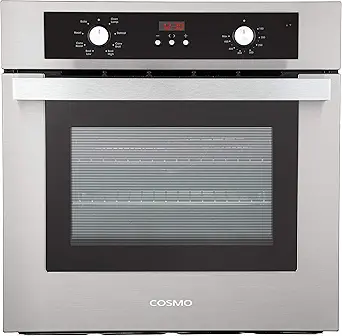
Aesthetic language serves as a key differentiator between these two manufacturers, establishing entirely different visual focal points in a kitchen remodel. Cosmo embraces a commercial, pro-style design ethos characterized by heavy-gauge, brush-finished 304-grade stainless steel, prominent industrial-style metal bar handles, and robust mechanical knobs paired with minimalist LED readouts. This utilitarian, restaurant-inspired approach seamlessly integrates into both rustic transitional spaces and modern industrial kitchens, conveying a rugged, tactile durability that resists the aesthetic wear of shifting digital trends.
Samsung adopts a distinctly contemporary, minimalist approach characterized by sleek lines, flush-mount installations, and high-tech display panels. Samsung's design signature often eschews traditional rotary dials in favor of integrated full-color LCD touchscreens and touch-sensitive capacitive controls, complemented by their premium Bespoke finish options which include fingerprint-resistant black stainless steel, matte black, and bespoke colored glass. The aesthetic result is an ultra-modern, seamless integration that pairs flawlessly with minimalist cabinetry and contemporary architectural motifs, though users who prefer tactile, analog hardware may find Samsung's glass-heavy interfaces less satisfying to operate with greasy or wet kitchen hands.