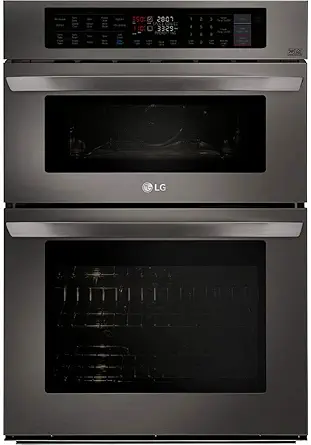







LG vs Electrolux: Overview
Comparing LG and Electrolux helps you determine which brand is best suited for your needs in Wall Ovens. Both brands offer strong choices depending on your budget and key feature requirements.
Key Features & Comparison
Evaluate factors such as build quality, warranty, customer satisfaction, and total value before making your final purchase choice between LG and Electrolux.
Features
From a feature and technology perspective, LG aggressively loads its wall ovens with high-utility consumer innovations. Most modern LG wall ovens feature the brand's flagship ProBake Convection system, which relocates the primary heating element from the cavity bottom to the back wall around the fan for more direct heat transfer. In addition, LG models often boast built-in Air Fry capabilities, Sous Vide modes, and InstaView glass panels that illuminate the interior with two quick knocks. The ThinQ ecosystem is one of the most developed in the industry, facilitating remote preheating, integration with smart recipe apps like SideChef, and Smart Diagnosis alerts that actively monitor component health and notify users of potential maintenance issues.
Electrolux counters this tech-centric approach with chef-inspired features engineered to optimize actual food outcomes rather than screen interactions. Electrolux wall ovens frequently include their dual-fan Perfect Taste convection system, integrated internal temperature probes that automatically transition to a keep-warm phase upon reaching the target internal temperature, and specialized baking stages like multi-stage dehydrating and steam-assist functions. Rather than emphasizing Wi-Fi connectivity, Electrolux channels its engineering into features that enhance ergonomics and physical usability, such as smooth-glide luxury-glide oven racks that extend fully without tipping and dedicated 'Perfect Turkey' buttons that automate complex roasting cycles. While Electrolux provides a more focused, culinary-grade toolset, LG wins decisively for users who demand modern smart home compatibility and comprehensive multifunctionality.
Performance
In terms of thermal performance, Electrolux delivers outstanding consistency that reflects its professional culinary background. The brand's dual-fan convection configuration ensures exceptional airflow distribution, virtually eliminating hot and cold spots across all rack levels. This makes Electrolux ovens particularly formidable for delicate pastry work, multi-rack cookie baking, and artisan breads where precise, dry airflow and accurate temperature holding are paramount. Furthermore, Electrolux ovens demonstrate superior insulation properties, leading to rock-solid temperature stability throughout long baking cycles and minimal ambient heat bleeding into the surrounding cabinetry, which is a common pain point in built-in kitchen layouts.
LG delivers robust heating power, largely driven by its rear-mounted heating element in the ProBake system, which results in faster-than-average preheat times and intense, even roasting performance. For proteins, casseroles, and sheet-pan meals, LG wall ovens perform admirably, achieving deep browning and crisp textures with ease. However, when it comes to sensitive multi-rack baking, LG's single-fan system—while powerful—can occasionally produce slightly uneven airflow patterns compared to Electrolux's dual-fan engineering, requiring the occasional rotation of baking sheets. While LG edges ahead in rapid preheat capabilities and high-heat roasting cycles, Electrolux holds the advantage in microscopic temperature stability and consistent edge-to-edge uniformity across complex, multi-rack baking scenarios.
Design
The aesthetic profiles of LG and Electrolux reflect two opposing design schools: high-tech contemporary versus understated European minimalism. LG wall ovens showcase a bold, modern appearance defined by deep stainless steel or black stainless finishes, vibrant touchscreens, and their signature brilliant blue interior porcelain cavity, which not only provides a high-end look but aids visibility. The InstaView panel serves as both an aesthetic centerpiece and a functional asset, allowing users to inspect food without breaking the oven door seal. While visually striking, LG's heavy use of digital displays and branded styling elements can occasionally conflict with ultra-minimalist, custom-panel, or classical kitchen designs.
Electrolux adopts a cleaner, architectural approach influenced by Scandinavian design traditions. Featuring clean horizontal lines, flush installation profiles, and minimalist control interfaces that illuminate only when activated, Electrolux appliances integrate seamlessly into upscale cabinetry and contemporary kitchens. The tactile quality of Electrolux ovens is distinctly upscale; door hinges utilize soft-closing mechanisms that dampen movement smoothly, and handles feature a refined, ergonomic sweep that feels substantial in hand. Inside, Electrolux favors industrial gray or cobalt porcelain finishes complemented by heavy-gauge chrome racks. While LG's high-contrast styling and interactive display deliver an immediate modern wow-factor, Electrolux offers a more timeless, integrated, and architecturally cohesive aesthetic that appeals to high-end interior designers.
Compare current retail pricing, active promotions, and verified stock availability directly from authorized stores:
Compare current retail pricing, active promotions, and verified stock availability directly from authorized stores: