LG vs Cosmo: Overview
Comparing LG and Cosmo helps you determine which brand is best suited for your needs in Wall Ovens. Both brands offer strong choices depending on your budget and key feature requirements.
Key Features & Comparison
Evaluate factors such as build quality, warranty, customer satisfaction, and total value before making your final purchase choice between LG and Cosmo.
Features
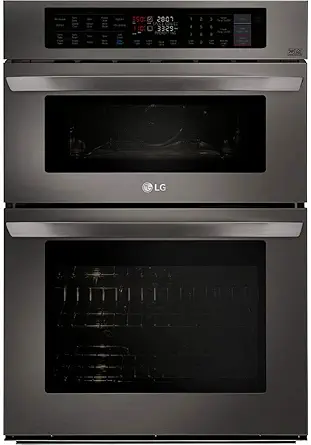
In terms of feature diversity and technological integration, LG decisively outpaces Cosmo. LG wall ovens frequently incorporate cutting-edge innovations such as built-in Air Sous Vide, high-powered Air Fry modes, and the brand’s signature InstaView window, which illuminates the interior with two quick knocks. Central to LG's modern feature catalog is the ThinQ platform, enabling remote preheating, real-time diagnostic monitoring via Proactive Customer Care, and recipe synchronization through services like SideChef and Innit. Furthermore, LG’s dual-speed convection systems and specialized steam-assist functionalities provide home bakers with granular control over the moisture profile of the cooking cavity.
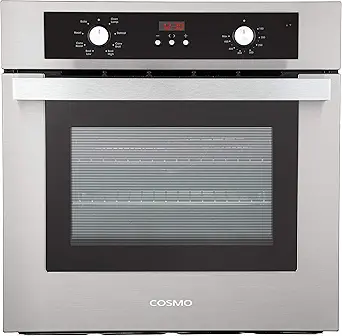
Cosmo approaches functionality with a classic, streamlined mindset, focusing on standard thermal convection, broiling, and basic baking modes rather than automated smart programs. While select Cosmo models offer touch controls and programmable timers, they largely bypass Wi-Fi connectivity and app ecosystems in favor of mechanical dependability. The features present—such as cavity cooling fans, basic multi-rack convection, and straightforward digital displays—are practical and easy to operate without a learning curve. For users who find smart appliances unnecessarily convoluted, Cosmo provides essential core utility, though it noticeably lags behind LG’s versatile, multi-functional culinary capabilities.
Performance
Performance benchmarks highlight LG’s superior thermal management and advanced airflow dynamics. Utilizing their proprietary True Convection system—which incorporates a dedicated heating element behind the convection fan—LG units achieve exceptionally uniform heat distribution across multiple rack positions. This eliminates hot spots and ensures consistent results whether baking delicate pastries or roasting meats. Temperature fluctuations are tightly regulated by responsive electronic thermostats, resulting in precise temperature maintenance. Additionally, LG’s rapid preheat cycles and high-output variable broilers deliver swift, commercial-grade heat transfer that accelerates dinner preparation without sacrificing quality.
Cosmo delivers competent everyday cooking performance, but its thermal consistency is more susceptible to slight variations. While its Turbo True European Convection provides adequate air circulation for even roasting, the temperature recovery time after opening the oven door is typically slower than LG’s. Users may encounter slight browning disparities across large sheet pans when utilizing all racks simultaneously. Nevertheless, Cosmo units provide substantial broiling power and stable continuous heating that easily handles standard family meals, making them fundamentally reliable workhorses despite lacking the pinpoint thermal accuracy engineered into LG’s convection cavities.
Design
From a design standpoint, LG showcases a sleek, contemporary aesthetic characterized by seamless flush-mount capabilities, PrintProof stainless steel, and minimalist digital glass controls. The visual centerpiece of many LG units is the bright, wide InstaView panel framed by clean architectural lines, paired with an interior boasting brilliant cobalt blue porcelain enamel. LG balances modern touchscreens with ergonomically weighted handles and heavy-duty, smooth-gliding telescopic racks. The result is an oven that integrates harmoniously into modern, transitional, or luxury contemporary cabinetry, projecting an unmistakable aura of refined electronics and industrial finish.
Cosmo embraces a pro-style, European commercial visual language, punctuated by heavy-gauge stainless steel construction, clean geometric handles, and prominent, tactile control knobs. This aesthetic appeals directly to homeowners who desire the rugged, industrial look of a high-end chef's kitchen without the professional-brand price tag. While visually striking from a distance, the tactile execution reveals some cost-saving compromises, such as lighter-gauge rack metals, standard friction slides, and simpler interior lighting compared to LG. Nonetheless, Cosmo achieves a commanding physical presence that elevates kitchen remodels, prioritizing traditional utilitarian elegance over digital minimalism.