Frigidaire vs Cosmo: Overview & Brand Philosophy
When selecting a built-in wall oven, homeowners must balance aesthetic appeal, spatial integration, and culinary precision. Frigidaire, a legacy American brand operating under the Swedish parent company Electrolux, has been a cornerstone of domestic kitchens for over a century. Known for pioneering the first self-contained electric refrigerator, Frigidaire applies a philosophy of pragmatic, family-first engineering to its cooking appliances. Their wall oven portfolio—spanning the core Frigidaire line, mid-range Frigidaire Gallery, and high-end Frigidaire Professional—focuses on functional convenience, broad accessibility, and rapid-cooking technologies designed for daily, high-output households.
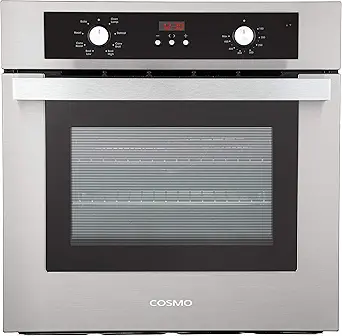
Conversely, Cosmo represents the vanguard of modern, direct-to-consumer appliance manufacturers. Founded with the intent to democratize luxury, Cosmo targets cost-conscious homeowners, urban remodelers, and flippers seeking the sleek, industrial aesthetic often reserved for European designer brands. Rather than pursuing proprietary, ultra-complex technological ecosystems, Cosmo leans into straightforward mechanical interfaces, professional-looking commercial styling, and heavy-gauge brushed stainless steel at accessible price points. In the wall oven segment, Cosmo offers streamlined electric and gas alternatives that bridge the gap between apartment-friendly dimensions and professional-grade focal points.
The philosophical divergence between these two companies creates an intriguing choice for consumers. Frigidaire seeks to dominate the heart of the mass-market American home with standardized sizes, integrated smart-cooking modes, and expansive service networks. Cosmo, by contrast, operates with an agile, design-led mindset, delivering contemporary European flair and essential functionality without the legacy brand markup. Understanding how these approaches translate to actual baking performance and day-to-day usability is essential before committing to a cut-out dimension in your cabinetry.
Key Differences & Technological Comparison
The architectural differences between Frigidaire and Cosmo wall ovens manifest primarily across convection architecture, heating controls, smart integration, and sizing standards:
- Convection Engineering: Frigidaire’s mid-to-high tier models often feature "Total Convection," a proprietary platform that drives diverse cooking functions such as Air Fry, Slow Cook, Steam Bake, and No Preheat. These models typically utilize true European convection (an independent third element wrapping around the fan) to circulate heat uniformly. Cosmo primarily employs standard fan convection systems or single-element assist convection, which effectively reduces hot spots and cooking times compared to traditional thermal ovens, though it lacks the sophisticated multi-mode air-dispersion algorithms found in Frigidaire's Gallery and Professional lines.
- Interface and Usability: Frigidaire leans heavily into intuitive capacitive touchscreens and digital control pads, offering customizable cooking presets, precision temperature probes, and intuitive multi-step cooking programs. Cosmo frequently preserves an analog, professional aesthetic, often employing heavy-duty, tactile metal turn-knobs accompanied by a central blue or amber digital display. This tactile approach minimizes digital failure points, though it reduces precise, single-degree temperature adjustments and automated recipe management.
- Sizing and Cabinetry Integration: Frigidaire designs its built-in ovens strictly around standard North American cabinet cut-outs, offering widespread availability in 24-inch, 27-inch, and 30-inch single and double configurations. They also provide the "Frigidaire Fit Promise," guaranteeing reimbursement for cabinet modifications if their 27-inch or 30-inch model does not fit an existing cutout of the same dimension. Cosmo predominantly targets the 24-inch and 30-inch footprints, often excelling in the compact 24-inch category with European-depth units that suit space-constrained urban condominiums or secondary prep kitchens.
- Self-Cleaning Technologies: Frigidaire wall ovens frequently offer two-tier cleaning systems: high-heat pyrolytic self-cleaning for heavy carbonized soils and low-temperature 30-minute steam cleaning for light maintenance. Cosmo wall ovens typically focus on traditional high-heat pyrolytic cleaning cycles or rely solely on cavity porcelain coatings that mandate manual cleaning, depending strictly on the price tier of the unit.
Pros & Cons Comparison
Frigidaire Wall Ovens
- Pros:
- Advanced culinary presets including integrated Air Fry, Steam Bake, and Food Dehydrator modes.
- Comprehensive size selections across 24", 27", and 30" widths, backed by the Fit Promise guarantee.
- Widespread availability of genuine replacement parts and extensive nationwide certified technician networks.
- Advanced true convection systems yield exceptional multi-rack baking uniformity.
- Cons:
- Higher baseline entry price compared to Cosmo’s standard offerings.
- Complex electronic control boards can be vulnerable to voltage surges and costly out-of-warranty repairs.
- Aesthetic blends into mainstream contemporary styles rather than standing out as a pro-style showpiece.
Cosmo Wall Ovens
- Pros:
- Exceptional value-to-cost ratio, delivering premium stainless-steel industrial aesthetics at entry-level pricing.
- Durable, intuitive control systems featuring heavy-duty commercial knobs that reduce electronic control board dependency.
- Strong offerings in the compact 24-inch footprint, ideal for small spaces, guest suites, and modern kitchen remodels.
- Solid commercial-style handles and sturdy oven doors provide a high-end physical feel.
- Cons:
- Limited lineup with practically zero presence in the non-standard 27-inch replacement market.
- Lacks advanced smart-home functionality, steam cooking options, or built-in specialized cooking algorithms.
- Service infrastructure and local independent repair coverage are less established than domestic legacy brands.
Performance, Durability & Value Analysis
From a culinary performance standpoint, Frigidaire holds an edge in thermal precision and versatility. In demanding baking trials—such as high-volume cookie sheet rotation or delicate soufflés—Frigidaire's advanced airflow management and dedicated heating elements generate fewer edge-to-edge gradients. The inclusion of integrated temperature probes in models across their Gallery lineup further ensures high-precision protein roasting. Cosmo delivers reliable, steadfast heat via its standard dual-element and convection configurations, easily tackling everyday bakes, sheet-pan dinners, and standard roasts. However, users may observe slight temperature variances along the lateral edges in their wider 30-inch units, occasionally requiring manual pan rotation during prolonged baking tasks.
When assessing durability and overall return on investment, the comparison hinges on design complexity versus serviceability. Cosmo's mechanical reliance on robust rotary dials and simplified circuitry lowers the likelihood of early micro-controller failure, making it an intrinsically durable machine for foundational cooking tasks. However, if a component does fail, sourcing specialized parts or scheduling factory-certified technicians can take longer compared to Frigidaire's extensive network. Frigidaire's appliances leverage ubiquitous parts distribution, ensuring that heating elements, thermal fuses, and fan motors are readily available for decades. While you pay a higher initial premium for a Frigidaire, its feature-rich platforms hold up remarkably well in high-occupancy homes, whereas Cosmo captures undisputed value for budget-conscious updates and minimalist kitchen builds.
Final Verdict: Which Brand Should You Choose?
The choice between Frigidaire and Cosmo depends on your cooking style, cabinetry dimensions, and design expectations.
Choose Frigidaire if: You are an active home chef who values specialized cooking modes like Air Fry and Steam Bake, you need to seamlessly replace an existing 27-inch or 30-inch wall oven without restructuring your cabinetry, or you prioritize the long-term security of an established, nationwide service and parts ecosystem. It remains the superior choice for high-volume family kitchens where culinary automation and multi-rack baking precision are daily necessities.
Choose Cosmo if: You are undertaking a modern kitchen renovation on a defined budget, require a compact 24-inch wall oven with a modern European appearance, or favor tactile, industrial control dials over complex digital screens. Cosmo offers uncompromised visual sophistication, making it the premier pick for urban condos, investment properties, or secondary living spaces that demand high-end design without the high-end expense.
Features
When evaluating feature sets in the wall oven category, Cosmo and Frigidaire represent two distinctly different engineering philosophies: Cosmo prioritizes European-inspired design with professional-grade fundamentals, while Frigidaire focuses on high-utility, tech-forward conveniences tailored for the North American lifestyle. Cosmo ovens emphasize precision thermal control through specialized convection systems, utilizing turbo true convection fans paired with hidden heating elements to deliver uniform heat distribution. Their models typically integrate essential, chef-oriented cooking modes such as dehydrate, defrost, and proofing alongside high-grade rotisserie assemblies in select units. Digital touch controls with intuitive child locks and cool-to-touch multi-layered glass doors highlight Cosmo’s dedication to sleek, functional ergonomics. However, Cosmo deliberately avoids hyper-connectivity, resulting in a streamlined, analog-adjacent feature set that favors mechanical simplicity and consistent thermal dynamics over smart-home automation.
Conversely, Frigidaire—especially through its celebrated Gallery and Professional lines—dominates the technical feature landscape by integrating versatile, multi-functional culinary capabilities directly into the oven cavity. The brand's hallmark innovation is built-in Air Fry technology, which leverages high-speed superheated convection currents to simulate deep-frying without countertop clutter. Frigidaire also edges ahead in everyday usability features, offering ultra-rapid preheating cycles, effortless Steam Clean and self-clean hybrid options, and integrated temperature probes that monitor internal meat temperatures and automatically trigger warming modes to prevent overcooking. Additionally, many of Frigidaire’s latest wall ovens boast robust Wi-Fi connectivity compatible with proprietary mobile apps and voice assistants, allowing users to remotely preheat, adjust timers, and receive push notifications regarding cycle progress.
The practical trade-off between the two brands centers on whether a consumer prioritizes core baking performance or multi-purpose culinary versatility. Cosmo delivers exceptional value for home cooks who desire commercial-style, dependable baking capabilities, low-maintenance electronics, and sleek aesthetic symmetry without paying a premium for extraneous software that can complicate repair longevity. In contrast, Frigidaire is the superior choice for busy households seeking an all-in-one culinary workstation; its inclusion of Air Fry, automated cook modes, and connected appliance architecture substantially improves weeknight convenience. While Frigidaire’s sophisticated sensor systems and smart controls offer higher practical utility, Cosmo’s minimalist electronic profile represents fewer potential failure points over prolonged lifespans, crystallizing the balance between modern gadgetry and durable simplicity.
Performance
When evaluating thermal performance and engineering rigor, Frigidaire holds a decisive advantage over Cosmo, underpinned by decades of mass-market optimization and advanced airflow dynamics. Frigidaire’s wall oven lineup—particularly within its Gallery and Professional series—frequently features Total Convection and True European Convection systems. These units utilize a dedicated third heating element surrounding a variable-speed fan to ensure uniform heat distribution, minimizing hot spots and allowing for reliable multi-rack baking. Additionally, Frigidaire integrates specialized performance modes such as Air Fry, Slow Cook, and Steam Bake directly into the heating algorithm, providing precise temperature calibration and moisture retention that caters to versatile, high-demand culinary tasks.
Cosmo approaches the market as a value-driven, contemporary alternative, emphasizing commercial-style European aesthetics and straightforward heating utility rather than hyper-specialized cooking modes. Cosmo wall ovens typically rely on standard single-fan convection systems combined with conventional top broil and bottom bake elements. While Cosmo delivers respectable heat-up times and handles standard roasting and baking tasks reliably, its thermal consistency across multi-rack configurations often exhibits noticeable temperature gradients compared to Frigidaire. Users frequently report a steeper learning curve regarding heat regulation, as the baseline temperature sensors and heating elements lack the rapid micro-adjustments seen in Frigidaire's more mature electronic control boards.
The practical trade-off between the two brands centers on culinary precision versus accessible functional simplicity. Cosmo provides sufficient everyday power and a sleek profile for budget-conscious homeowners who require fundamental baking and broiling without paying a premium for proprietary technology. However, for serious home cooks prioritizing consistent browning, rapid preheating, and advanced multi-rack throughput, Frigidaire’s superior sensor calibration, advanced airflow engineering, and dedicated cooking presets offer a measurably superior long-term performance profile.
Design
When evaluating the design paradigms of Cosmo and Frigidaire wall ovens, the contrast between European-inspired minimalism and traditional American functionalism becomes immediately apparent. Cosmo emphasizes a sleek, pro-style architectural aesthetic characterized by flush-mount capabilities, heavy-gauge commercial-grade stainless steel, and minimalist, high-contrast digital-rotary interfaces. Their design language leans heavily into edge-to-edge glass door assemblies and seamless handle integration, which gives them a high-end, custom look that punches well above their price point. Frigidaire, conversely, adheres to a more utilitarian, versatile design philosophy—exemplified by their popular Gallery and Professional series. Frigidaire employs their proprietary Smudge-Proof stainless steel, which chemically resists fingerprints far better than Cosmo's raw finishes, and integrates more traditional mechanical ergonomics, including robust, full-metal die-cast knobs alongside expansive, capacitive-touch TFT displays that prioritize legibility and rapid setting access over sparse aesthetics.
From an engineering and spatial optimization perspective, the two brands diverge significantly in cavity architecture and ventilation dynamics. Cosmo utilizes a compact convection airflow matrix optimized for precision baking, incorporating cool-to-touch quadruple-layered glass door insulation that successfully isolates extreme internal heat while maintaining a flat exterior profile. However, this focus on sleekness can sometimes lead to marginally less usable interior capacity compared to dimensional footprint. Frigidaire excels precisely in this internal spatial engineering, maximizing cubic footage within standard 27-inch and 30-inch cutouts. Their internal design features advanced air circulation channels specifically engineered for integrated features like built-in Air Fry, requiring distinct bottom-venting systems and specialized rack gliding architectures. While Cosmo offers solid flat wire racks, Frigidaire provides an engineering advantage with heavy-duty, ball-bearing telescoping glide racks designed to handle hefty Dutch ovens and roasting pans with zero friction.
The practical trade-offs in design ultimately hinge on the user's kitchen layout and workflow preferences. Cosmo's visual profile is arguably more cohesive in contemporary, modern European, or transitional kitchen spaces where clean lines and low-profile cabinetry integration are paramount. The trade-off lies in everyday maintenance—Cosmo's exterior demands more frequent polishing—and a more streamlined interface that requires navigating deeper menu trees. Frigidaire represents the gold standard of practical daily use; its design trade-off is a somewhat bulkier, more conventional profile that may feel overly busy to design purists, but it offsets this with superior ergonomics, effortless exterior cleaning, and a highly intuitive, one-touch control hierarchy that fundamentally streamlines high-volume, family-style cooking.